


Sofas in film and TV part 1: what the furniture beneath our favourite characters tells us
A sofa is rarely just somewhere for a character to sit.
On screen, sofas witness arguments, seductions, family gatherings, power plays, breakdowns, awkward silences and a great deal of television watching. They can tell us who has money, who wants us to think they have money, who lives alone, who has impeccable taste and who may have inherited the three-piece suite from their parents.
They are also one of the quickest ways for a production designer and set decorator to establish character and place. A vast pristine sectional in a glass-walled mansion tells a very different story from a sagging floral sofa in a suburban living room. And sometimes a single piece of furniture can help define an entire vision of the future.
Our Sofas in Film and TV series (running on Sundays on our Instagram) looks at this hardworking piece of screen furniture from different angles, from status and domestic life to horror, period restraint and science fiction.
So, settle in. Here are some of our favourite sofas in film and television, and what they bring to the story.
1. Sofas where stories unfold
The sofa is often the heart of a screen home. Characters collapse onto it, gather around it, fall asleep on it and conduct the everyday business of being a family, couple, friend or increasingly disgruntled hotel guest.
That makes the ordinary domestic sofa surprisingly useful to filmmakers. It establishes the character of a home before anyone has said very much at all.
Across The White Lotus, Ozark, The Marvelous Mrs. Maisel, My Best Friend’s Wedding, The King’s Speech, To Catch a Thief, The Crow, Severance and In Time, sofas move between grand hotels, family homes, apartments and highly controlled institutional spaces.
Some invite you to sink in. Others appear to demand considerably better posture.
The sofa can also become part of the architecture of a scene. Characters are grouped around it, separated across it or isolated upon it. In ensemble drama particularly, where people sit and how much space lies between them can say an awful lot.
2. Sofas as statements of power, status and aspiration
Few pieces of furniture communicate status quite as efficiently as a sofa.
Scale, fabric, provenance and placement all matter. A vast sofa sitting in the middle of an enormous room is doing something very different from one squeezed against the wall of a modest flat. On screen, sofas help establish who owns the room, who is visiting it and who would very much like to own one just like it.
In The Great Gatsby, interiors form part of a world built around wealth and display. Succession uses expensive, carefully controlled rooms to tell us about immense privilege, while John Wick: Chapter 4 places its characters within spaces where furniture, architecture and art all contribute to an atmosphere of power.
The same principle works across very different periods and social worlds. Darkest Hour, The Sopranos, Frankenstein and Bugonia each use furniture to help locate their characters within hierarchies of money, influence, taste and ambition.
A sofa can be comfortable, certainly. It can also function remarkably well as a throne.
3. The worlds of Yorgos Lanthimos
Furniture becomes especially interesting in the films of Yorgos Lanthimos because his interiors so often feel governed by their own peculiar logic.
Across The Lobster, The Favourite, Poor Things and Kinds of Kindness, rooms can be austere, opulent, fantastical or unnervingly ordinary. The furniture is central to that effect.
In The Favourite, enormous historic interiors make human behaviour seem even more absurd, while the elaborate furniture reinforces status and ritual. Poor Things allows design to become far more fantastical, combining historical references, improbable forms, colour and invention into a world that appears to have developed according to its own design history.
Then there are the contemporary environments. The Lobster and Kinds of Kindness demonstrate how deeply strange an apparently normal chair, sofa or hotel interior can become once Lanthimos has finished with it.
The sofa is particularly useful here. Something associated with comfort and domestic ease becomes a stage for uneasy human interaction.
4. Horror and unease
Horror has always understood the usefulness of familiar things.
A sofa belongs to the supposedly safe world of home, which makes it particularly effective when that sense of security starts to disintegrate.
In American Psycho, The Conversation, Suspiria, The Substance, Stranger Things 5, Black Phone 2, A Ghost Story, Midsommar and The Shining, sofas occupy spaces ranging from lurid and highly designed to almost aggressively ordinary.
That ordinariness matters. Faded upholstery, suburban furniture and unremarkable living rooms can create tremendous unease because we recognise them. Elsewhere, immaculate modernism or intense colour can make a room feel controlled to the point of menace.
Horror sofas become places to wait, watch, hide, recover, unravel or realise that something has gone very, very wrong.
Sometimes the most unsettling thing a room can do is suggest you make yourself comfortable.
5. Lounging, sprawling and making yourself at home
Then there are the people who understand what sofas were invented for.
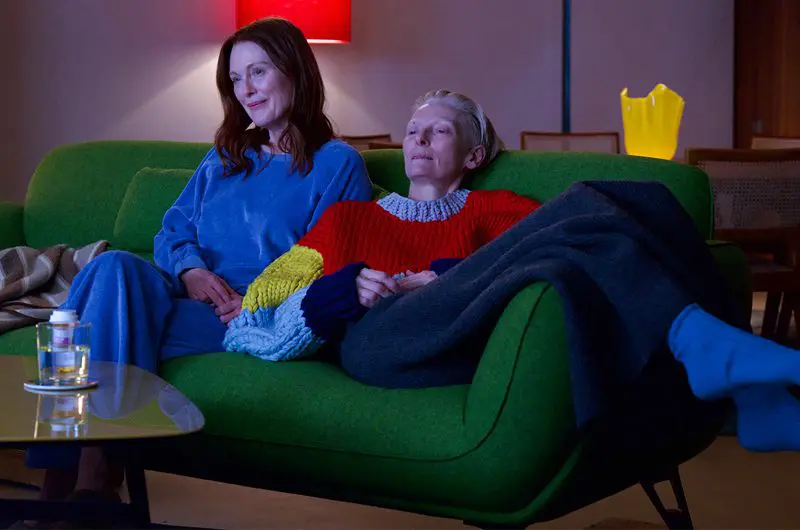
Across A Single Man, Only Lovers Left Alive, Ted, Mad Men, All of Us Strangers, Atonement, Betty Blue, North by Northwest, Breakfast at Tiffany’s, The Room Next Door, Domino and Ma, characters slump, stretch, sprawl, read, smoke, watch television, talk, drink and occasionally appropriate another piece of furniture entirely.
Yes, Holly Golightly’s famous half-bathtub sofa in Breakfast at Tiffany’s counts.
These scenes are interesting because the way a character occupies furniture tells us about them. Compare the composed elegance of A Single Man with the gloriously lived-in nocturnal world of Only Lovers Left Alive, or the immaculate visual control of North by Northwest with the domestic looseness of Ted.
Furniture becomes behavioural. The same sofa can look formal when nobody is sitting on it and completely different once somebody has kicked off their shoes, thrown themselves across three cushions and claimed the whole thing.
6. Stiff and proper sofas
At the other end of the sofa-sitting spectrum, some rooms seem designed to ensure that everybody behaves themselves.
Think Bridgerton, The Great, American Beauty, Pride & Prejudice, The Report, Babylon, The Crown, The Milk of Sorrow, The Gilded Age, Oppenheimer, Dangerous Liaisons and Hail, Caesar!
They span wildly different periods and styles, but share a sense of control, ceremony or constraint.
In Pride & Prejudice, Sarah Greenwood and Katie Spencer’s interiors place characters within a world where behaviour, class and social codes determine almost everything. The Gilded Age, Bridgerton and The Crown similarly use drawing rooms and formal seating arrangements as stages upon which manners, power and reputation are negotiated.
The tension can exist in contemporary spaces too. The Report is visually restrained rather than ornate, while the family sitting rigidly together in American Beauty turns an ordinary sofa into something closer to a psychological holding pen.
What matters here is the relationship between furniture and behaviour. These are rooms in which people appear conscious of where they sit, how they sit and who is watching.
Stay tuned for Part 2, where we head into retro interiors, contemporary design and some rather spectacular visions of the future.
Explore more furniture, lighting and décor from your favourite films and TV programmes in our Marketplace.
This feature is FREE to Classic members.
Join our newsletter community to receive Film and Furniture inspiration direct to your inbox and we’ll UPGRADE you to Classic Membership (which includes access to our exciting giveaway draws) for FREE.





 Facebook
 Twitter
 Instagram
 Pinterest
 RSS
RSS