• Features
    • All
    • F&F Features
    • Guest Features
    • Events/Exhibitions
    • Resources
  • Marketplace
    • Furniture & Homeware
    • Films & TV
    • Books & Mags
    • Recommended Retailers
    • The Shining request form
  • Films+TV
  • About
  • News+Members
    • News+Members
    • Sign In
  • PODCAST
  • Contact
Follow
Facebook logoFacebookTwitter logoTwitterInstagram logoInstagramPinterest logoPinterestRSS logoRSS

Amy Wells

Films / TV

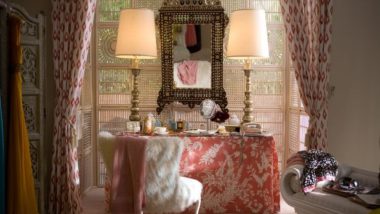
A Single Man

A Single Man

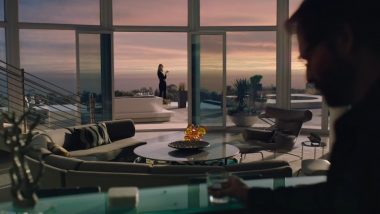
Big Little Lies

Big Little Lies

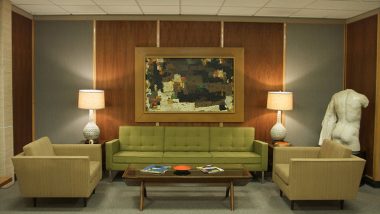
Mad Men

Mad Men

  • Features
    • All
    • F&F Features
    • Guest Features
    • Events/Exhibitions
    • Resources
  • Marketplace
    • Furniture & Homeware
    • Films & TV
    • Books & Mags
    • Recommended Retailers
    • The Shining request form
  • Films+TV
  • About
  • News+Members
    • News+Members
    • Sign In
  • PODCAST
  • Contact
Facebook logoFacebookTwitter logoTwitterInstagram logoInstagramPinterest logoPinterestRSS logoRSS
From Instagram
What’s the significance of the Carlo Bugatti chair What’s the significance of the Carlo Bugatti chair in Alien Covenant?

Alien: Covenant has enough aliens, spaceships and gore to keep most cinema-goers entertained, yet there’s a philosophical thread running through it: creativity.

The film opens with Weyland Corp’s synthetic David seated in a Carlo Bugatti Throne Chair beside an E1027 Side Table.

As he speaks to his creator Peter Weyland, he lists the objects in the room: the Bugatti chair, a Steinway piano, The Nativity, and David. Each a benchmark of artistic and design achievement.

The film closes with Das Rheingold, and in between, the aliens have… evolved.

So back to that chair.

Designed by Carlo Bugatti in 1905, the Throne Chair is deliberately unconventional. Walnut, copper, pewter, vellum. Influences drawn from Gothic, Japanese and Islamic traditions. It rejects standardisation and celebrates individuality at a time when industrial production was taking hold.

Bugatti pushed against uniformity. He created something entirely his own.

Placed in this pristine, futuristic setting, the chair becomes more than decoration. Its almost animal-like form mirrors David’s fascination with anatomy and experimentation, which unfolds as the story progresses.

Then there’s the pairing. The precision of Eileen Gray’s E1027 table, all tubular steel and glass, sits beside Bugatti’s expressive craftsmanship. Two opposing approaches, both intent on redefining design.

That contrast is the point.

This opening scene sets up a question that runs through the film: what does it mean to create? And what happens when the creation decides to go further than its maker?

And if, after all that, you need a cup of tea, take your cue from David, who serves it from a Rosenthal Form 2000 tea pot.

🪑🎬 Find furniture from film at FilmandFurniture.com (link in bio)
Read the Room: The Devil Wears Prada 2 (Part 2/2) Read the Room: The Devil Wears Prada 2 (Part 2/2)

If New York is pared back (see previous post), Milan is dialled up.

The Milan hotel suites
Set against the backdrop of Palazzo Parigi, the Milan scenes lean into grandeur. Marble, sweeping staircases, layered architectural detail. Though filmed at Winfield Hall in New York, the interiors are dressed to evoke Italian opulence at its most theatrical.

💖 And then the furniture and art that have honestly made our hearts sing!

🤩 Pieces by Misha Kahn appear throughout the suites. Sculptural furniture, objects that feel closer to art.
Organic forms. Unexpected materials. A deliberate clash with the classical envelope of the rooms.

This is where the film becomes most interesting. Old-world architecture meets contemporary collectible design. Stability against experimentation.

Lily’s loft
Back in New York, Lily’s apartment pushes further.
This is maximalism, but edited.
A deep red velvet Kevin Sofa grounds the living space. Substantial, low, and unapologetically present. Opposite, a Tavamo side table sits on a black pedestal base, graphic and precise.

Lighting becomes sculptural. The Meltdown floor lamp by Johan Lindstén, with its blown-glass spheres, reads as both object and atmosphere.

And then the artworks. More pieces by Misha Kahn, including a hand-woven mohair tapestry which is so gorgeous it stopped us in our tracks, and a dark blue lamp sculpture placed near the stair. They define the room and we're seriously in love.
The overall effect is layered, expressive, and confident. A space that reflects someone who has found her footing and chosen to show it.

The first film gave us aspiration through familiarity.
This one deals in curation. In contrast. In knowing exactly what to place, and what to leave out.

🛍️ Discover the exact furniture and decor pieces in our marketplace at FilmandFurniture.com (Link in Bio)

D: David Frankel
PD: Jess Gonchor
SD: Stephanie Q. Bowen

#filmandfurniture #DavidFrankel #MerylStreep #AnneHathaway #EmilyBlunt #ProductionDesign #SetDecoration #film #cinema #furniture #interiordesign
🇫🇷 Richard Linklater’s Nouvelle Vague recreates th 🇫🇷 Richard Linklater’s Nouvelle Vague recreates the 1959-1960 era of the French New Wave, focusing on the production of Jean-Luc Godard’s Breathless (À bout de souffle) with a fascinating level of interior detail. 

The sets blend a 1960s "mod" sensibility with a casual, bohemian French lifestyle, featuring a minimalist aesthetic with bold, artistic accents.

The reconstructed hotel room is a tiny, intimate room where characters Patricia and Michel share key moments - it was painstakingly reconstructed on a soundstage, featuring authentic period items like a vintage radio, mirror, and posters.

Cafés such as La Rotonde and Le Select bring it back to ground level. Tiled floors, zinc bars, marble tables worn by use.

The Cahiers du Cinéma office features elegant wallpaper and high ceilings, then collapses into desks crowded with paper and thought. 

Shot in black and white, every surface is judged by tone and texture. 

Production designer Katia Wyszkop builds a 1959 Paris that is deliberately imperfect. And in real life, interiors are shifting this way again. Away from polished, one-note spaces and towards something more lived-in. Smaller rooms and objects with purpose. 

Nouvelle Vague understands well that rooms are very much part of the story.

📧 👉🏼 Sign up to our newsletter to receive interiors inspiration from film direct to your inbox (Link in bio)
Read the Room: The Devil Wears Prada 2 (Part 1/2) Read the Room: The Devil Wears Prada 2 (Part 1/2)

Power has a new aesthetic. Runway Magazine has returned, and its interiors have evolved as sharply as the fashion it dictates. Where the original film gave us polished gloss, the sequel moves into something more deliberate. 

Miranda's office (pic 1/2)
In 2006, her office was all contrast. Black, white, hard edges. Intimidation by design. Now, the palette shifts to warm creams and pale woods. A light timber-topped table with a soft, more architectural presence.

A curved white sofa anchors the room, paired with symmetrical sculptural lamps that nod towards 1930s French interiors.
Miranda’s bar cart returns. So does the antique octagonal mirror. 

Andy’s office (pic 3)
Andy’s space reintroduces warmth. A caramel-toned sofa sits against the window, softened with patterned cushions. Light wood joinery wraps the desk and shelving, layered with books, framed photography, and personal objects.
The furniture suggests decisions made over time, rather than assembled in a rush.

Even the desk arrangement reflects this. Not a barrier, but a working surface integrated into the room. A place to sit with, not across from.

The Runway office (pics 4/5)
Open-plan. Expansive. Rows of workstations. White desks, integrated screens. White Eames Aluminium Group-style task chairs appear across the floor.

The dressing room (pics 6/7)
The closet sequences move into a different register with high-gloss cabinetry, floral wallpaper, mirrored compartments. A central island lined with drawers, every item visible and within reach. The scale has increased, but so has the precision. Costume designer Molly Rogers and production designer Jess Gonchor reshape the room to reflect a new fashion economy. Less magazine archive, more content machine.

Don’t just watch the characters. Read the room.

🛍️ Find furniture and decor from the film for your own home in our Marketplace via the link in bio
Follow along for Part 2

D: David Frankel
PD: Jess Gonchor (@jgonchor)
SD: Stephanie Q. Bowen (@sqbsetdecoration)

#filmandfurniture #DavidFrankel #MerylStreep #AnneHathaway #EmilyBlunt #ProductionDesign #SetDecoration #film #interiordesign
Designers in Film No. 6, Part 2/2: Ludwig Mies van Designers in Film No. 6, Part 2/2: Ludwig Mies van der Rohe

“God is in the details.”

Continuing our look at Mies on screen.

The Barcelona Chair and Ottoman (1929), Barcelona Day Bed (1930) and MR Chaise Lounge, all appear in Batman v Superman: Dawn of Justice and Justice League (pic 1). Bruce Wayne’s modernist lakeside house draws on the language of Farnsworth House, so it’s no surprise these pieces sit comfortably within it.

The Brno Chair (1930). Lean, precise, uncompromising. Also seen in Batman v Superman: Dawn of Justice (pic 2+3), as well as Suits (pic 4)

The Barcelona / Tugendhat Coffee Table (1930). Glass and polished steel, reduced to a single gesture. Appears in Casino Royale (pic 5).

The Tugendhat Chair (1930). Leather, steel, refined cantilever. Seen in The Affair, filmed in the Villa Tugendhat itself (pic 5).

Pic 8 is F&F's Founder and Editor Paula Benson in the @knoll_uk showroom in London (photo: @clairenathanphoto)

👀 Where have you spotted Mies van der Rohe designs on screen?

🛍️ Find these pieces and more at FilmandFurniture.com (link in bio). We do the sourcing so you don’t have to.

#filmandfurniture #MiesVanDerRohe #ProductionDesign #SetDec #film #interiordesign #furnituredesign
Designers in Film No. 6, Part 1/2: Ludwig Mies van Designers in Film No. 6, Part 1/2: Ludwig Mies van der Rohe

“God is in the details.”

And in film, it’s those details that make a world believable.

Mies van der Rohe reduced design to its essence. On screen, that signals control, wealth, and a certain intellectual rigour.

The MR Collection (late 1920s). Early explorations in tubular steel. The MR cantilever chair appears in the Prometheus short film DAVID, where two identical androids play chess (pic 1). Also seen in Widows and Weekend at Bernie’s (pic 2).

The MR Chaise Lounge. A study in line and balance. Appears in The Affair (pic 3), Crazy, Stupid, Love and Widows (pic 4).

The Barcelona Chair and Ottoman (1929). Leather, chrome, perfect proportion. Seen in Bugonia (pic 5), Widows, Apartment 7A (pic 6) and American Psycho (pic 7). It tells you everything about the person who owns it.

The Barcelona Day Bed (1930). Low, linear, supremely controlled. Appears in Companion (pic 8).

Mies designed with discipline. Objects that define a space without raising their voice. That instinct continues to shape how characters are framed on screen.

👀 Where have you spotted Mies van der Rohe designs on screen?

🛍️ Find these pieces and more at FilmandFurniture.com (link in bio). We do the sourcing so you don’t have to.

#filmandfurniture #MiesVanDerRohe #ProductionDesign #SetDec #film #interiordesign #furnituredesign
Join In

Disclosure: We may receive a small % commission if you click a link and purchase a product or service via this website.
We tell you this in the spirit of openness and please rest assured that all our recommendations are vetted and genuine.

ALL WRITTEN CONTENT © FILM AND FURNITURE.
All rights reserved. Content cannot be reproduced, distributed, transmitted, displayed or published without consent.
All original images: copyrighted to the original image maker and/or film company and are published under Fair Dealing.

Film and Furniture logos © Film and Furniture

Terms & Conditions Returns & Refunds Privacy Policy & Cookies Sign In
ADVERTISING & PARTNERSHIPS GUEST POSTS
Site design: Form®
We use cookies to ensure that we give you the best experience on our website. Learn more. View our privacy policy. Got it