


Severance Part 2: The Outie World — Homes, Havens and the Architecture of Identity
In Part One of our Severance investigation we explored Lumon’s innie world – a maze of white corridors, green carpet and corporate control. Here, Part Two takes us outside to the outie world, where we discover homes filled with warmth, eccentricity, wealth and myth. These spaces stand in sharp contrast to the innie experience: where Lumon reduces design to instruments of compliance, the outie world reveals furniture and architecture as expressions of personality, ideology and family history.
Production Designer Jeremy Hindle and set decorators Andrew Baseman (Season 1) and David Schlesinger (Season 2) have been recognised for their design achievements at the 2025 Creative Arts Emmy Awards, as well as by the Art Directors Guild and the Set Decorators Society of America. Their work is instantly recognisable yet deeply strange: meticulously designed sets that turn architecture and décor into narrative tools.
Fresh from its Emmy win, we’re bringing you a special two-part Film and Furniture exploration into Severance’s design story. Read Severance Part 1: The Innie World and dive into Part 2 below (click on the product names to discover more about each item).
Don’t miss our Video Podcast, where we share our insightful behind-the-scenes conversation with set decorator David Schlesinger. Subscribe now.
We’re proud to partner with Holloways of Ludlow to bring you this feature. With showrooms in London, Kent, Bath and Winchester — plus an exceptional online offering of design-focused furniture and lighting — they provide expert advice and support to both residential and contract clients. Representing over 400 international designers and high-end brands, Holloways of Ludlow share our belief that good design should be beautiful, functional and long-lasting.

Devon and Ricken’s Mid-Century Haven

By stark contrast to Lumon Industries, Devon (Mark’s sister) and Ricken (her husband) live in a warm, mid-century home nestled on a wooded hillside near Kier. The real-world location is the Bier House in Usonia, New York, designed by Kaneji Domoto, a disciple of Frank Lloyd Wright. Built between 1948–56, it embodies the Usonian ideals of horizontal lines, natural materials and harmony with the landscape.

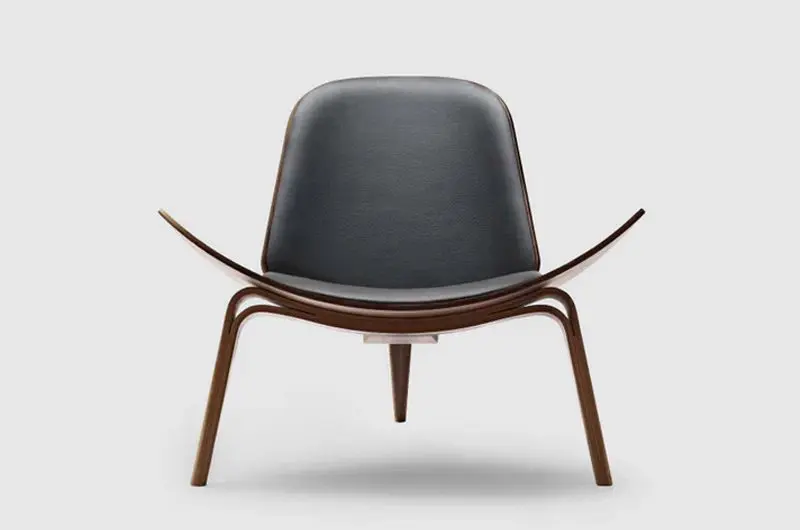
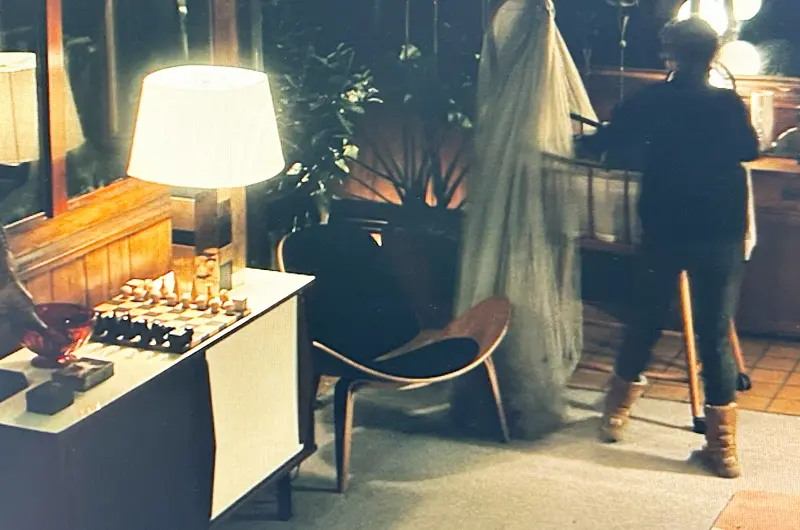
Inside, timber panelling in tones of brown sets the palette for a collection of mid-century treasures. Furniture includes Hans Wegner’s CH07 Shell Chair (1963), Charlotte Perriand’s Consado Console (1958), and a Man Ray Chess Set from the 1920s.
Ricken’s intellectual eccentricity is reflected in Ashley Hicks’ Tabletop Totems, Jens Quistgaard’s Dansk grinders in the kitchen, and mobiles by Ekko Workshop.
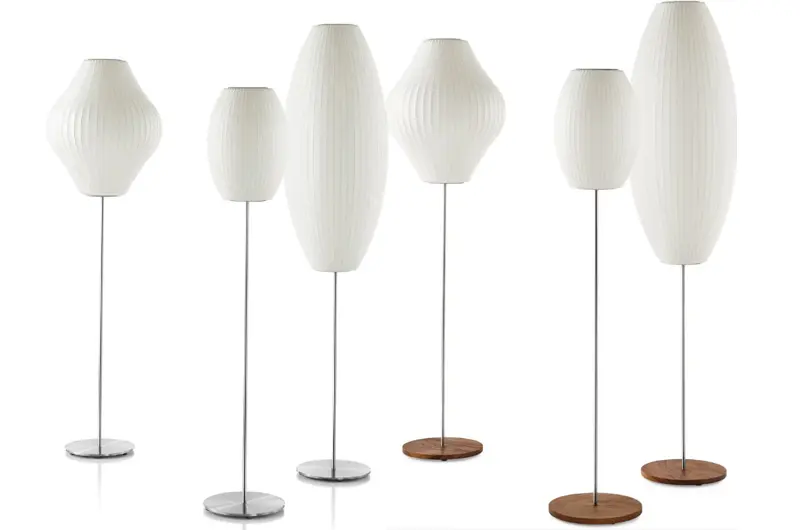
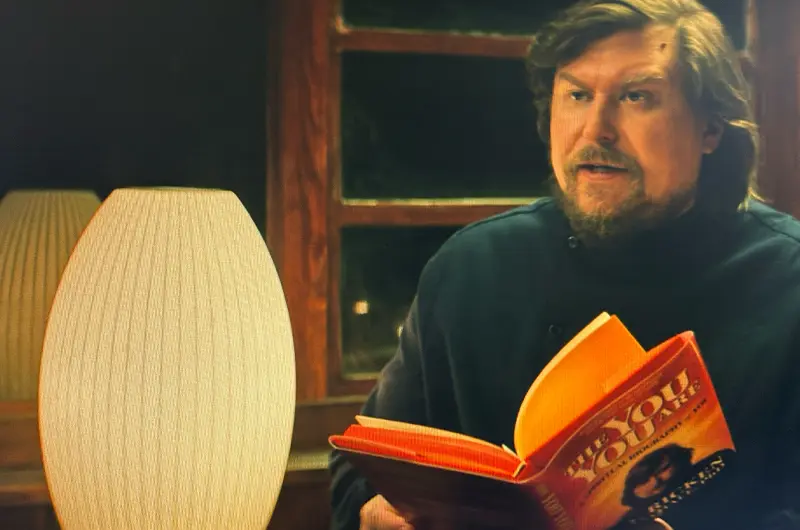
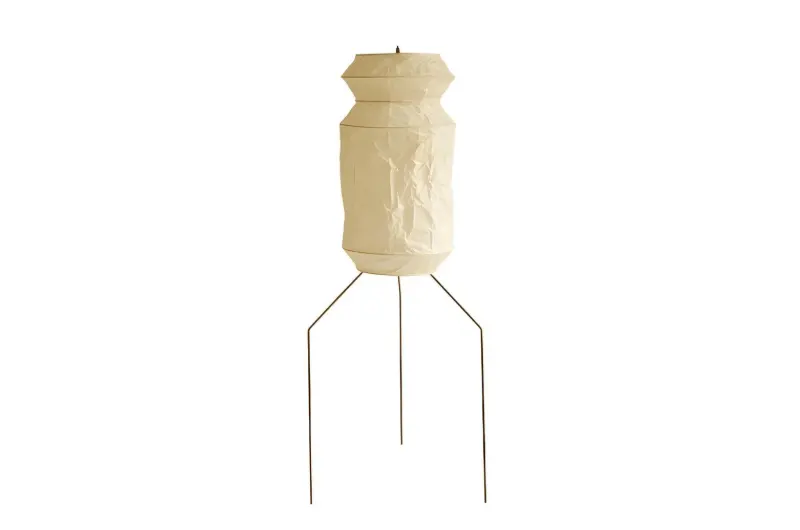
Lighting defines the mood: George Nelson’s Cigar Lotus Floor Lamp (1952), Noguchi’s Akari lamps (including mod.22N, 1980, and UF3-L6, 1951), a pair of Mushroom-shaped globe lamps, a Murano glass lamp by Gino Vistosi (1970s), Arthur Jacobs’ chain light for Modeline (1974) and Poul Henningsen’s PH Table Lamp (1925).

Together, they create an eclectic and human environment — a warm palette that directly opposes Lumon’s greens and blues.
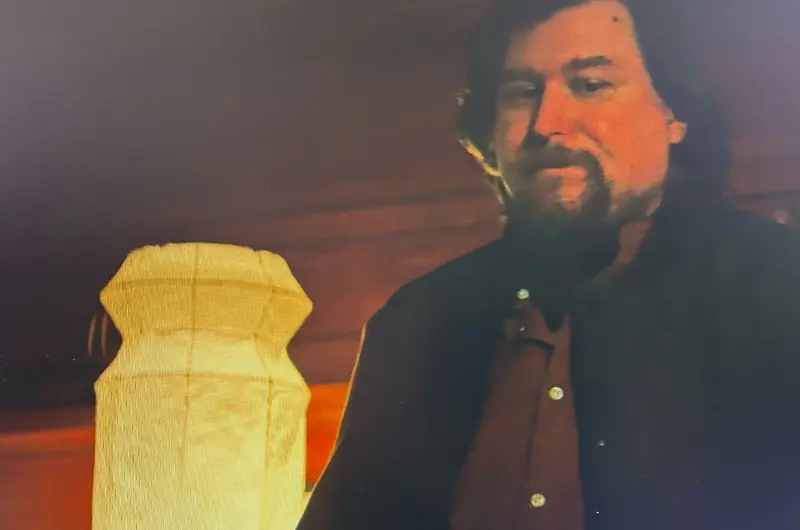
One early episode, “Good News About Hell,” uses the house to great effect: Ricken hosts a “dinnerless dinner party” where Severance itself becomes the subject of parody and critique. Later, Mark sleeps in a race-car bed in the future nursery, where three different-sized beds line up in a philosophical experiment about childhood development.
The Eagan Family Mansion

If Devon and Ricken’s home represents warmth, the Eagan mansion embodies cold power. Introduced in Season 2, Episode 9 (The After Hours), it was filmed at The Taghkanic House (1999), designed by architect Thomas Phifer. Its long, linear forms and expansive glazing exude wealth and control.
Inside, Set Decorator David Schlesinger curated pieces that feel pristine, symbolic and suffocating: a John Pomp Studios Rift Table and Chair of thick hand-blown glass (like frozen water), Christophe Côme’s Tall Triscota Cabinet (2014), Sunshine Thacker’s Gammagroove Chair (2022, inspired by Kubrick’s 2001: A Space Odyssey), Maarten Vrolijk’s Ceramic Blooming Terra Lamps (2023), Erin Sullivan’s Bubble Side Table (2015), and Studio Anansi’s Trigono Console Table (2023).
The décor extends beyond furniture. Tjitske Strom’s Handtufted Tapestry, ‘Zebra & Ostrich’ (2022) hangs alongside Christophe Côme’s Triscota Floor Lamp (2003), adding layers of texture and meaning.

Even the tableware literalises Lumon’s ideology. An AB Daniel and Son porcelain plate (1860), depicting figures restraining one another, ties chillingly to the time of Lumon’s fictional founding date. “We found a plate dated from the time that Lumon lore begins,” recalls Schlesinger. “The director insisted we make it work with just one original.” Paired with Reed & Barton silver and a Tala egg wedger, every object reinforces hierarchy and control.
-


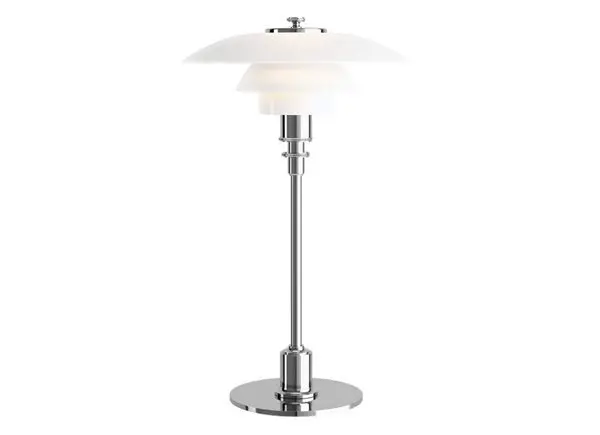
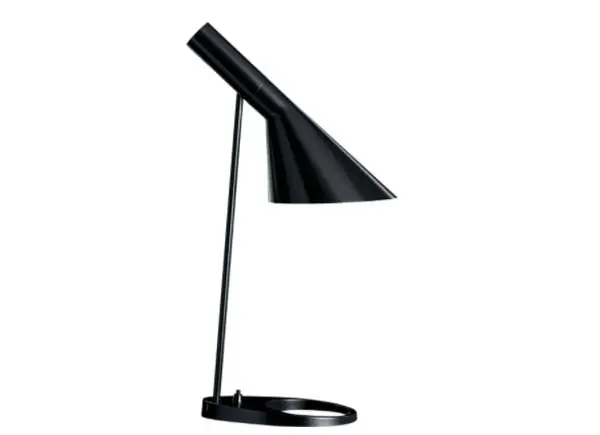
PH table lamp by Poul Henningsen (new)
Designer: Poul Henningsen
Louis Poulsen
Director: Marc Forster
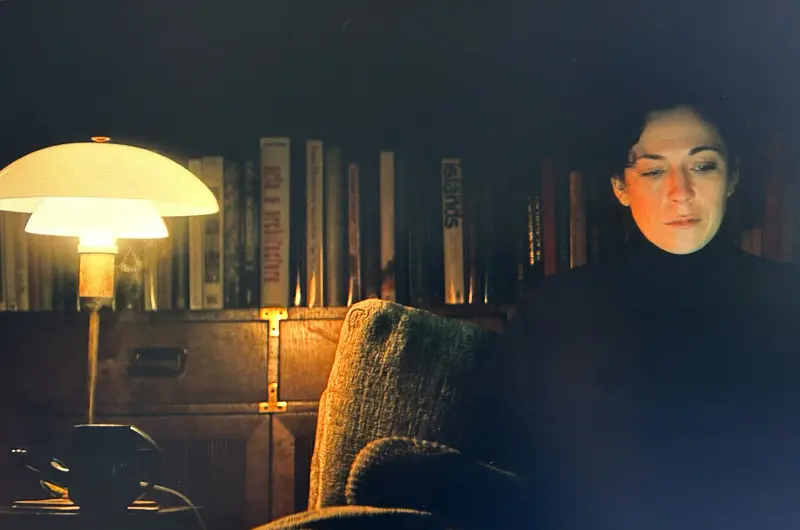
Shop NowWe spotted the PH table lamp by Poul Henningsen in M’s office in the Bond film Quantum of Solace, in the Prime Minster’s office in Borgen, at Captain Pike’s bedside (with brass base) in Star Trek: Strange New Worlds and in Devon and Ricken’s Mid-Century Haven of a house in Severance.
Mark and Gemma’s House
Mark and Gemma’s house, glimpsed through flashbacks reflects, something more fragile: A life interrupted.
Schlesinger explained how grief shaped the interiors: “We wanted it to feel like time had stopped — piles left undone, books abandoned mid-shelf, objects with no resolution.” The effect is subtle but powerful: a home once full of life, now subdued and disordered.

The Christmas tree is a masterstroke of narrative design. In the innie world of Lumon’s Testing Floor Christmas Room, the ornaments and tinsel were 3D-printed in Lumon’s palette of greens; here, the tree reappears alive, lit with glass ornaments in warm tones. “We wanted the sense that Lumon has been watching these people all along — their Christmas tree is literally a copy,” Schlesinger notes. The uncanny duplication underscores the show’s central message: Lumon is everywhere.
Even the bookshelves tell a story. The team sourced entire libraries from retiring Russian literature professors, a nod to Gemma’s academic life before Lumon. “You may only glimpse a title,” Schlesinger adds, “but the actors feel the truth of the room.”
This is design as emotion: The architecture of grief, intimacy, and surveillance all at once.
The Birthing Cabin

The Birthing Cabin is folkloric and unsettling. Cushman furniture by Herman DeVries, a pair of Carlo Scarpa chandeliers, and andirons shaped as a pregnant Kier and wife merge domestic ritual with corporate mythology. Writer Dan Erickson suggested the sculptural twist: “Kier himself should be pregnant — pregnant with industry.” Schlesinger admits: “One of my favourite things we did.”
It is Lumon’s ideology reframed as folk art — strange, surreal, and unforgettable.
Design as Memory and Myth
If Part One revealed design as oppression — Lumon’s cold corridors, resin tables, and sinister wellness chairs — then Part Two shows us the other side of the coin. In the outie world, furniture and architecture are filled with warmth, eccentricity and history. Devon and Ricken’s eclectic Usonian haven, the Eagans’ icy mansion, Mark and Gemma’s fragile home, and the folkloric Birthing Cabin each reveal what Lumon suppresses — and what still leaks out into the wider world.
Together, the innie and outie worlds demonstrate Severance’s design genius. Context is everything: Charlotte Perriand’s Console in Devon and Ricken’s midcentury home radiates warmth and individuality, while the simple glass ornaments on Mark and Gemma’s Christmas tree carry the weight of memory.
The design legacy of Severance is palpable — spilling into merchandise, auctions, and even real-world installations like Apple TV’s Lumon Glass Box at Grand Central Station. What began as sets on a soundstage now echoes through culture, proving how deeply design can shape the stories we tell and the worlds we build.
With thanks to our partners at Holloways of Ludlow, who share our belief that good design is both functional and beautiful — and always worth talking about.
This feature is FREE to Classic members.
Join our newsletter community to receive Film and Furniture inspiration direct to your inbox and we’ll UPGRADE you to Classic Membership (which includes access to our exciting giveaway draws) for FREE.
To access in-depth features, video interviews, invitations to pre-release film screenings, major exhibitions and more, become a Front Row or Backstage member today!





 Facebook
 Twitter
 Instagram
 Pinterest
 RSS
RSS