


10 film apartments to fall in love with, and where to find the furniture and décor for your own home
The design of an apartment speaks volumes. And apartments in film are particularly revealing. Unlike sprawling houses, they are contained, personal spaces where every chair, lamp, picture and rug can help us gain insight into the character who lives there. Why do they live here? What do they do for a living? What does their choice of furniture and decor suggest about their taste, status, intellect, psychology, artistic ambition? Should we judge a person who owns a beautiful chair but never sits in it?
Some of cinema’s most memorable apartments can also be inspirational for our own home décor. Others are cramped, chaotic or act more like a pressure cooker. The best do far more than simply look good.
With several recent films giving the screen apartment particularly good billing, we’ve taken a tour through some current favourites and enduring classics, from a beautifully layered Boston home and a San Francisco apartment where the rugs become part of the conversation, to mid-century Manhattan fantasy, Berlin brutalism and Almodóvar’s glorious Madrid colour.
And because admiring the furniture is only half the fun, we’ve also picked out some of the designs, lighting and ideas that can make the journey from screen to your own home, including pieces available from our friends at Holloways of Ludlow.
1. The Drama: Boston
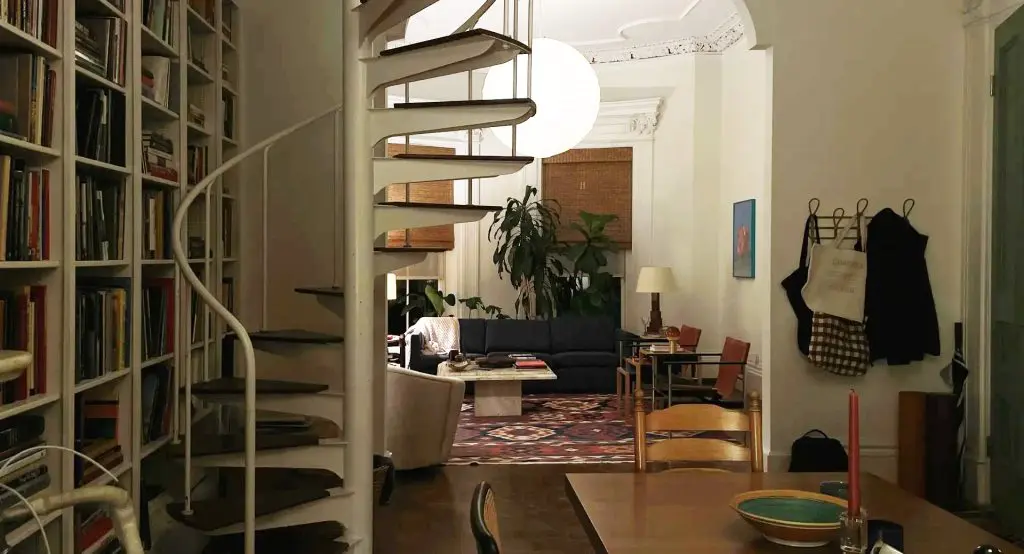
If your respective day jobs are literary editor and museum curator, your apartment needs to withstand a certain amount of scrutiny.
In Kristoffer Borgli’s The Drama, Charlie (Robert Pattinson) and Emma (Zendaya) live in a late-19th-century Boston apartment with high ceilings, generous windows, an open layout and spiral staircase. Crucially, this is a real home rather than a studio construction. Production designer Zosia Mackenzie and her team removed the occupants’ possessions and dressed the apartment from scratch, sourcing furniture from flea markets, local shops and Facebook Marketplace. The intention, Mackenzie says, was to make it feel “curated and precise”, while convincing us that this couple genuinely lives there.
It works. Mid-century furniture rubs shoulders with rustic vintage finds, contemporary art and shelves laden with books that were individually selected for the characters. A blue tweed Knoll sofa provides one of the anchors, while the dining area is a particularly good lesson in resisting the matching set.
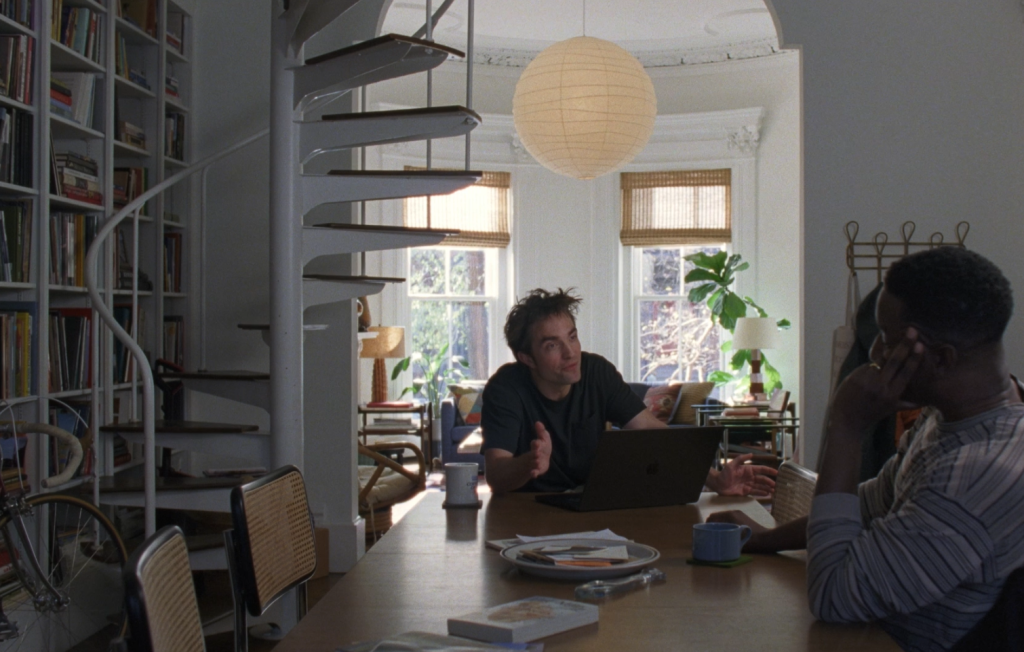
At its centre is Matthew Hilton’s Cross Extending Dining Table (where Charlie writes his wedding speech), surrounded by vintage ladder-back woven rush chairs alongside Cesca chairs by Marcel Breuer. The mixture shouldn’t necessarily work on paper, but that’s the point. These look like pieces look collected by two people with a shared interest in design rather than ordered during one frantic Saturday afternoon.
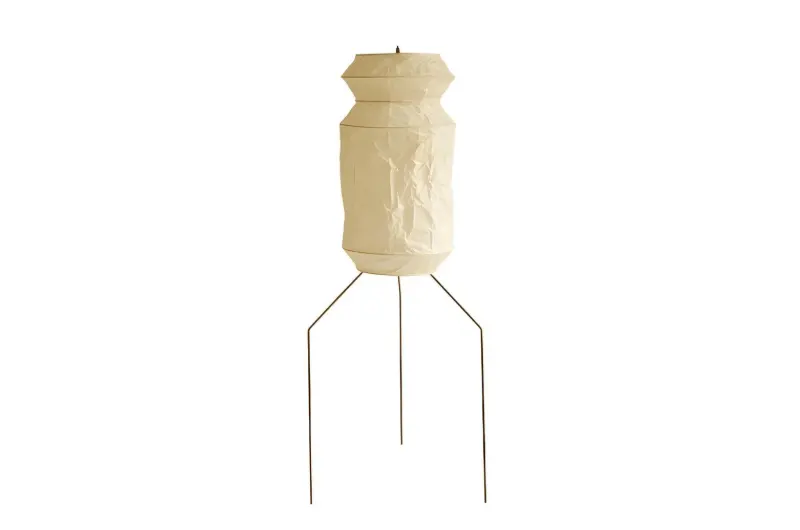
The lighting is even better. Two large Akari pendants by Isamu Noguchi span the living and dining spaces.
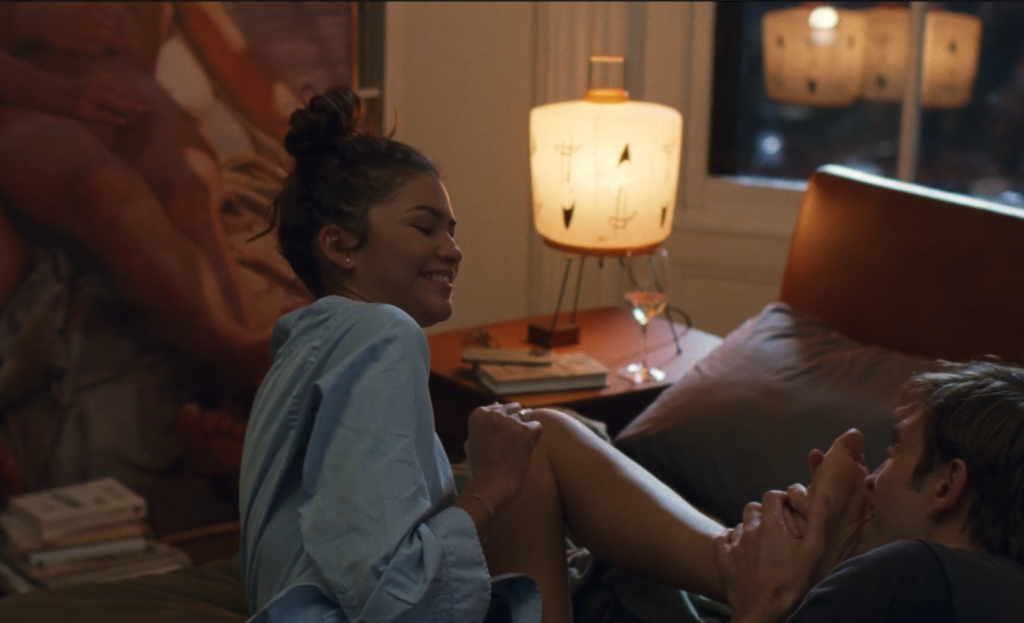
In the living area we spotted the graduated glass of the Marset Dipping Light and Achille and Pier Giacomo Castiglioni’s wonderfully characterful Snoopy Table Lamp for Flos.
Emma’s bedside table has HAY’s pleated Matin Table Lamp, while Charlie gets Noguchi’s Akari 2A.
Art is just as important. Sara Cwynar’s saturated Peony II, Erik Saether’s Photocell and Tristan Unrau’s rather more uneasy Shambolic Figure belong convincingly to Charlie’s world, while books tell us plenty about Emma’s.
As the relationship begins to unravel, the generous dimensions that initially make the apartment so appealing become useful dramatically too. Mackenzie has described how its depth and long sightlines make the space feel almost cavernous during the couple’s most difficult moments.
2. The Invite: San Francisco
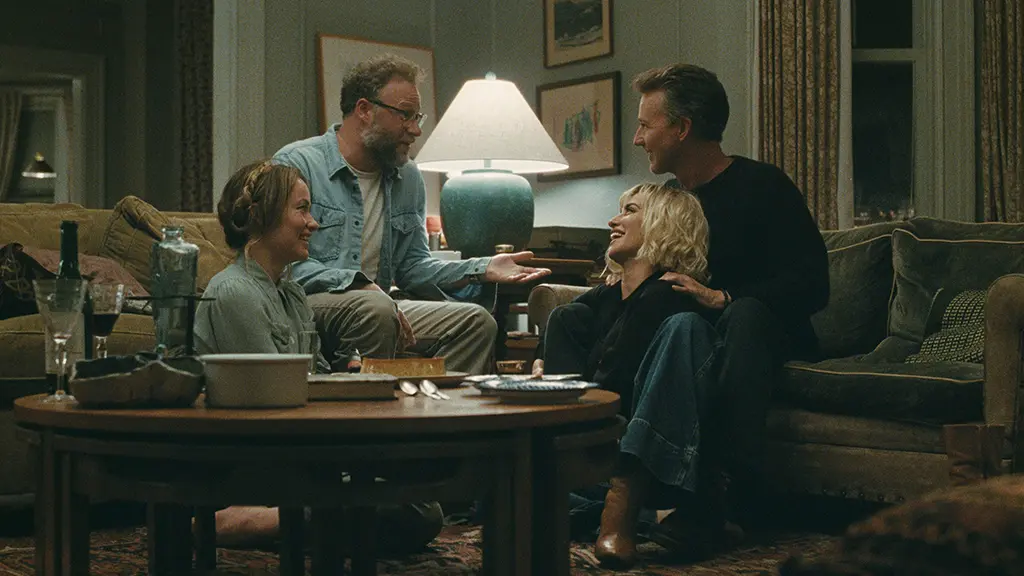
When a film opens with someone rolling out a new rug in their apartment, you know you’re in Film and Furniture territory.
Olivia Wilde’s The Invite understands that our homes reveal exactly who we are. Before the evening’s dinner party has even begun, Angela (Wilde) is bringing home willow branches for the décor. There are conversations about paint swatches and rugs, and about renovating a bathroom so that it doesn’t look renovated. Anyone who has ever spent an absurd amount of time deciding between two almost indistinguishable shades of blue-grey may feel seen.
Production designer Jade Healy created Angela and Joe’s San Francisco home on a soundstage, basing its architecture on the city’s pre-war apartments. She filled it with antiques, flea-market and Facebook Marketplace finds, building a home that feels stylish but attainable rather than decorator-perfect. Mirrors, winding sightlines and the slightly labyrinthine plan help the apartment become progressively more claustrophobic as the evening deteriorates.
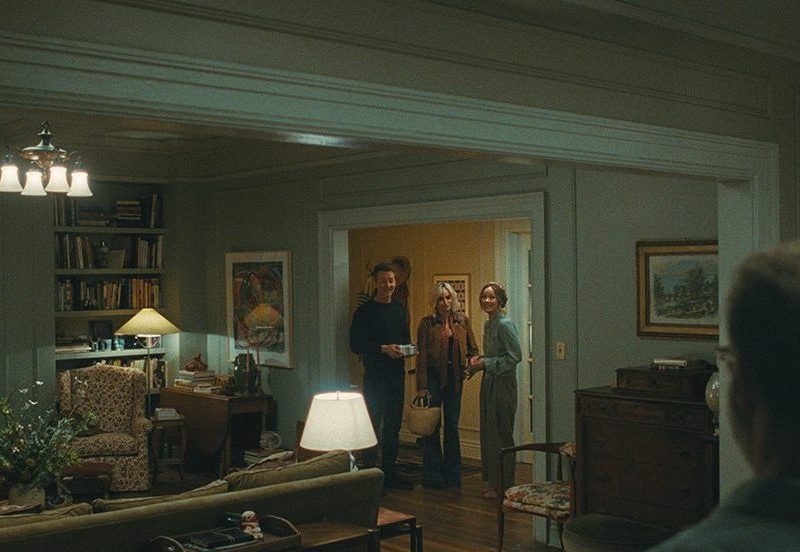
Bluish greens move through the rooms, including Farrow & Ball’s Blue Gray, Vale Mist and Oval Room Blue, while white cased openings frame views from one space into another. Artwork feels inherited rather than selected to fill an empty wall; books line Joe’s particularly inviting study (cue Sade); tactile rugs soften the rooms; and teal ceramic table lamps with crisp white shades appear repeatedly.
Above the dining table is a sculptural pendant light which holds court, while mirrors repeatedly catch and divide the characters as their relationships shift.
Angela’s decorating is revealing because she is continually working on the apartment, attempting to perfect the surroundings while her marriage is developing rather more substantial cracks.
And then comes the line we can all get behind:
“I want all the rugs”. Us too.
3. Park Avenue: New York
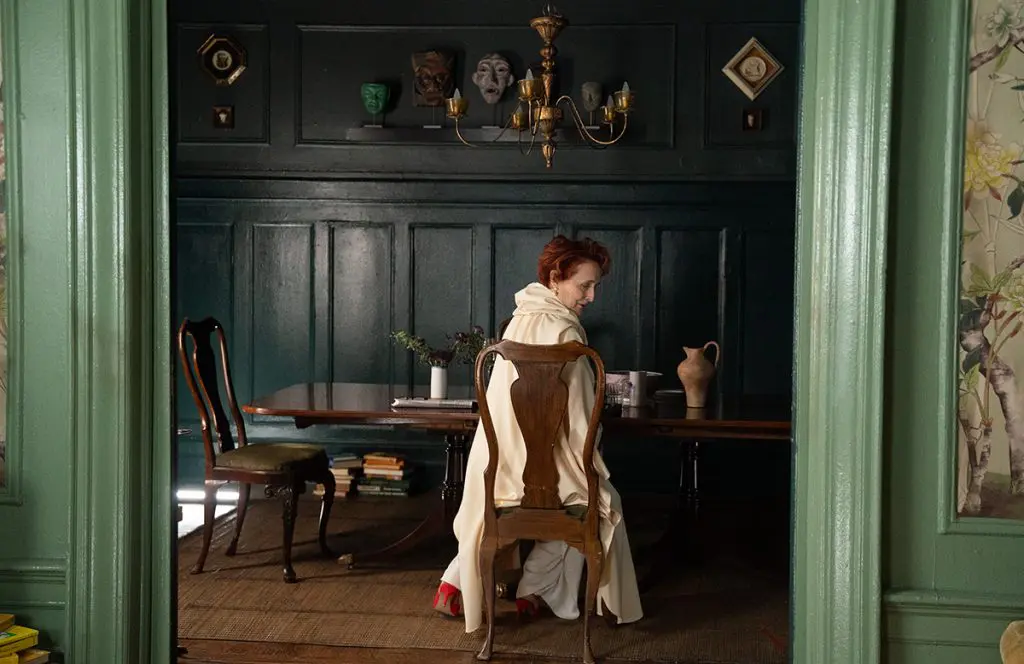
If The Invite shows us a home being continually perfected, Park Avenue gives us one that has been steadily curated over a lifetime.
Writer-director Gaby Dellal is also an interior designer, and that dual perspective is evident throughout the New York apartment occupied by Kit (Fiona Shaw). Dellal told Film and Furniture that she and production designer Katie Fleming worked with a tiny budget, using objects they both owned. Rugs, ceramics and even the distressed pink silk headboard in Kit’s bedroom came from Dellal’s own home.
The result is a wonderfully convincing Upper East Side apartment that feels tactile and slightly unruly.
Dark, inky walls layered with years of paint meet worn timber floors and apricot sheers. Antique cabinets jostle with mid-century chairs and lamps, rugs overlap, books stack up and art is everywhere. Dellal describes starting with colour, using the dark walls partly to make Shaw’s red hair and satin pyjamas sing against them. A useful reminder that wall colour can flatter the people in a room as effectively as the things in it.
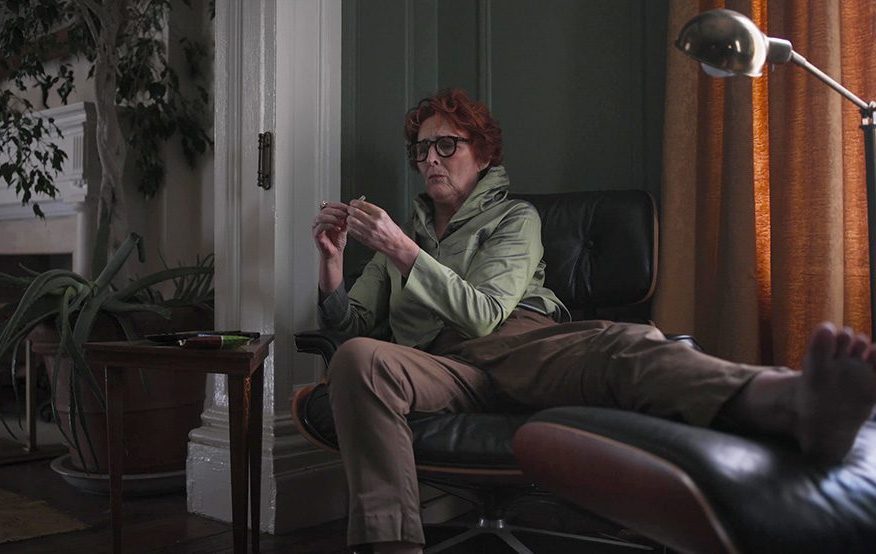
In the living room an Eames Lounge Chair and Ottoman sits beside the grand piano. The hallway includes a vintage Stilnovo wall sconce, while the dining area uses Farrow & Ball’s deep Hague Blue as a backdrop to Chinese masks, an antique brass chandelier and a long mahogany table.
Here objects function almost as a record of a family life. Paintbrushes, mugs, rings and cardigans recur between mother and daughter. Nothing needs to shout its provenance because the apartment’s appeal comes from the sense that its contents have been collected, borrowed and kept.
4. The Fantastic Four: First Steps – New York, but not as we know it
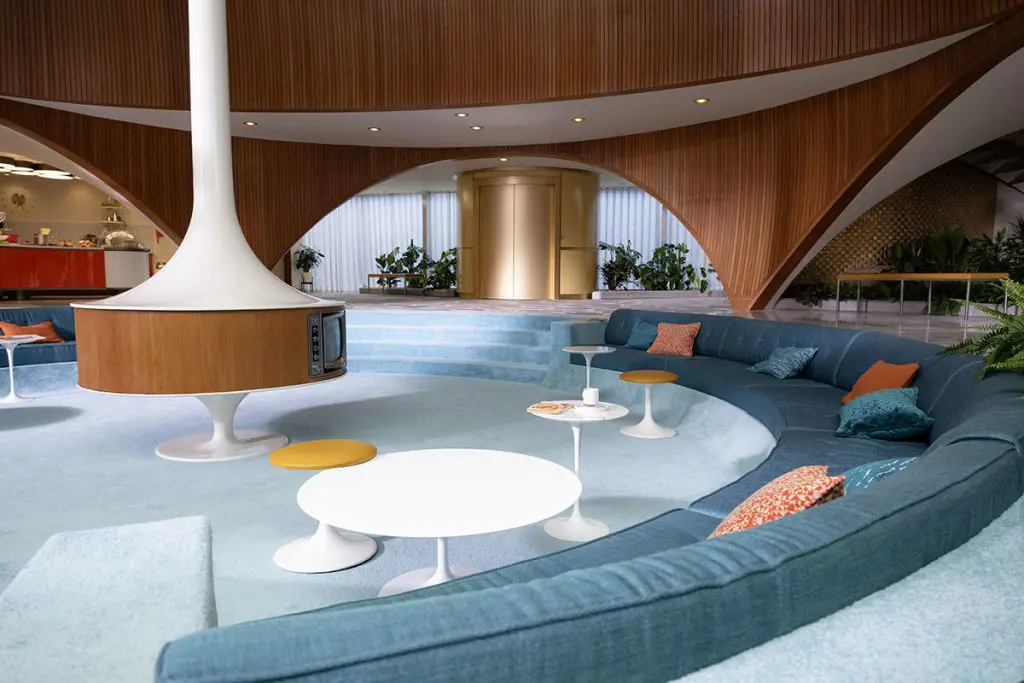
At the opposite end of the New York apartment spectrum is the Baxter Building penthouse in The Fantastic Four: First Steps.
Production designer Kasra Farahani asked how a warm West Coast mid-century modern house might exist within a Manhattan skyscraper. His answer was effectively to build a wooden cocoon inside the glass penthouse, with warm panelling, flagstone floors, sweeping curves, indoor planting and a sunken conversation pit wrapped around a sculptural fireplace.
The film exists in an alternate 1960s where Reed Richards has altered the trajectory of design and technology, allowing Farahani to draw on Oscar Niemeyer, Eero Saarinen, Verner Panton and the optimism of mid-century futurism. Marvel’s own account of the design describes the concept as a “cabin within a penthouse”, deliberately countering the potential sterility of a glass Manhattan tower with timber, brass and natural materials.
The furniture is a modern-design spotter’s delight.
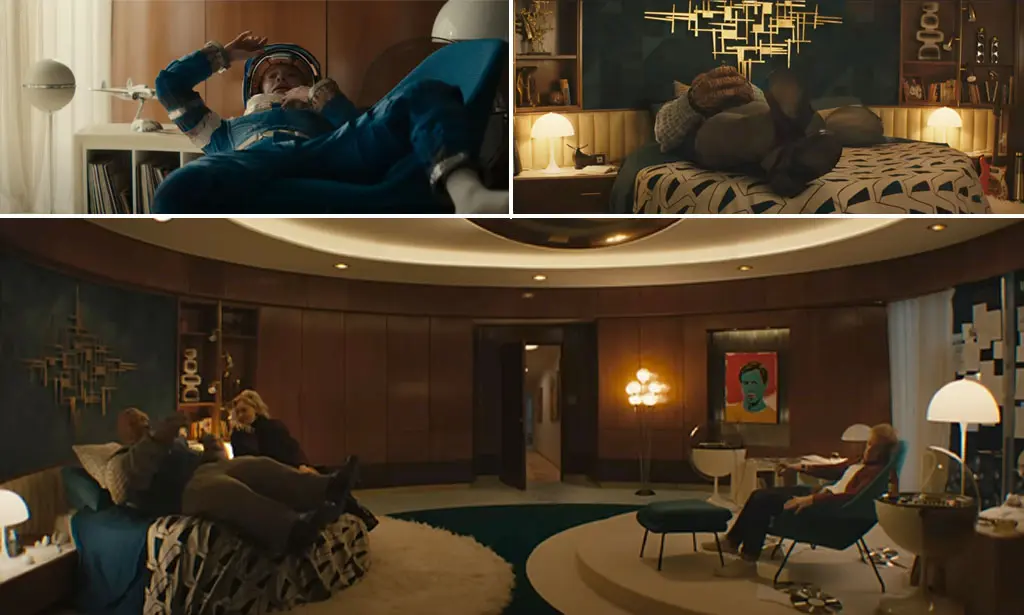
Eero Saarinen Tulip Chairs and Tulip Tables populate the dining and living areas. Johnny’s bedroom contains a blue Saarinen Womb Chair alongside Audiorama 8000 speakers and a custom round bed. Warren Platner chairs appear on the balcony, while a Panthella table lamp and Panthella floor lamp by Verner Panton provide appropriately space-age pools of light.
Even the Calder-inspired mobiles do double duty as sculpture and functioning lighting.
For your own home, you may struggle to find a Fantasticar in your local car showroom, but Saarinen, Platner and Panton offer a rather more practical route into this optimistic version of the future – all available in the UK from Holloways of Ludlow.
5. After the Hunt: New Haven with a Manhattan state of mind

Photo Credit: Yannis Drakoulidis
© 2025 Amazon Content Services LLC. All Rights Reserved.
Luca Guadagnino has form when it comes to interiors that tell tales, and Alma and Frederik’s apartment in After the Hunt is particularly eloquent.
Although the story takes place around Yale and New Haven, production designer Stefano Baisi conceived their home around the “Classic Seven” apartments associated with grand Upper West Side buildings. The geography is Connecticut; the cultural language is unmistakably Manhattan.
Baisi imagined three generations embedded within its rooms. European émigré grandparents brought Wiener Werkstätte and Bauhaus influences; Frederik’s parents contributed a warmer Kennedy-era layer; Alma and Frederik added reupholstered furniture, travel finds and art.
Consequently, there is an enormous amount to look at.
A green Verner Panton Flowerpot lamp sits against deep orange-tobacco velvet sofas. An additional sitting area contains sofas upholstered in Morris & Co’s Bluebell Embroidery fabric. A Josef Hoffmann table anchors the dining room, while Frederik’s study includes an Eileen Gray E1027 side table, a striped sofa from Guadagnino’s own collection and Josef Albers paintings. Elsewhere we find a Cesca chair, Dieter Rams’ 606 shelving system and pieces by Gio Ponti and Piero Portaluppi.

Photo Credit: Yannis Drakoulidis
© 2025 Amazon Content Services LLC. All Rights Reserved.
Then there is Alma’s second apartment in the Wharf district. Bare, functional and almost entirely stripped of the cultural signalling of her main home, Baisi conceived it “by subtraction”. It gives us another version of Alma, a private mental space removed from the identity performed elsewhere.
Few films make the difference between having taste and displaying taste quite so interesting.
Elsewhere in New York
Cinema could furnish an entire apartment block with memorable New York interiors from film (wait, there’s an idea).
In Maestro, Leonard Bernstein’s world gave us another sophisticated, culturally saturated version of the city, which we explored with production designer Kevin Thompson in our Film and Furniture interview: Delve into the film sets and interior design of Maestro.
Then there is Billy Wilder’s The Apartment, where C.C. Baxter’s modest Upper West Side flat offers a welcome antidote to all this polished good taste: a small kitchen, record player, bachelor clutter and the ingenious use of a tennis racket to strain spaghetti.
Holly Golightly’s apartment in Breakfast at Tiffany’s gives us another enduring version of New York living, sparsely furnished yet utterly distinctive, complete with the famous half-bathtub sofa. And A Complete Unknown takes us downtown into Bob Dylan’s Greenwich Village world, where the creative mythology of the New York apartment becomes altogether more bohemian.
The city has been selling us the apartment dream for decades. Square footage has rarely been the hook.
6. The Father: London
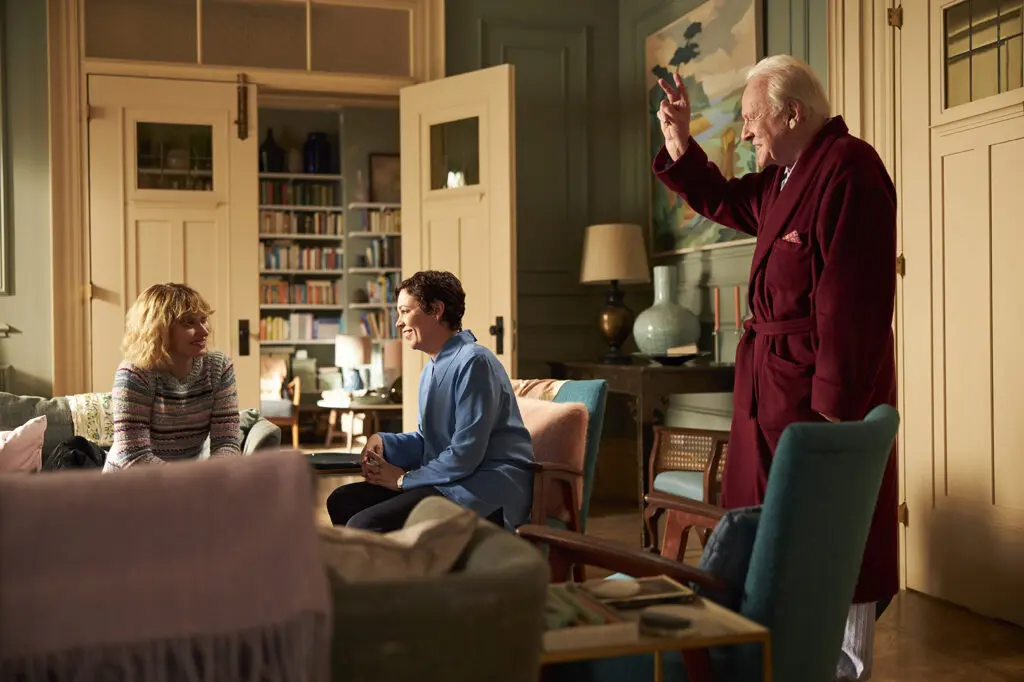
Sometimes furniture has a more unsettling job to do.
In Florian Zeller’s The Father, production designer Peter Francis uses the apartment to put us inside Anthony’s increasingly unreliable perception. At first we believe we understand where we are. Gradually, the room starts disagreeing with us.
Cream walls become greeny blue. A gold sofa disappears and is replaced by a pair of rosewood mid-century armchairs upholstered in teal. A piano becomes a drinks cabinet. Pictures change while remaining in uncannily similar arrangements. Doors and interconnected rooms create labyrinthine sightlines until the familiar apartment has become impossible to trust.
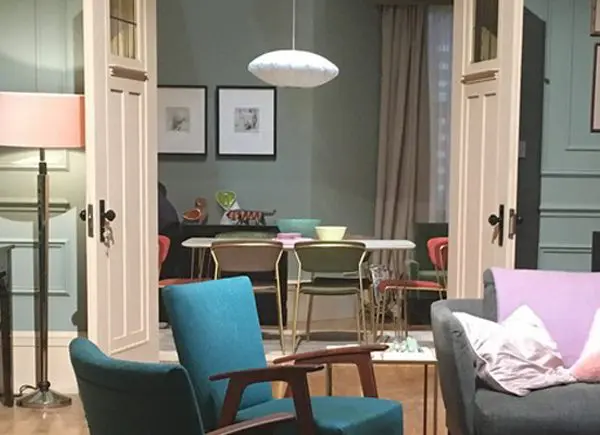 Eventually the same architectural language begins to merge with the doctor’s surgery and care home, leaving us uncertain whether the earlier apartments were ever quite what we believed them to be.
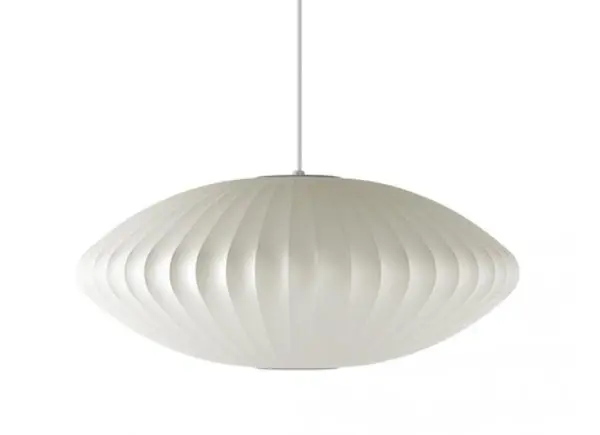
Among the identifiable furniture is Arne Jacobsen’s Series 7 Chair for Fritz Hansen, now a modern classic, alongside a Bubble Saucer Pendant Light by George Nelson and the Lisa dining chair by Marcello Ziliani in the dining area.
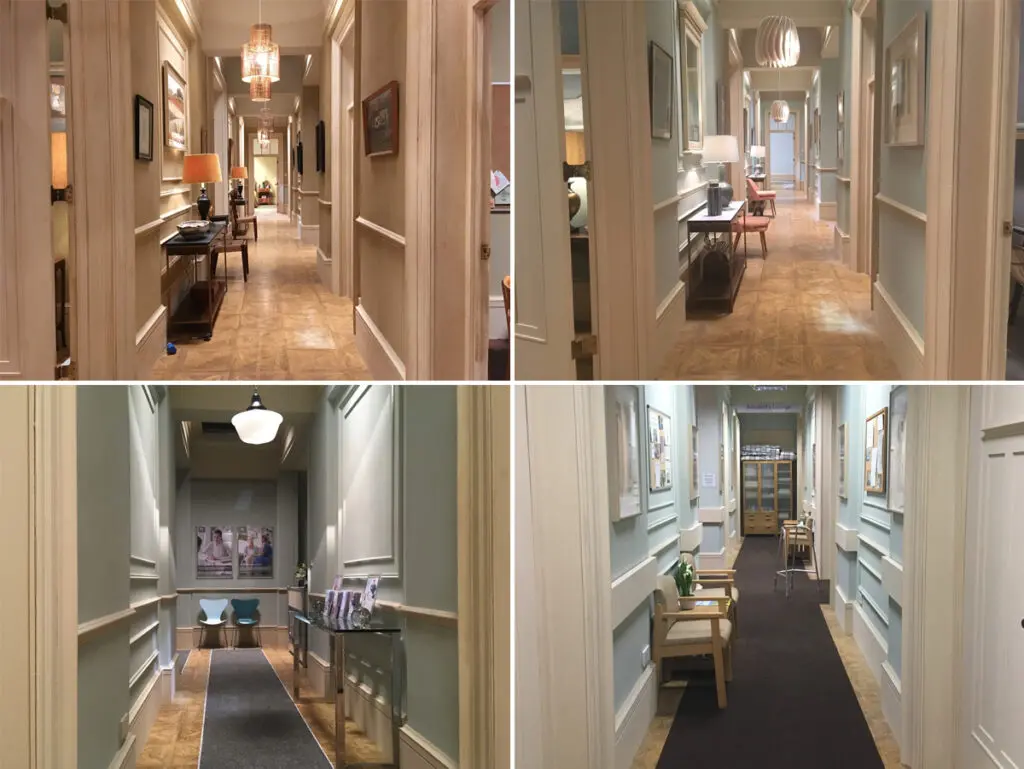
Here, buying the chair is considerably easier than working out which room you’re in.
7. The Souvenir: London
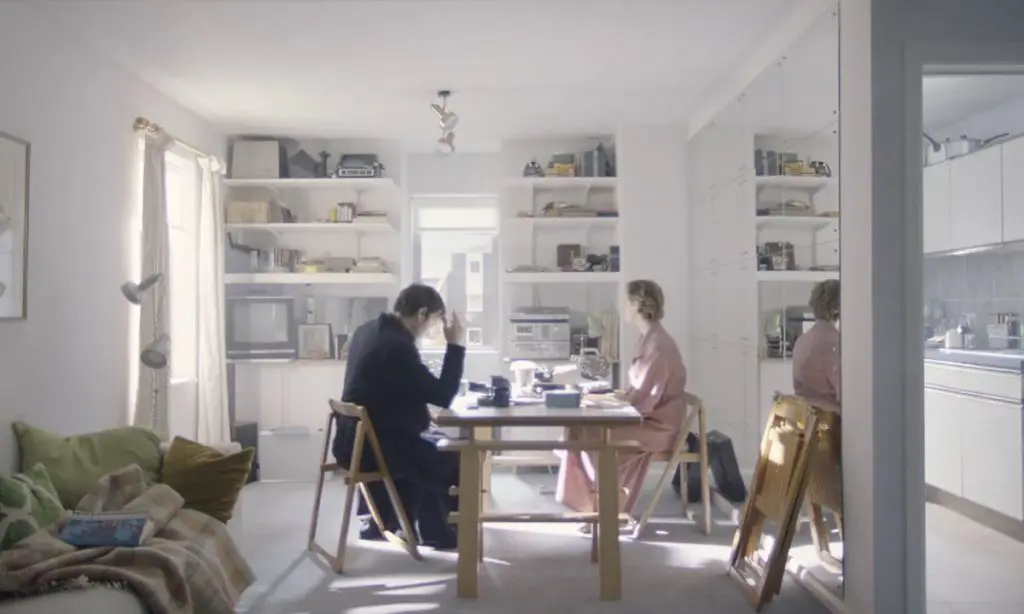
Joanna Hogg’s The Souvenir turns Julie’s Knightsbridge duplex into an unusually personal film set. Production designer Stéphane Collonge reconstructed the flat Hogg herself had lived in as a film student in the early 1980s, using her memories, photographs and original possessions.
At first it belongs unmistakably to Julie: a bright, modern space of white shelving and cabinetry, a striking mirrored wall, simple wooden chairs and practical task lighting, filled with cameras, Super 8 equipment, books, records and the tools of a young filmmaker. Her taste also leaned towards contemporary Italian design, including the Leonardo trestle table by Achille Castiglioni, which Hogg had bought in 1979.
As Anthony becomes part of her life, the décor changes with him. Julie’s creative tools gradually recede and more decorative pieces arrive: chandeliers, a silver candelabra, kilim rugs and, most strikingly, an ornate gilded cane bed with a distinctly Sloane Ranger air. After their trip to Venice, a Murano glass chandelier and Venetian imagery move the apartment further towards Anthony’s more formal, old-world taste.
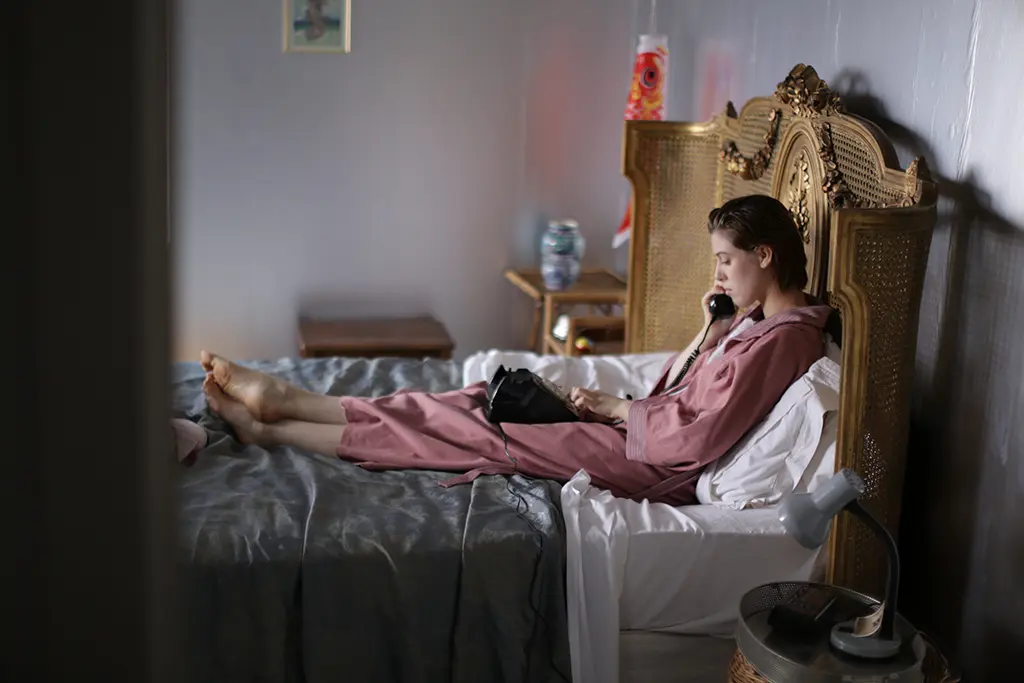
The transformation is subtle but telling. The apartment begins as the working home of a young filmmaker finding her voice and gradually becomes a record of someone else’s influence. Even the furniture is telling the story.
The apartment also contains a reproduction of Jean-Honoré Fragonard’s The Souvenir, the painting that gives the film its title and echoes Julie’s romantic idealism.
8. Tár: Berlin
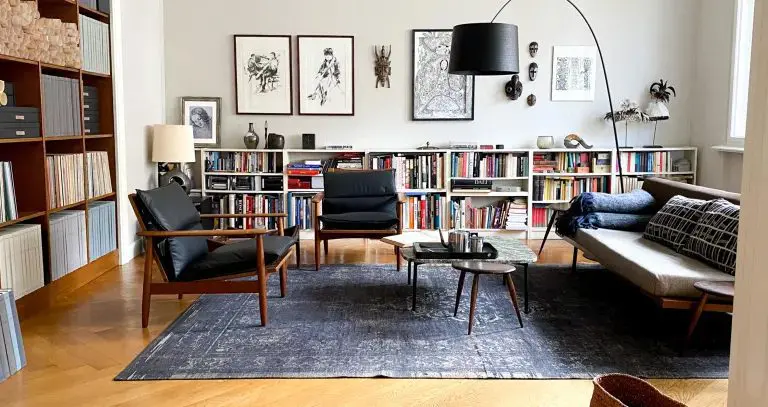
Lydia Tár has sharp taste.
The Berlin interiors in Todd Field’s Tár, designed by production designer Marco Bittner Rosser, communicate success and control through scale, concrete, natural materials and a formidable collection of furniture.
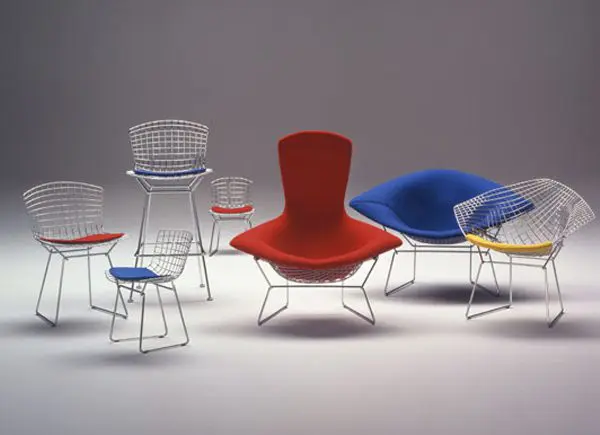
Look closely and there is Marc Sadler’s Twiggy Floor Lamp for Foscarini, Warren Platner Side Chairs for Knoll, a Harry Bertoia Bench put to the entirely sensible use of stacking books, Hans Wegner Papa Bear chairs, vintage teak armchairs and the extraordinary National Career Lamp by Olafur Eliasson.

Bittner Rosser deliberately uses Lydia’s two Berlin apartments to reveal different stages of her life. The monumental concrete family home belongs to the established chief conductor. Her older studio apartment, retained as somewhere to compose and think, is more modest and functional, with cool Danish mid-century furniture and a historic Steinway at its centre.
It’s an intriguing companion to After the Hunt. Both give accomplished women two domestic spaces, and in both cases the distinction between them tells us something that a single beautifully furnished home could not.
9. Pain and Glory: Madrid
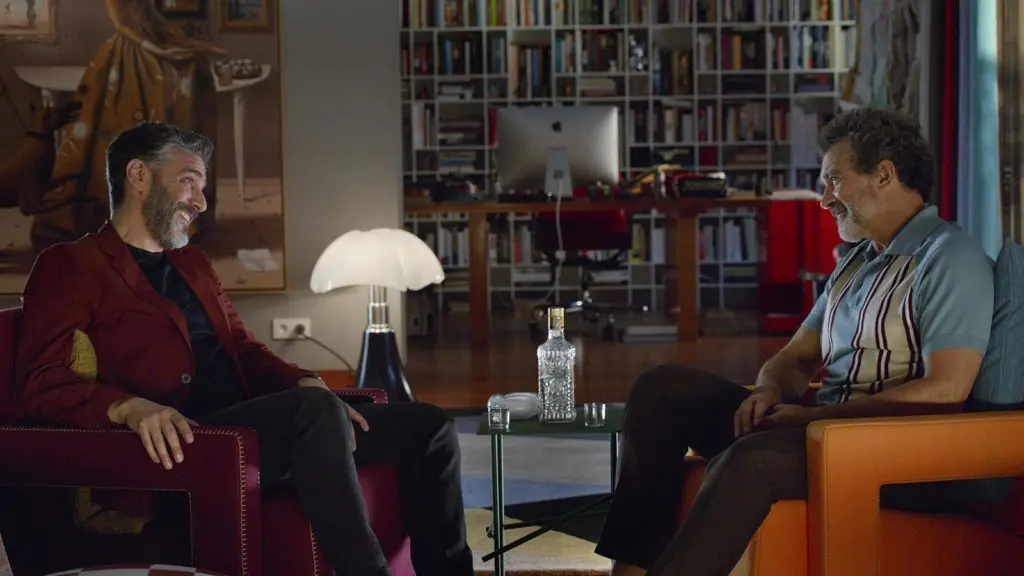
Few directors understand the expressive possibilities of an apartment quite like Pedro Almodóvar.
In Pain and Glory, Salvador Mallo’s Madrid home is so closely connected to its director that separating character from creator becomes part of the pleasure. Production designer Antxón Gómez based the layout on Almodóvar’s own apartment, while the director supplied furniture, artwork and other possessions from his home for the set.
Among them were Charlotte Perriand shelves, Fornasetti pieces and a sculpture by Miquel Navarro, while Mario Bellini’s La Basilica table becomes Salvador’s desk. Books, ceramics, paintings and objects crowd the rooms, and colour is everywhere.
Then there is Gae Aulenti’s Pipistrello Lamp, one of those pieces capable of holding its own even within an Almodóvar interior.
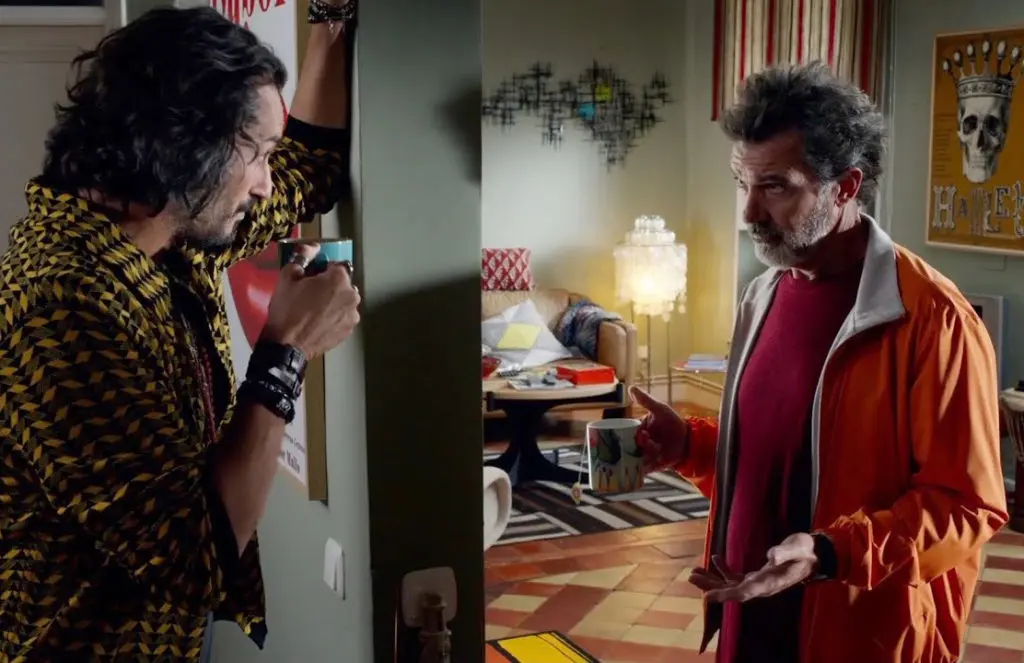
The apartment works because the abundance is purposeful. Almodóvar has described the paintings and possessions as representing Salvador’s previous success and vitality, while Antonio Banderas recalled how particular the director was about every surrounding detail, right down to which book should sit where.
And this is hardly Almodóvar’s first great apartment. His films repeatedly use domestic interiors as extensions of their occupants: Janis’s art-filled home in Parallel Mothers, Pepa’s extraordinary terrace in Women on the Verge of a Nervous Breakdown, the wall-to-wall patterned interiors of All About My Mother and Gae Aulenti’s wonderfully eccentric Tour table in Talk to Her (the one with bicycle wheels as table legs).
An Almodóvar apartment rarely sits hunched in the background.
10. Amélie: Paris
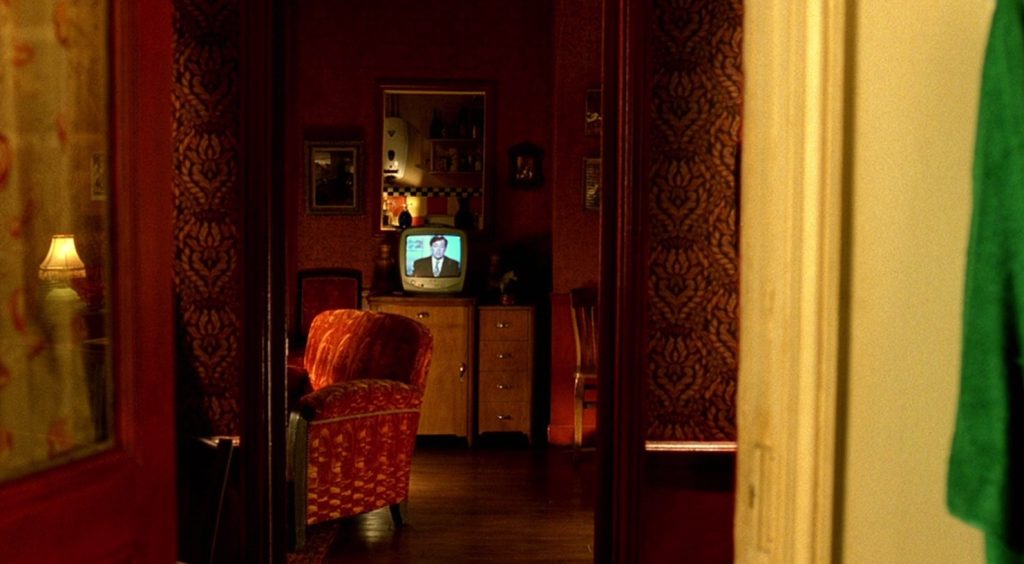
And finally, let’s skip over to Montmartre.
Jean-Pierre Jeunet’s Amélie gives its heroine an apartment as distinctive as her imagination. Deep reds, greens, patterned surfaces, vintage furniture, warm pools of lamplight and peculiar decorative objects make the rooms feel as though they belong specifically to Amélie Poulain.
The heightened palette is part of the film’s wider visual language. Jeunet wanted an “explosion of colour”, with production designer Aline Bonetto carrying the carefully controlled scheme through locations and sets before the filmmakers pushed it further in post-production.
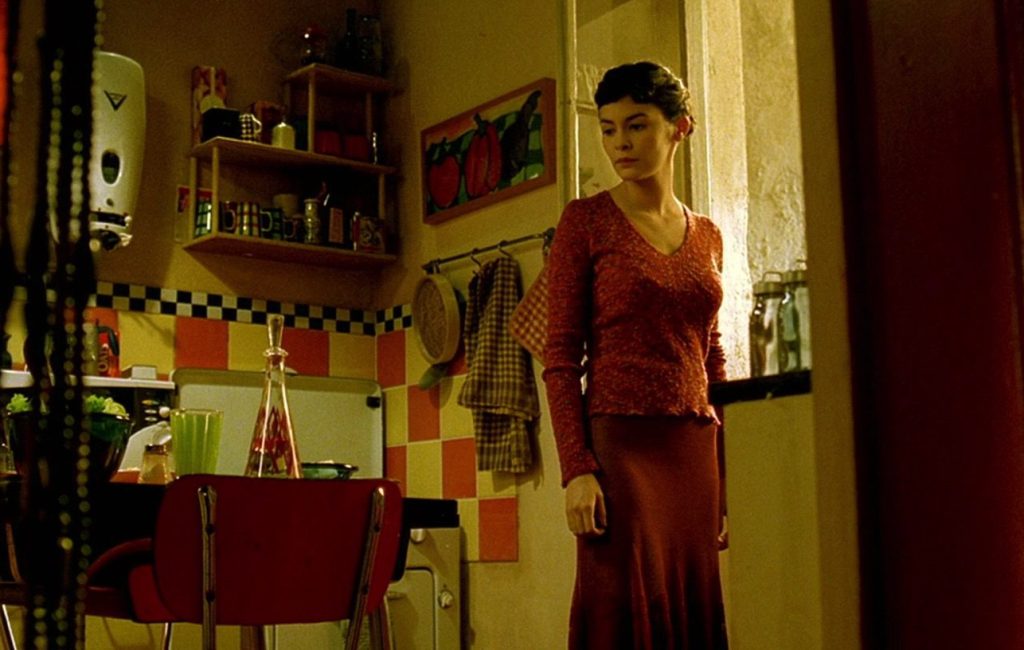
This is perhaps the apartment here least dependent upon owning recognisable design classics. Its appeal comes from personality: colour, pattern, pools of light, old furniture, pictures, mirrors and objects that appear to have been selected because someone loves them rather than because an interiors trend forecast said they should.
And that feels like a good place to finish.
Bringing a little cinema home
From Charlie and Emma’s carefully accumulated Boston apartment in The Drama to Lydia’s formidable Berlin home in Tár, these interiors work because their contents tell us something about the people who chose them.
There are lessons worth borrowing. Mix periods. Let books speak from the shelves. Buy a good lamp. Don’t be frightened of colour. Allow a vintage find to sit beside a modern design classic. Choose objects because you want to live with them rather than because they complete a scheme.
And if you’ve fallen for some of the furniture along the way, Holloways of Ludlow is a useful place to start. Its collection brings together many of the designers and manufacturers whose work regularly appears on screen, from Knoll, Flos and Foscarini to HAY and some of the great names of twentieth-century design.
You don’t need the Baxter Building to make use of these ideas. Although if anyone does have a spare sunken conversation pit, we’d happily jump in.
Sponsored post
This feature is FREE to Classic members.
Join our newsletter community to receive Film and Furniture inspiration direct to your inbox and we’ll UPGRADE you to Classic Membership (which includes access to our exciting giveaway draws) for FREE.



 Facebook
 Twitter
 Instagram
 Pinterest
 RSS
RSS