


The design of Queer Part 2: The art and film references
Throughout Queer, director Luca Guadagnino and production designer Stefano Baisi drew inspiration from a diverse range of artists and films, seamlessly blending reality with fantasy to create a distinctive visual language. Guadagnino envisioned the film as a moving painting, where every frame was crafted to evoke emotion. The set design reflects this approach, offering viewers a rich, layered aesthetic that brings emotional depth to the story.
In Part 2 of our exploration, we dive deeper into the film and art references in Queer. From surrealist paintings to avant-garde cinema, discover how these influences shaped the design choices.
We invite you to read Part 2 below, or check out our feature ‘The design of Queer Part 1: Creating a surreal world with designer Stefano Baisi’ for further insights. Be sure to watch the video interview from our YouTube channel below for more insights, or listen to The Film and Furniture Podcast on Podbean, Spotify, Apple Podcasts, and all your favourite podcast platforms.
Art influences on Queer
Primary artistic influences for the design of Queer came from the paintings of artists Michael Borremans and Francis Alÿs, both of whom are known for their ability to evoke a sense of stillness, tension, and quiet discomfort in their work.
The disparate spaces imagined in Borremans’ paintings, drawings and sculptures are unified by an uncanny sense of dislocation and often unsettling beauty.

“Luca aimed to infuse the film with the texture of a painting” production designer Stefano Baisi told us. Borremans’ often unsettling portraits and figurative works, paired with Alÿs’ exploration of identity and the relationship between artist and subject, provided a foundation for the visual tone of Queer.

One striking example of this influence can be seen in a surrealist dreamlike scene where Lee and Eugene Allerton (played by Drew Starkey) balance a piece of paper in mid-air by blowing on it. The scene directly references Alÿs’ 2000 painting La Leçon de Musique, which captures a similar moment of delicate balance, where the two men are connected.

The muted, melancholic colour palette and symbolic imagery of Alÿs and Borremans provided a visual language that aligned with the film’s narrative themes of longing and isolation, adding layers of meaning to the characters’ emotional journeys.


Francis Bacon also had an impact on Queer. Known for his raw, emotionally charged depictions of the human form, often within confined, distorted spaces, Bacon’s work provided inspiration, especially in the scene where Lee and Allerton, under the influence of Ayahuasca, become physically entangled in a jungle setting.
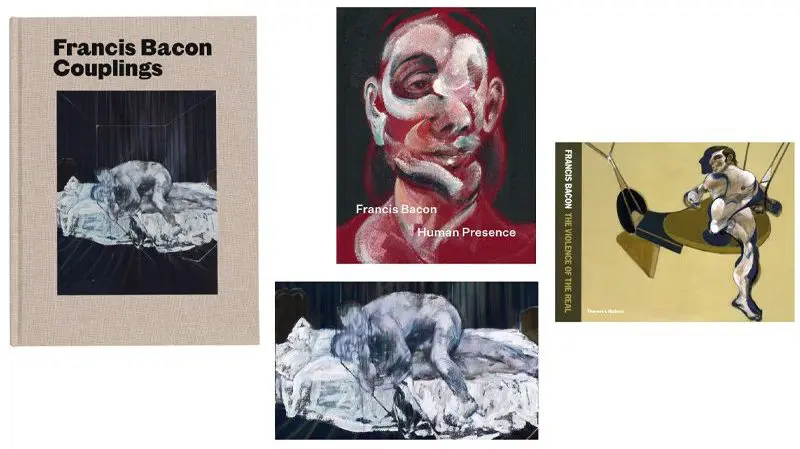
“Luca wanted to empower the relationship between the two characters” Baisi explains. “The moment where they take Ayahuasca is the moment they loose control, the moment where they are more connected. When you love someone you have this desire to merge into the body of someone else, so Luca was very much inspired by Bacon’s use of distorted forms and figures”.

The surreal nature of his work, the blending of agony and beauty, is something reflected in the relationship between the two central characters.
Alongside these painters, other visual influences permeate the film. The work of British sculptor and installation artist Rachel Whiteread, known for her exploration of voids and negative space, inspired the film’s concept of absence.
The photography of Tina Modotti, an Italian-born activist and photographer who spent time in Mexico, also played a role in shaping the film’s visual language.

Film influences on Queer
The film also draws from the work of Akira Kurosawa, particularly his 1990 film Dreams, which explores themes of spirituality and the unconscious. “We looked at Dreams to understand how to work with something that is completely invented from scratch and is not real” says Baisi.


David Lynch’s Blue Velvet (1986) is another reference, especially in the design of Lee’s apartment. The kitchen layout in Lee’s space, with its unsettling symmetry and stark contrasts, mirrors the disquieting, almost sinister world that Lynch conjures in Blue Velvet.

In a similar vein to Queer, Naked Lunch (1991) directed by David Cronenberg, draws heavily from surrealist and avant-garde influences, blending reality with the fantastical. The film’s unsettling aesthetic, which includes fragmented set designs and nightmarish imagery, mirrors the disorienting narrative of William S. Burroughs’ novel. Cronenberg’s vision, much like Guadagnino’s in Queer, creates a dreamlike atmosphere, where the boundaries between the real and the imagined blur.
Albert Whitlock’s matte paintings also left their mark on the film’s visual style. The primary purpose of matte painting is to create the illusion of a scene that is not physically present on set, or to extend a scene beyond what is physically possible.
Renowned for his ability to seamlessly blend real and imagined worlds, Whitlock’s work in classic films such as The Birds (1963) and Earthquake (1974) was studied closely by Baisi and his team to understand how to extend physical sets and create environments that felt both real and surreal.
The use of matte paintings also aligns with Queer’s theme of reality and illusion, as the film frequently blurs the line between what is tangible and what is imagined.

In addition to these artists, the film also pays homage to surrealist works, particularly in its manipulation of space. Surrealist art, known for distorting reality to express the unconscious mind, is evident in the film’s use of space and colour to communicate the emotional states of the characters.
The distorted proportions of the sets as seen in the movie theatre scene for example, the fluidity of the spaces, and the presence of symbolic objects create an emotional resonance that goes beyond the physical space itself. This surreal approach enhances the narrative, drawing us deeper into the psychological and emotional worlds of the characters.
Queer is available to stream on Mubi.
This feature is FREE to Classic members.
Join our newsletter community to receive Film and Furniture inspiration direct to your inbox and we’ll UPGRADE you to Classic Membership (which includes access to our exciting giveaway draws) for FREE.
To access in-depth features, video interviews, invitations to pre-release film screenings, major exhibitions and more, become a Front Row or Backstage member today!



 Facebook
 Twitter
 Instagram
 Pinterest
 RSS
RSS