


Blade Runner furniture and interiors: from Los Angeles 2019 to 2049 and 2099
The future is coming back. With Blade Runner 2049 recently topping the streaming charts and Blade Runner 2099 arriving in November 2026, the time is ripe to return to one of cinema’s most influential design worlds. From Deckard’s whisky glass and Charles Rennie Mackintosh chair in the original Blade Runner to the Pierre Paulin Ribbon chair in Blade Runner 2049, join us as we explore the furniture, lighting and interiors that shaped the films’ extraordinary vision of the future.
Ridley Scott’s original Blade Runner (1982) gave us a future pieced together from layers of architecture, furniture and objects. The film placed Cini Boeri’s sculptural Cibi glass alongside Frank Lloyd Wright-inspired architecture, Mackintosh furniture, vintage American lighting and industrial machinery. Pieces designed decades earlier appeared entirely at home in Los Angeles, 2019.
Thirty-five years later, Denis Villeneuve’s Blade Runner 2049 expanded that visual language into a monumental world of brutalist interiors, analogue technology and carefully selected furniture.
Now, as the TV miniseries Blade Runner 2099 prepares to take the story another fifty years into the future, we revisit some of the design details that made the first two films so enduring.
The furniture and interiors of Blade Runner
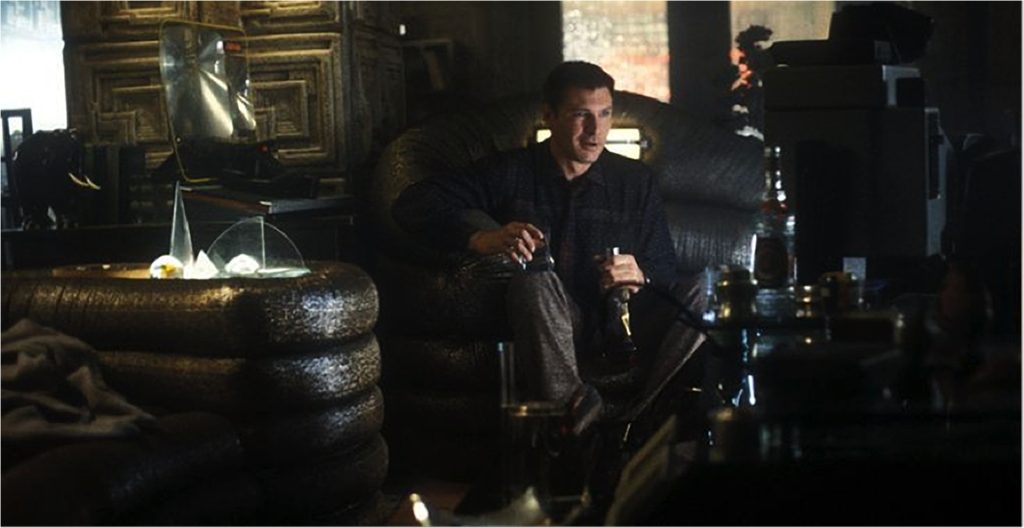
Set in 2019, Ridley Scott’s Blade Runner (1982) painted a remarkably persuasive picture of a dense, decaying Los Angeles. Based on Philip K. Dick’s novel Do Androids Dream of Electric Sheep?, it fused science fiction with film noir while exploring memory, identity and what it means to be human.
Production designer Lawrence G. Paull, art director David L. Snyder and set decorator Linda DeScenna created a future that felt accumulated rather than built from scratch. Old buildings had been adapted, technology layered onto existing architecture and classical furniture sat alongside strange machinery and flickering screens. The result was a world that felt expensive, damaged, overcrowded and thoroughly lived in.
Deckard’s apartment is the clearest expression of that. Its interiors combine Frank Lloyd Wright-inspired concrete blocks and Clooney desk with early 20th-century furniture, vintage lighting and objects that have acquired even greater desirability through their appearance in the film.

Deckard’s apartment and the Ennis House
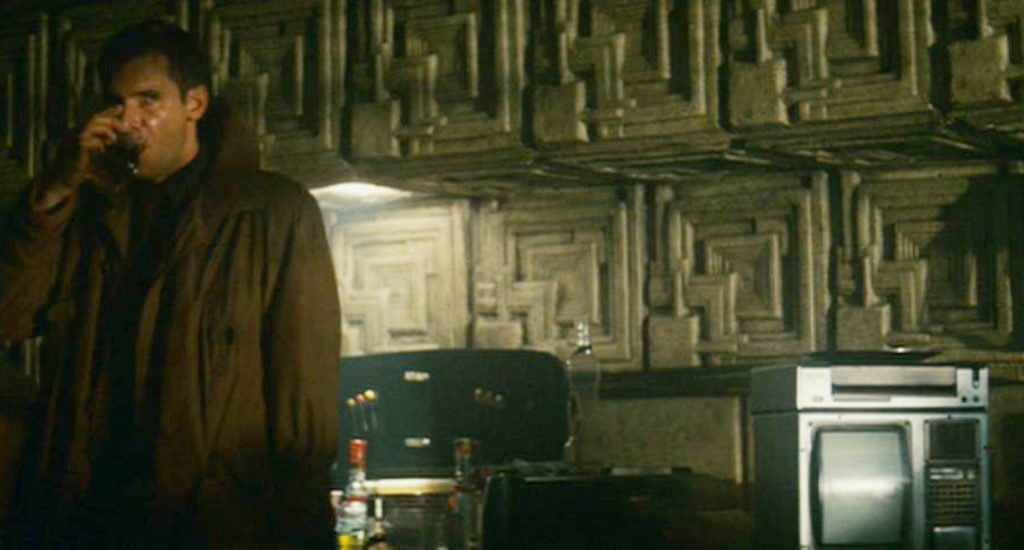
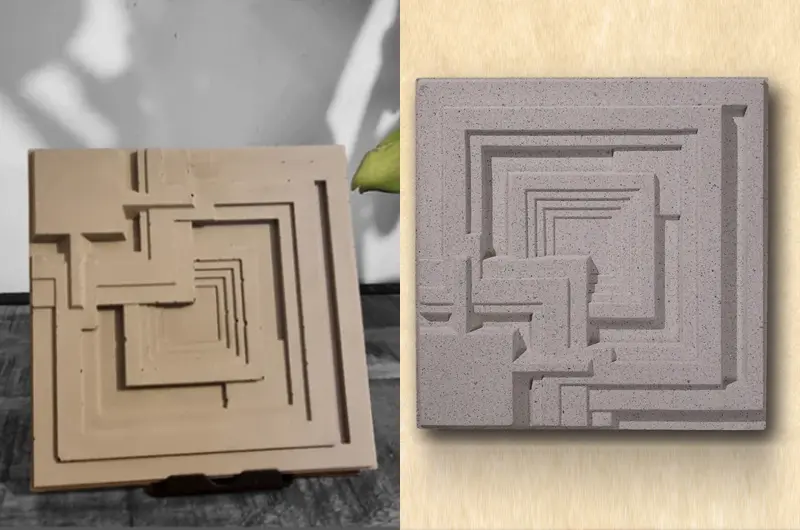
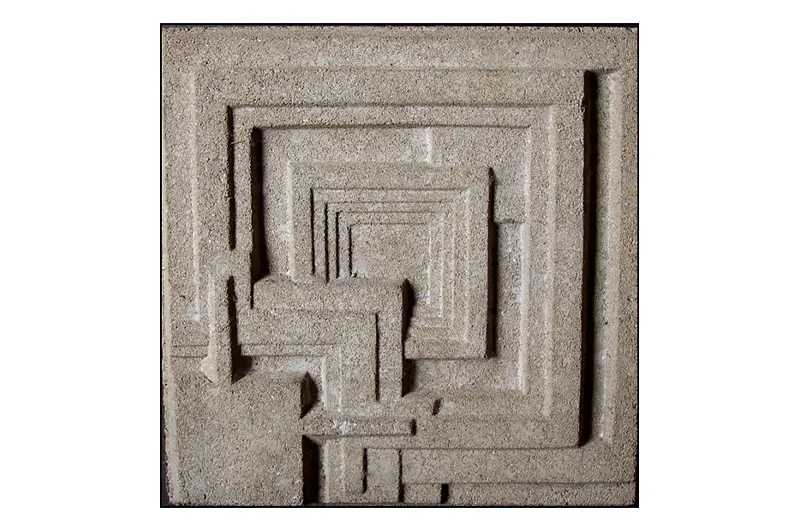
Deckard’s apartment is closely associated with Frank Lloyd Wright’s Ennis House in Los Angeles. Built in 1924 for Charles and Mabel Ennis, the house is one of Wright’s textile-block buildings. Its patterned concrete draws on Maya architecture and create deep geometric relief across the walls.
The Blade Runner production recreated and adapted this visual language for Deckard’s apartment, using patterned blocks to give the interior a heavy, almost archaeological character.
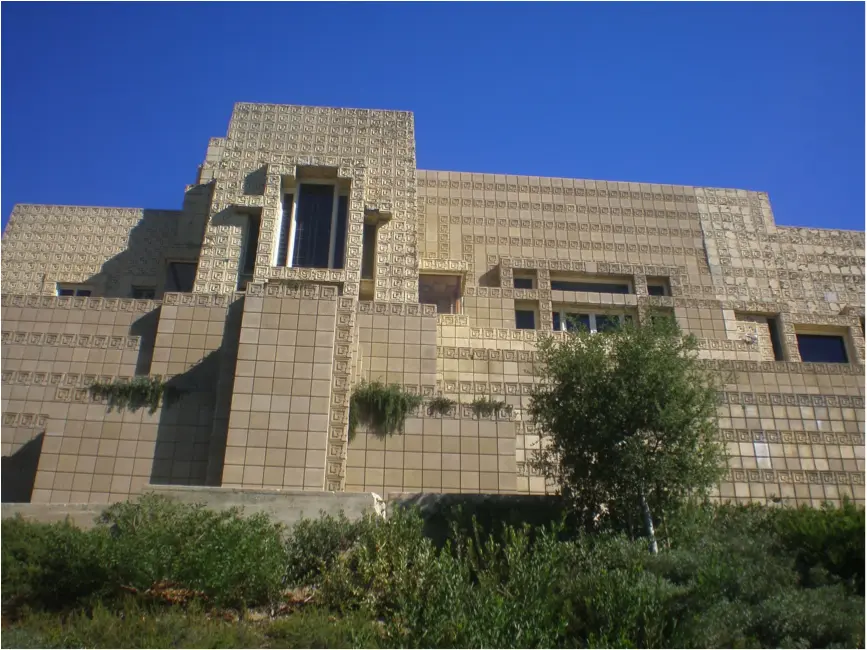
The result suggests that Los Angeles has continued to build over itself without ever fully discarding what came before. Ancient visual references, 20th-century furniture and imagined technology are compressed into the same rooms.
It is this density of time that makes the film’s world so convincing. The interiors do not belong to one design movement or period, rather, they feel as though generations of people have continually repaired, adapted and repurposed them.
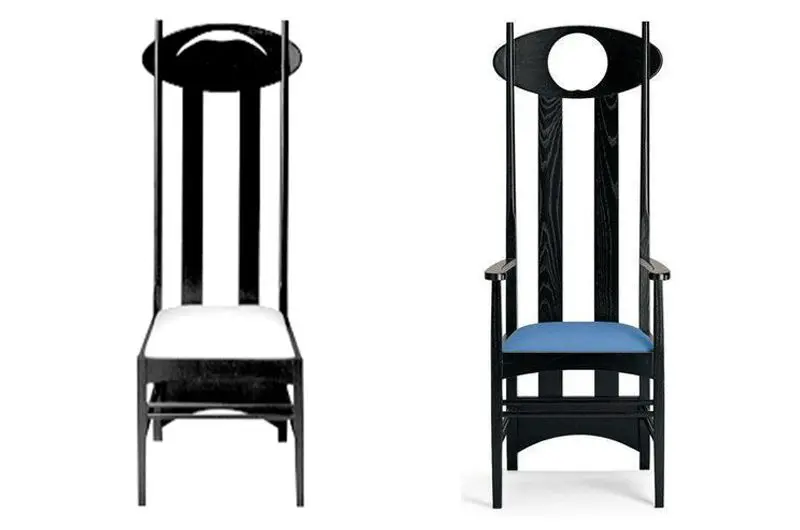
Argyle chair by Charles Rennie Mackintosh
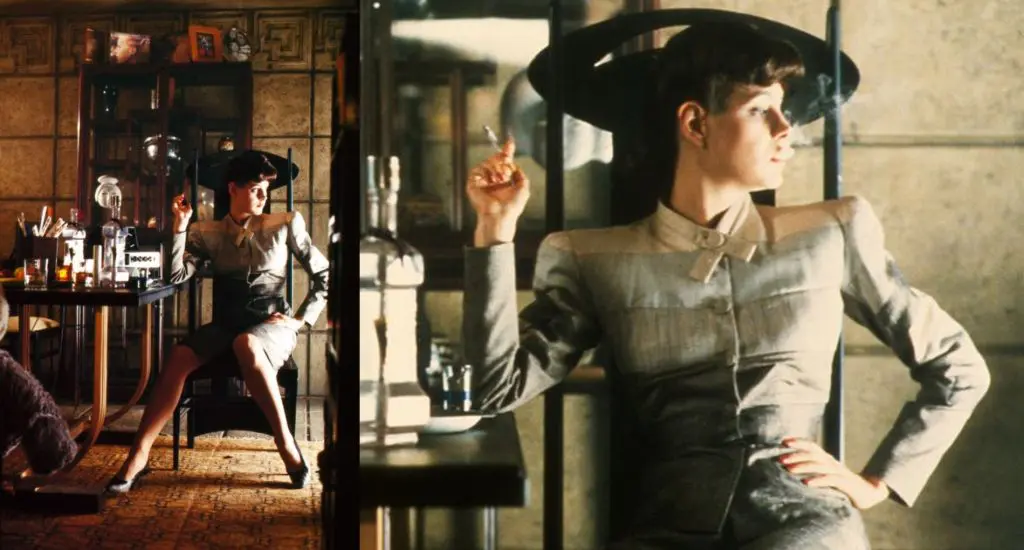
Rachael, played by Sean Young, sits elegantly in Charles Rennie Mackintosh’s high-backed Argyle chair in Deckard’s apartment.
The chair was originally designed for Miss Cranston’s Argyle Street Tea Rooms in Glasgow. Tea-room proprietor Catherine Cranston commissioned Mackintosh and designer George Walton to decorate and furnish the rooms in 1897.
Its extraordinary height gave the chair an architectural role within the interior. Placed around tables, the extended backs created a sense of enclosure and privacy for diners. The oval cut-out near the top brings a delicate graphic detail to the otherwise imposing structure.
Mackintosh later used Argyle chairs in the Glasgow flat he shared with his wife and creative collaborator Margaret Macdonald Mackintosh.
In Blade Runner, its vertical form suits Rachael’s immaculate tailoring, while its age complicates our sense of when the scene is taking place. That is one of the film’s great design tricks. An object created in Victorian Glasgow can still look startlingly futuristic nearly a century later.
The Argyle chair has also appeared in The Addams Family, Babylon 5 and Dr. Who, as well as several Star Trek series and features including The Next Generation, Deep Space Nine, Enterprise and Strange New Worlds.
Film and Furniture can source vintage examples and authorised modern editions in Europe and the US. Please complete our general enquiry form for current availability and shipping information.
-

Argyle chair by Charles Rennie Mackintosh
As seen in:Designer: Charles Rennie Mackintosh
Director: Ridley Scott
Shop NowCharles Rennie Mackintosh’s Argyle chair was designed for the Argyle Street Tea Rooms in Glasgow’s Buchanan Street in 1897. The chair makes an appearance in Blade Runner, The Addams Family, Star Trek, Babylon 5 and Dr. Who.
The Blade Runner whisky glasses

Few drinking vessels have acquired the screen presence of Deckard’s whisky glass. The exact tumbler used by Harrison Ford in Blade Runner, and later seen again in Blade Runner 2049, is the Cibi Double Old Fashioned glass designed by Italian architect and designer Cini Boeri.
Arnolfo di Cambio has produced the hand-blown crystal design in Tuscany since 1974. Its dramatic geometric base gives the glass its distinctive weight and refracts the light beneath the drink, making a modest measure of whisky look like a precious amber artefact.
The Cibi is available in two sizes, 22cl and 37cl. The larger 37cl version is the size most closely associated with Blade Runner.
Its appearance in Deckard’s apartment helped turn it into one of the most recognisable glasses in cinema. The association is now so strong that it is regularly described simply as the Blade Runner glass. We have tried and tested it at Film and Furniture, perhaps with more dedication than the assignment strictly required.
-
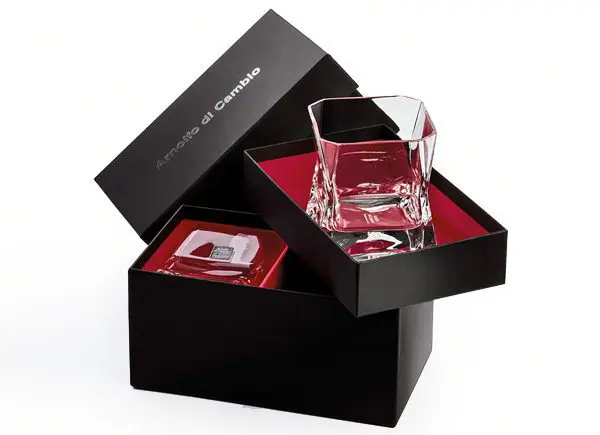
Blade Runner whisky glasses gift boxed set of 2 (37cl)
Designer: Cini Boeri
Arnolfo di Cambio
Directors: Denis Villeneuve, Ridley Scott
Shop NowThe exact ‘CIBI’ glass tumbler design that Deckard (Harrison Ford) is seen drinking whiskey from in Blade Runner (1982).
Approx £149.95 Inc VAT if applicable / $200
The Cibi glass also appears in The Viewing, Panos Cosmatos’s episode of Guillermo del Toro’s Cabinet of Curiosities.
Single Arnolfo di Cambio Cibi glasses are available as well as in gift-boxed sets, with worldwide delivery.
Dazor Saucer Lamp
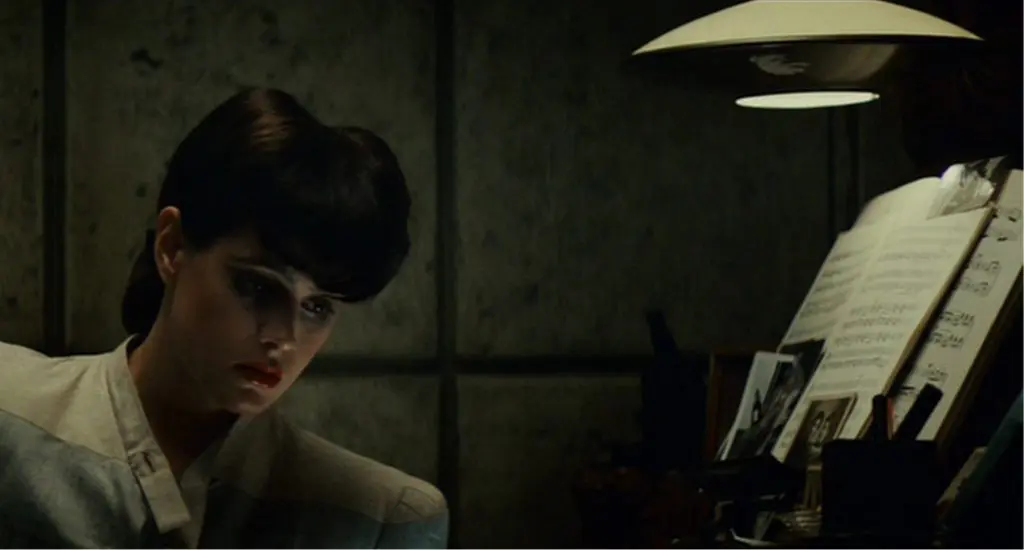
Deckard’s apartment contains very little conventional overhead lighting. Instead, pools of illumination come from a collection of desk lamps, table lamps and light sources positioned around the rooms.
The result is intimate, shadowy and unmistakably noir. Light picks out an object or part of a face while much of the surrounding apartment remains in darkness. Several pieces deserve a closer look.
Hovering over Deckard’s piano during his unicorn reverie is a Dazor Saucer lamp. This American mid-century design is sometimes described as a UFO or flying-saucer lamp because of its broad, flattened shade. Its streamlined profile looks entirely suited to a science-fiction setting and is another example of Blade Runner using existing objects to suggest the future. Rather than covering the set with speculative gadgets, the designers selected pieces whose forms already carried a sense of technological possibility.
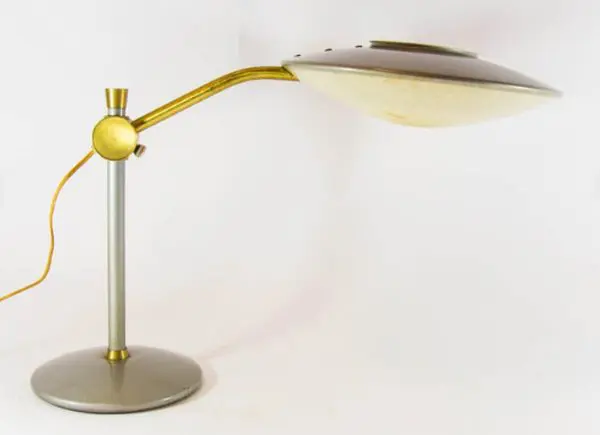

Vintage Dazor lamps remain highly collectable and can be found in a variety of desk, table and task-lighting configurations.
World’s Fair Saturn lamp
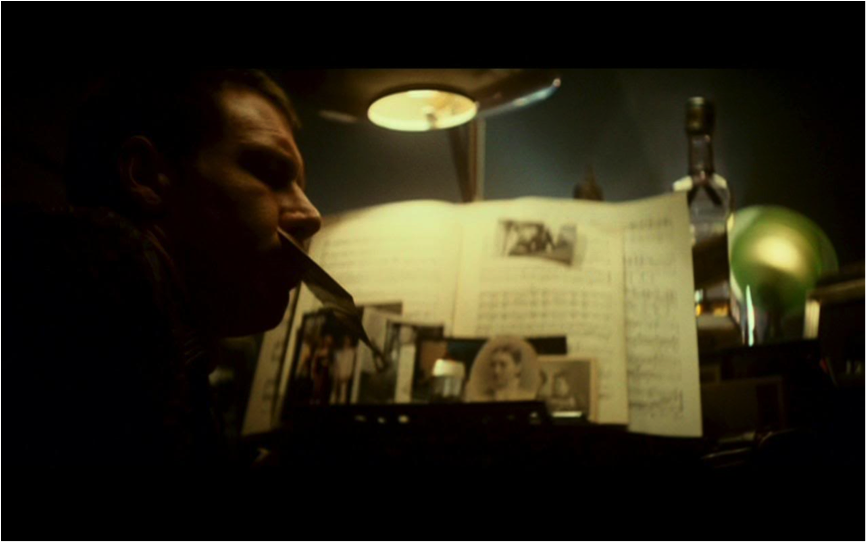
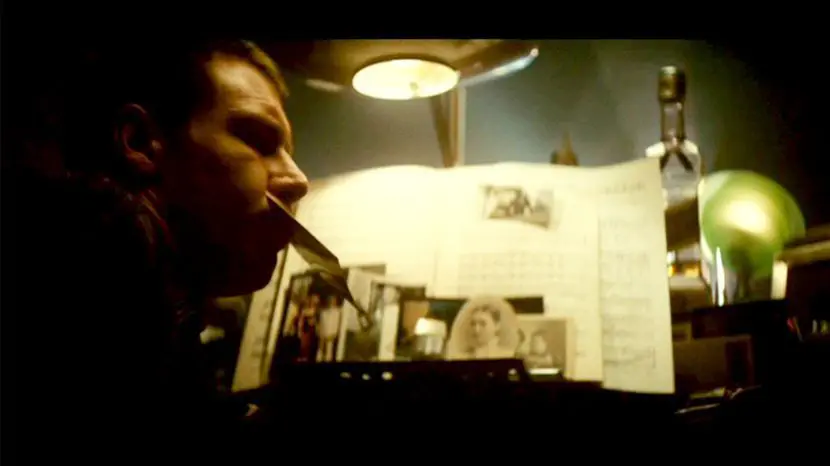
Deckard’s apartment also contains a wonderfully strange World’s Fair Saturn lamp.
Dating from the 1930s, the Art Deco light features a globe encircled by rings, creating the appearance of the planet Saturn. Depending on the model, the globe may be decorated with geographic or astrological imagery.
It brings a slightly kitsch, retro-futurist note to the apartment and sits perfectly among the film’s mixture of private-eye gloom, industrial decay and space-age symbolism.
The same design can also be spotted in the Red Room in Twin Peaks, giving the lamp an enviable record of appearing in two of screen history’s strangest interiors.

Blade Runner 2049: redesigning the future

Set thirty years after the original, Denis Villeneuve’s Blade Runner 2049 follows LAPD blade runner K, played by Ryan Gosling, whose discovery of a long-buried secret leads him to the missing Rick Deckard.
Production designer Dennis Gassner and set decorator Alessandra Querzola extended the visual language of Ridley Scott’s film rather than reinventing it. The world retains the weight, darkness and tactile quality of the original, but on a colder and more monumental scale.
K’s sparse apartment, Lieutenant Joshi’s austere LAPD office and the vast Wallace Corporation headquarters were created through physical sets, tactile objects and carefully controlled light. Following the Blackout, which destroyed vast quantities of digital information, analogue systems have become valuable again. Rolodexes, metal desk accessories, utilitarian lighting and heavy machinery give the film a distinctly Soviet and Cold War character.
The result is a future shaped by environmental and political collapse, where technology feels functional, worn and built to endure.
The Wallace Corporation interiors
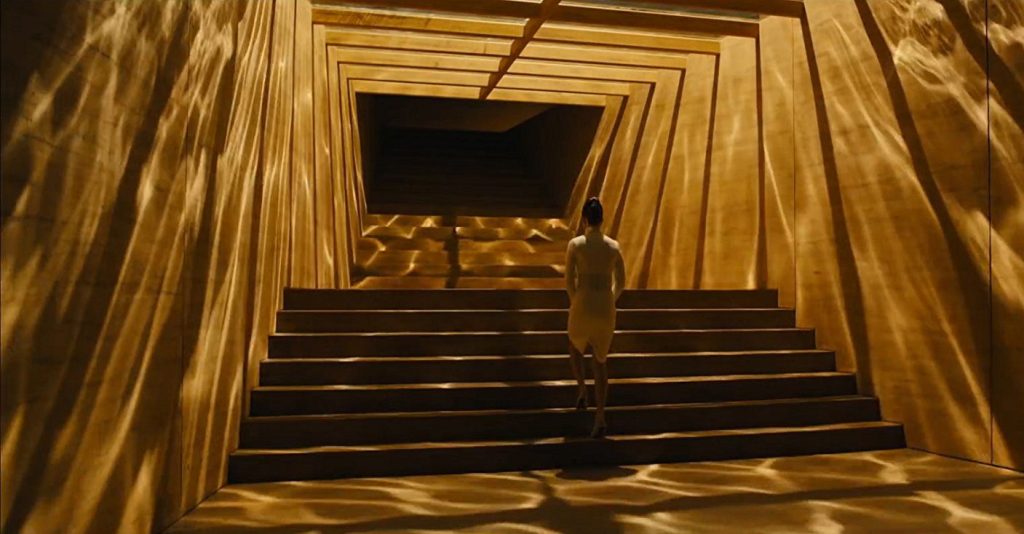
The Wallace Corporation headquarters contains some of the most imposing spaces in Blade Runner 2049. Niander Wallace has taken control of the technology once developed by the Tyrell Corporation and become one of the most powerful figures on Earth. The result feels less like a corporate office than a vast palace. The interiors feature monumental timber walls, polished floors and broad pools of water, with rooms that appear to stretch far beyond ordinary human scale.
The architecture was influenced by ancient Japanese temples. Within the environmentally depleted world of the film, natural materials and water have become rare expressions of wealth.
Wallace can command these resources, yet his surroundings offer little warmth. The spaces dwarf their occupants and turn each encounter into a carefully staged ritual.
Friedrich W. Möller’s Conseta lounge chair
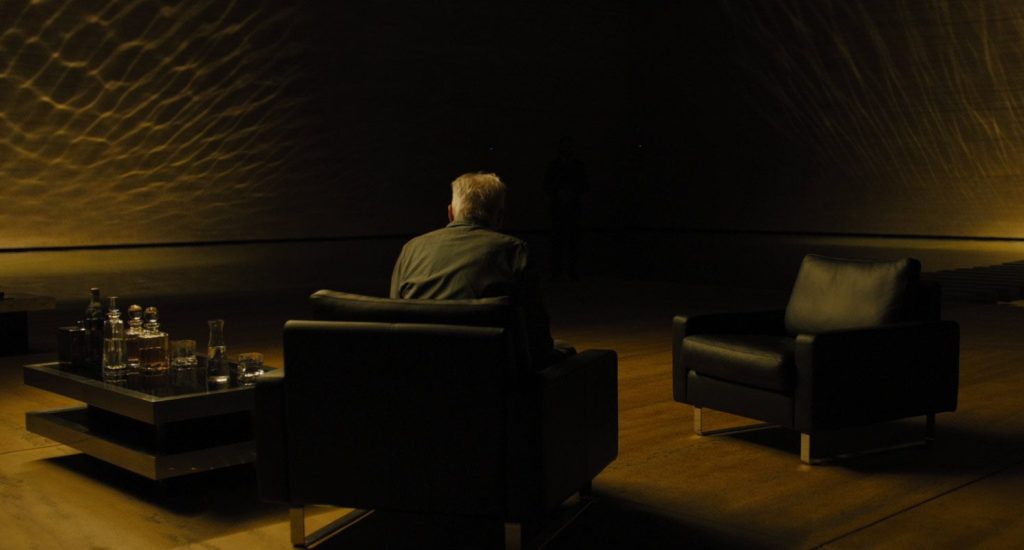
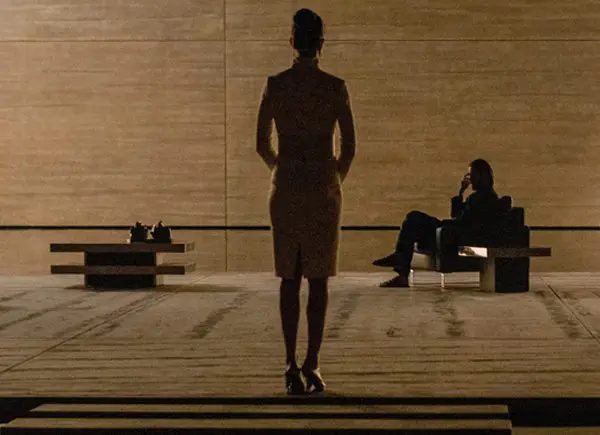
The Wallace Corporation features a pair of black leather Conseta lounge chairs. The Conseta seating system was designed by Friedrich W. Möller in 1964 and manufactured by German furniture company COR. Its name combines the Latin words con sedere, meaning “to sit together”.
Although best known as a modular sofa system, the design also includes armchairs and lounge seating. The version seen in Blade Runner 2049 has black leather upholstery supported by a slender metal structure.
Its controlled geometry suits Wallace’s interiors, where furniture appears sparingly against immense expanses of stone, timber and water.
Within such enormous rooms, even luxurious furniture appears exposed and slightly vulnerable.
-

Conseta lounge chair as seen in Blade Runner 2049 (vintage)
As seen in:Designer: Friedrich W. Möller
COR
Director: Denis Villeneuve
Shop NowThis vintage Conseta lounge chair was designed by Friedrich W. Möller in 1964 and manufactured by Cor in the 1970s – the very choice of chair by Niander Wallace in Blade Runner 2049.Approx £541.00 Inc VAT if applicable / $724
Umberto Riva’s E63 table lamp
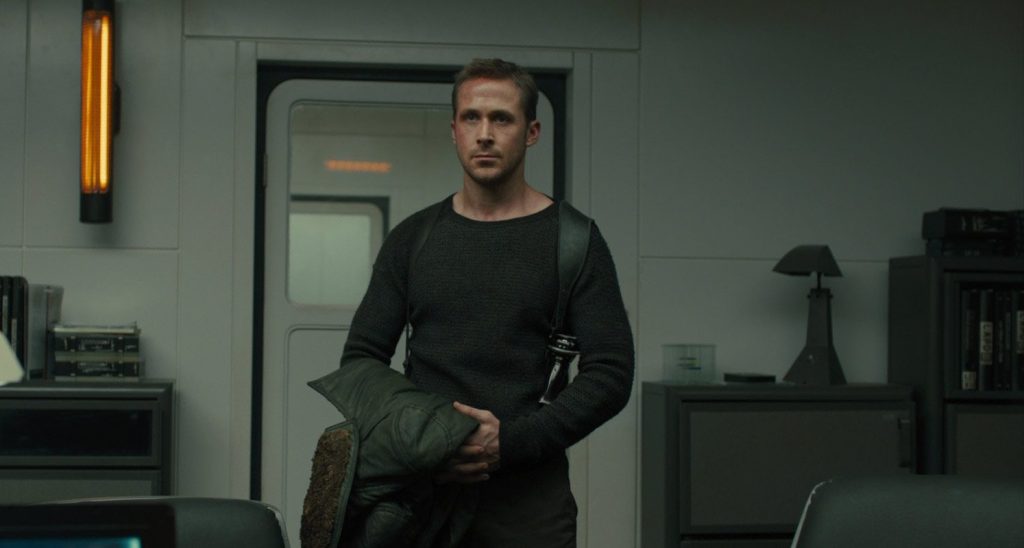
Lieutenant Joshi’s LAPD office contains the grey metal E63 table lamp designed by Italian architect Umberto Riva.
Originally created in 1963 and sometimes known as the Ruspa lamp, the design has since been reissued by Tacchini as part of its Edizioni collection.
The lamp is formed from folded steel planes, with an adjustable shade that directs the light downwards. Its broad metal surfaces make it appear simultaneously functional and sculptural, an ideal match for the austere furniture and analogue equipment in Joshi’s office.
Riva resisted rigid geometric conventions throughout his work, bringing sensitivity, asymmetry and a deep understanding of light to his architecture and product design. His influences included Carlo Scarpa, Frank Lloyd Wright and the American Craftsman movement.
The E63’s substantial metal body makes the light source feel protected, almost armoured. It looks perfectly suited to the institutional world of the LAPD, where every desk, filing system and machine appears built for endurance.


Pierre Paulin’s Ribbon chair
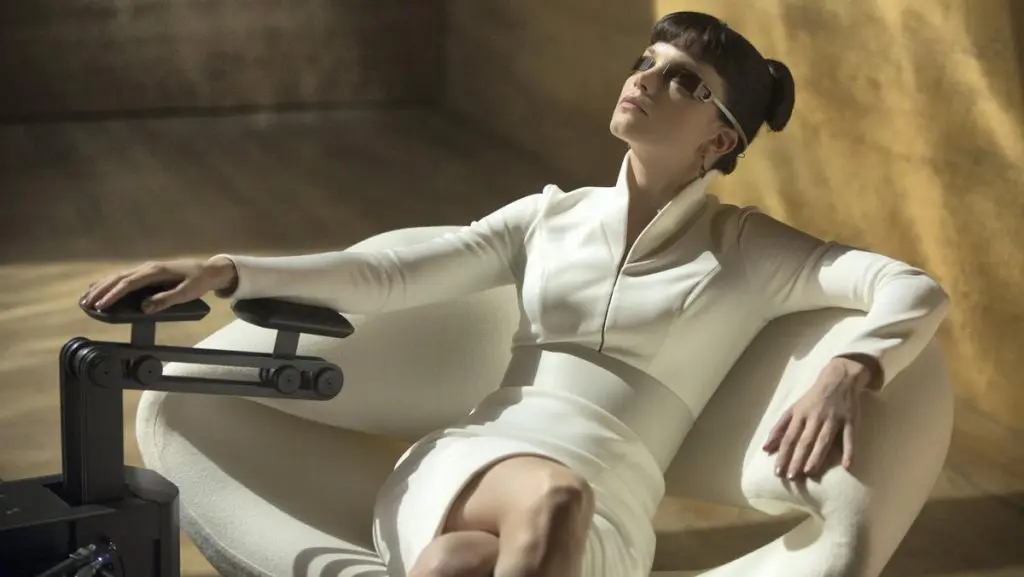
Perhaps the most memorable piece of furniture in Blade Runner 2049 is Pierre Paulin’s F582 Ribbon chair.
Designed for Artifort in 1966, the chair is formed from a tubular steel frame and moulded plywood shell covered with foam and fabric. The upholstered form curls like a continuous strip of ribbon, creating a seat that feels both architectural and fluid.
In the film, Luv, played by Sylvia Hoeks, sits in a pale Ribbon chair in her office at the Wallace Corporation. Luv is Niander Wallace’s assistant, enforcer and most devoted creation. Her precision is reflected in everything around her, from the clean lines of her clothing to the immaculate surfaces of the office.
Querzola selected the Paulin chair in response to Roger Deakins’s lighting. Luv’s office sits below Wallace’s main chamber, where light reflected from the water above moves across the walls. The Ribbon chair’s curves follow those shifting patterns and soften the severity of the architecture.
“I wanted curves and flow,” Querzola told Film and Furniture. “I couldn’t imagine these light waves reflecting on a cube-shaped chair. I also wanted something neat but eclectic.”
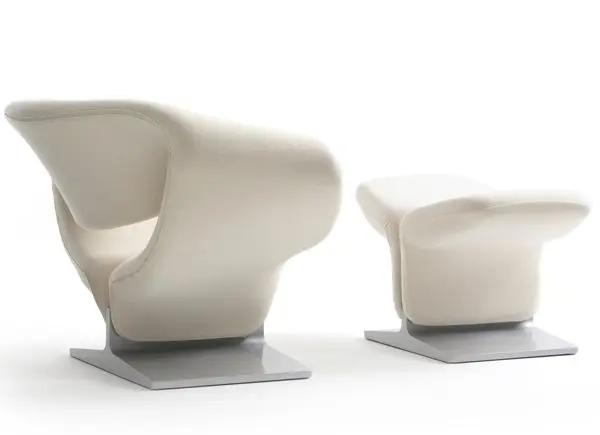
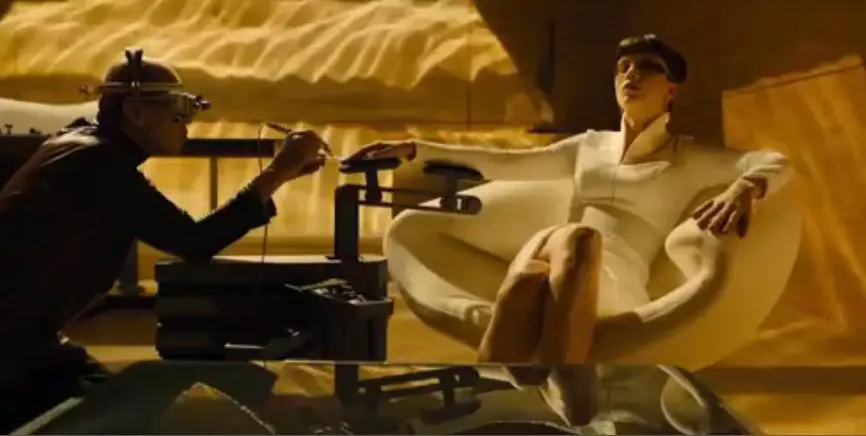
It is a superb example of set decoration responding directly to cinematography. The chair does more than fill the room. Its shape works with the light, the architecture, Luv’s costume and her controlled physical presence.
The Ribbon chair has a distinguished screen history. It has appeared in Star Trek: The Original Series, Space: 1999 and the James Bond film Diamonds Are Forever before travelling into the world of Blade Runner 2049.
Why Blade Runner’s furniture still matters
The furniture of Blade Runner and Blade Runner 2049 shows how convincingly science fiction can be built from real-world design. Mackintosh, Cini Boeri, Pierre Paulin, Umberto Riva and Friedrich W. Möller brought objects from very different periods into futures that still feel culturally dense and emotionally believable.
An 1897 chair, a 1930s lamp or a piece of 1960s seating can appear perfectly natural in 2019, 2049 or beyond. Good design travels remarkably well through time.
Looking ahead to Blade Runner 2099
As Blade Runner 2099 prepares to introduce another era of Los Angeles, we will be watching the background as closely as the replicants.
Set fifty years after Blade Runner 2049, the new series imagines a world in which replicants have seized control. Early images suggest a fresh visual direction, with brighter settings and what creator Silka Luisa has called “sunshine noir”, while retaining the layered, tactile design language of the earlier films.
The Blade Runner 2099 TV series premieres on Prime Video 25 November 2026. Watch the teaser trailer below.
Shop Blade Runner
More furniture and features from Blade Runner 2049
This feature is FREE to Classic members.
Join our newsletter community to receive Film and Furniture inspiration direct to your inbox and we’ll UPGRADE you to Classic Membership (which includes access to our exciting giveaway draws) for FREE.






 Facebook
 Twitter
 Instagram
 Pinterest
 RSS
RSS