


The Intrigue of Memory, Objects and Locations in Paul & Paulette Take a Bath
Winner of both the Cinema & Arts Award at the 2024 Venice Film Festival and the Critics’ Week Audience Award, Paul & Paulette Take a Bath is an unconventional romantic comedy that blends dark humour with a poignant exploration of how spaces carry history, memory, and personal trauma. The film introduces Paul, a young American photographer, and Paulette, an enigmatic French woman drawn to the macabre. Their chance encounter on a Parisian boulevard sparks an unusual relationship, one that evolves around a provocative game: Reenacting scenes from notorious crimes of the past, at the very locations where they occurred.
For Paul, the game is a way to get closer to Paulette; for her, it’s an escape from the wreckage of a painful breakup. As their journey through Europe deepens, the line between reality and fantasy blurs. What begins as playful amusement transforms into an unsettling confrontation with history. Yet within the discomfort, the characters discover a strange joy in exploring some of humanity’s darkest moments.
Memory Embedded in Locations
Through the spaces they inhabit, Paul & Paulette Take a Bath explores how locations witness stories, tragedies, and emotional echoes of the past. Each room carries history, shaping interactions and reflecting the characters’ struggles, while bringing the past vividly to life.
British-French filmmaker Jethro Massey recalls: “I came to Paris as a young man dreaming of a life in cinema. I played a game with friends, recreating the race on the bridge from Jules et Jim. Below my tiny flat, Bertolucci was filming The Dreamers. I’d stop each day to watch the lights, the old cars, a boulevard taken back in time to the 1968 riots. Little did I know that those dreamers were playing the same game as me; theirs was a homage to Bande à Part.”
Massey explains that the film was inspired by these experiences and two striking images: Lee Miller, the pioneering photojournalist and war photographer, in Hitler’s bathtub on the day of his suicide, and a photo posted on social media by a friend, posing in the bathtub where Winston Churchill wrote speeches. Massey explains, “These images capture human fragility against the weight of history in intimate spaces.”
A Place to Escape – and Confront the Past
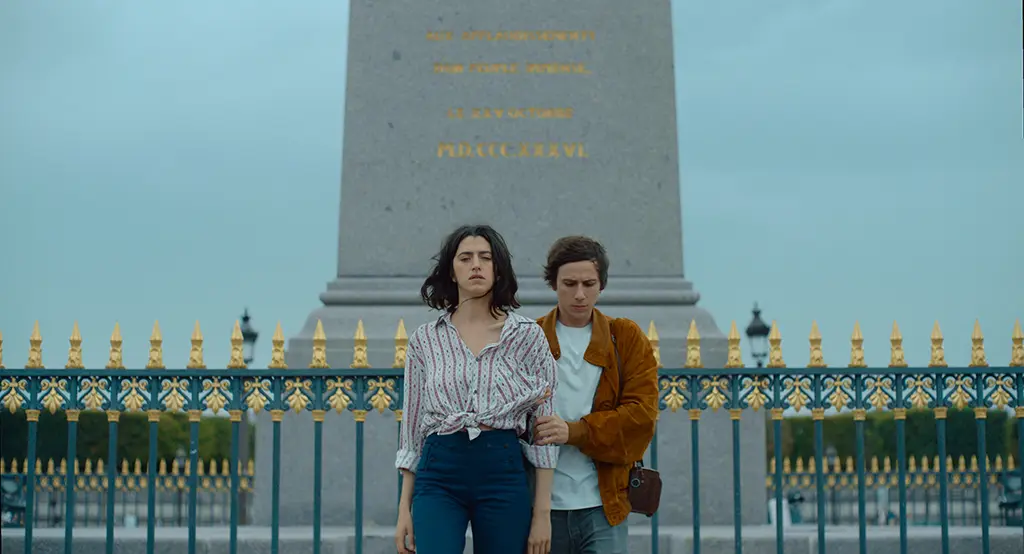
The film opens with Paulette, kneeling on Place de la Concorde in a chilling re-enactment of Marie-Antoinette’s final moments. Paul photographs her, and from this initial interaction, a strange bond begins to form.
She invites Paul to her temporary apartment—a friend’s Parisian flat, which Massey describes as “a serendipitous find, almost hidden, with that lived-in aura that you can’t fake.” The space is filled with antique furniture, lighting, rugs, and a striking red velvet sofa. Green-painted walls, an antique chandelier, and a rotary telephone – owned by Massey and plugged in for authenticity – make the apartment feel alive with history.
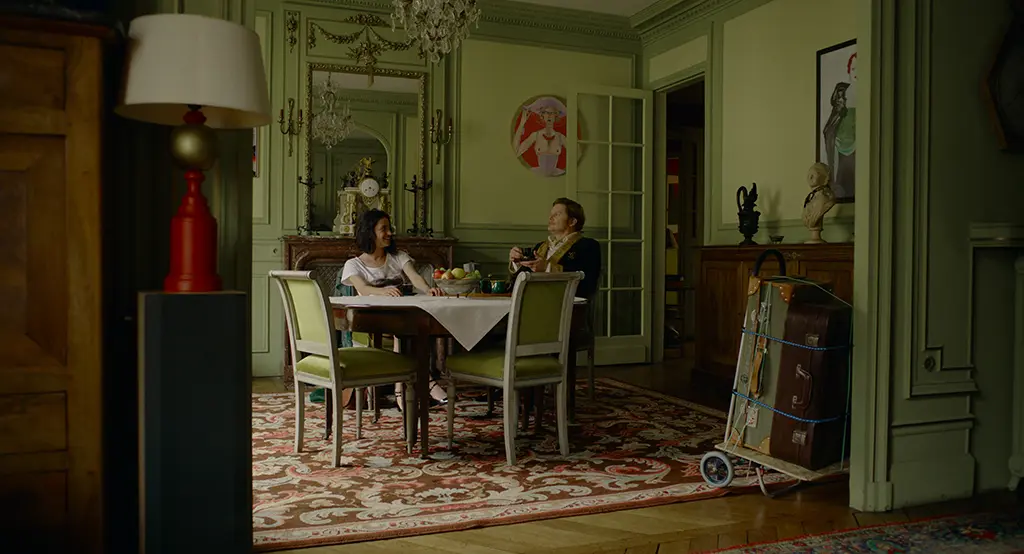
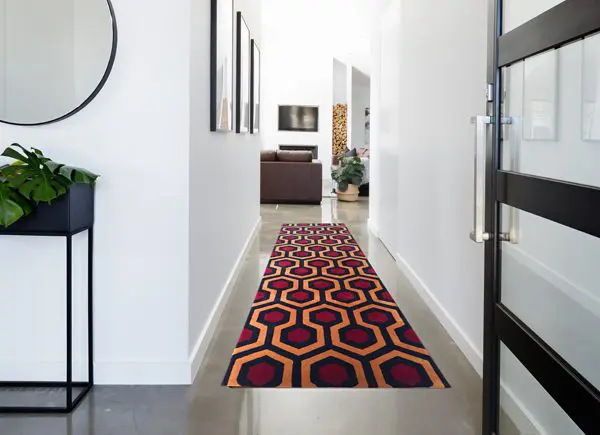
“The phone had to be there to start the story,” Massey explains, referring to the scene when Paulette first calls Paul after their chance encounter. “It’s tactile, it has texture – the resistance when you dial it. That impulse is so important. In a world that’s more and more digital, we need to connect physically with things. Paulette is always feeling the world. It’s part of her story.” He also notes how the vintage rugs, velvet upholstery, and warm patina of the furniture create a rhythm in the space, guiding the actors’ movement and interactions while evoking subtle echoes of the past.
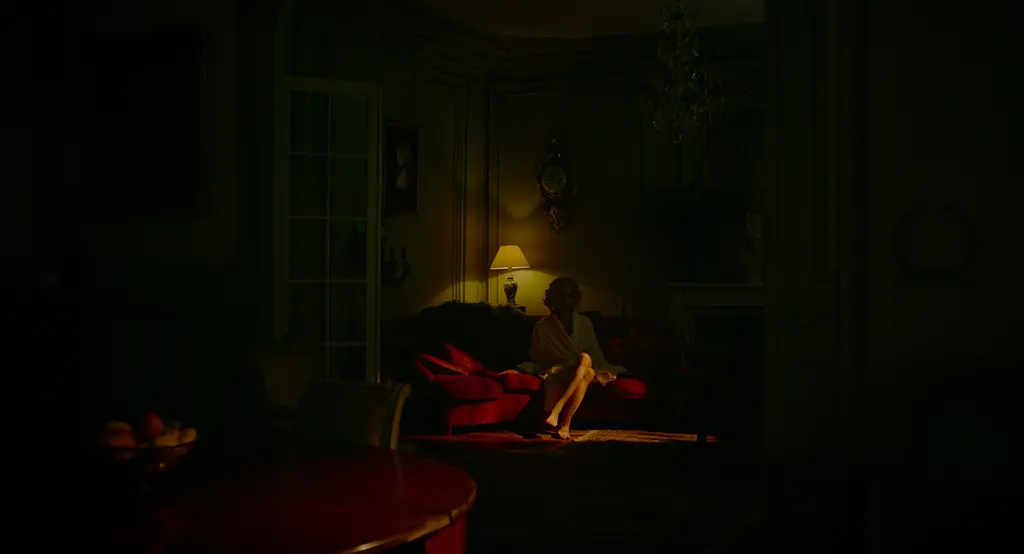
As Paulette sits in semi-darkness, bathed in the dim glow of a table lamp, she recounts a notorious crime that occurred in the same apartment: “These rooms are witnesses,” she says. “In 1890 a woman… lured a wealthy man to this very apartment. It was the newspaper scandal of the century – France’s first celebrity murderer…” and she continues to eerily connect the room to the present. The apartment, with its carefully curated decor, becomes more than a backdrop; its furniture, colours, and objects serve as symbols of memory, both haunting and intimate, framing the characters’ exploration of history and desire.
Hitler’s Bathroom
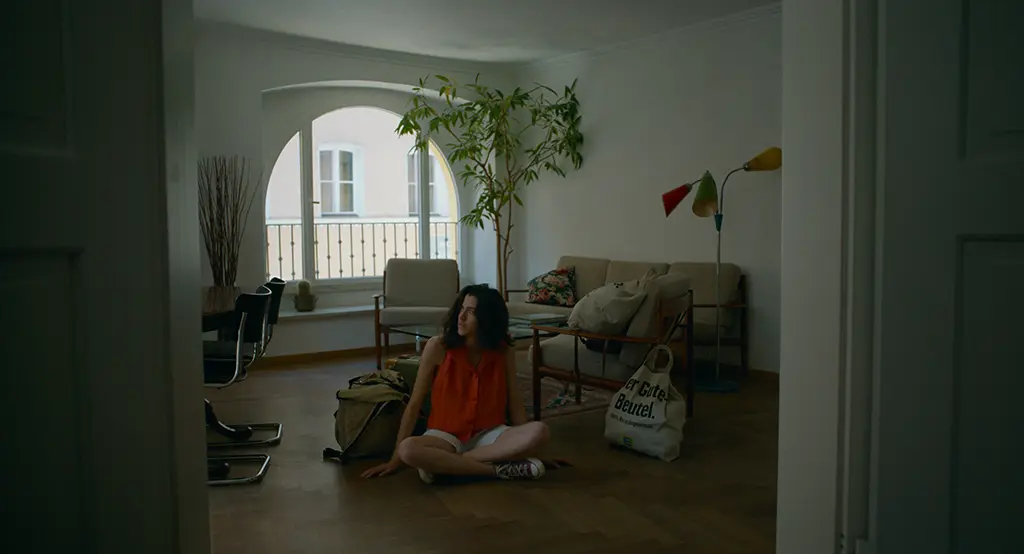
A road trip in a VW Beetle takes the couple to Munich, to an apartment once inhabited by Adolf Hitler. The neat living room – clearly furnished well after Hitler’s departure – features herringbone floors, midcentury wooden chairs and sofa, a desk, and a striking, colourful floor lamp. Yet, the dark history embedded in the flat casts a long shadow.
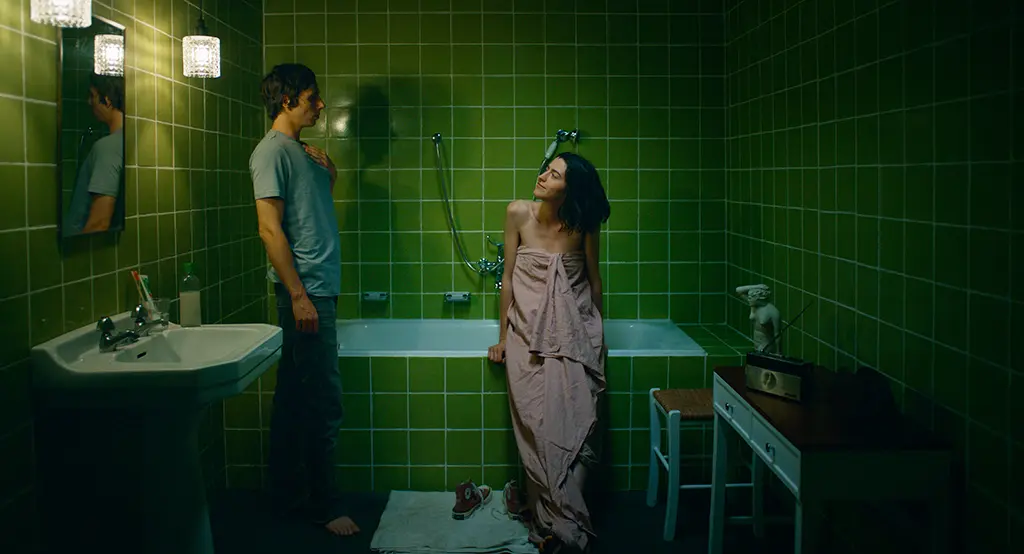
In reality, these interior scenes were filmed elsewhere, as the actual apartment is now a police station. The bathroom, a constructed set with aged green tiles, draws inspiration from Lee Miller’s haunting photograph of herself in Hitler’s bathtub. Here, the ordinary and the infamous collide, and the characters’ game grows increasingly uncomfortable.
The bathroom also features a small sculpture, the first prop the team made for the film, replicating the object seen in Miller’s photograph. A pioneering photographer and former Vogue model, Miller documented the liberation of Paris and captured intimate, often shocking moments of history. Massey notes: “Even this tiny sculpture carries the weight of history. It’s tactile, unsettling, and sets the tone for the scene.”
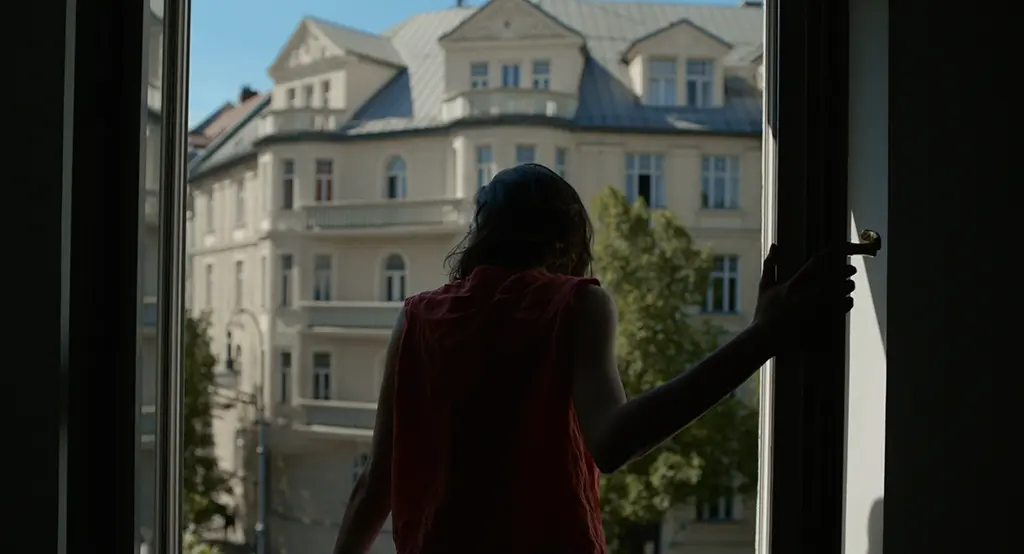
To anchor the scene in reality, Massey filmed a view of the real ex-Hitler apartment through a window, blending fact and fiction. The bathroom, though recreated, becomes a chilling symbol of the banality of evil and the unsettling intimacy of history.
Crossing the Line: The Bataclan Apartment
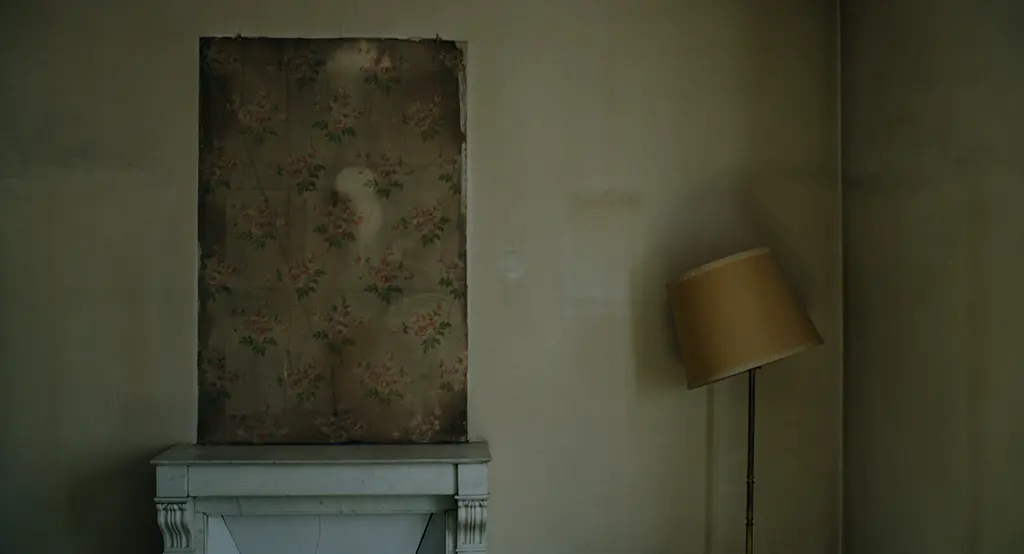
The journey culminates at an apartment near the Bataclan, a place that forces Paul to confront the ethical boundaries of their macabre game. As they reenact a scene from where the Paris attacks were planned, the gravity of the location hits them both. This apartment, once a site of horror, is no longer a place for play.
Colour, Memory, and the Power of Décor
Throughout the film, colour and decor reinforce emotional landscapes. A red sofa, an antique chandelier hanging from a hook, the green tiles, and vintage furniture make memory tangible. Massey reflects: “There’s something wonderful about tactile objects. In Paris flea markets, finding props, furniture, vinyl records—it all adds layers to the story. It’s about connecting physically. That’s what makes a space alive.”
Ultimately, Paul & Paulette Take a Bath demonstrates that spaces are more than settings—they are witnesses, carrying emotional weight, shaping how characters – and audiences – experience history, trauma, and human connection.
You can find clips from Paula Benson’s in-depth and insightful discussion with Director Jethro Massey on the Film and Furniture You Tube Channel – coming soon.
Paul & Paulette Take a Bath is in UK & Irish cinemas 5th September.
Find more info at www.conic.film/bath
A major exhibition of the trailblazing surrealist photographer Lee Miller opens at Tate Britain, London on 2 October 2025.
Find more info at the Tate website.
Furniture and Décor Focus
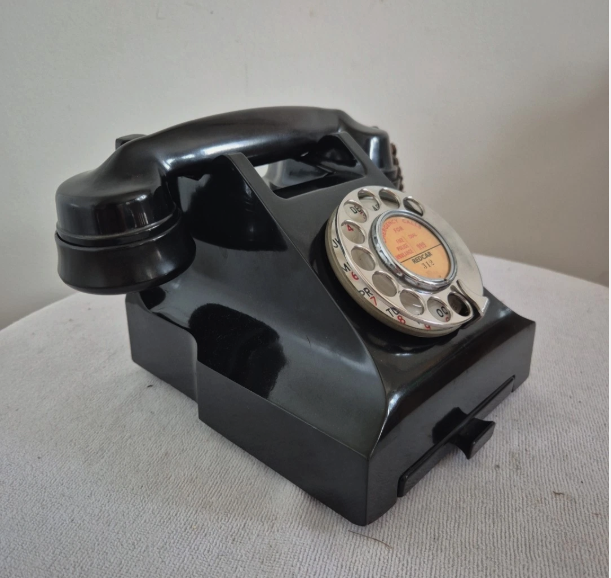
Rotary Dial Telephone – Evokes a tactile, intimate era of communication. Find yours from around £50 upwards on eBay or Etsy.
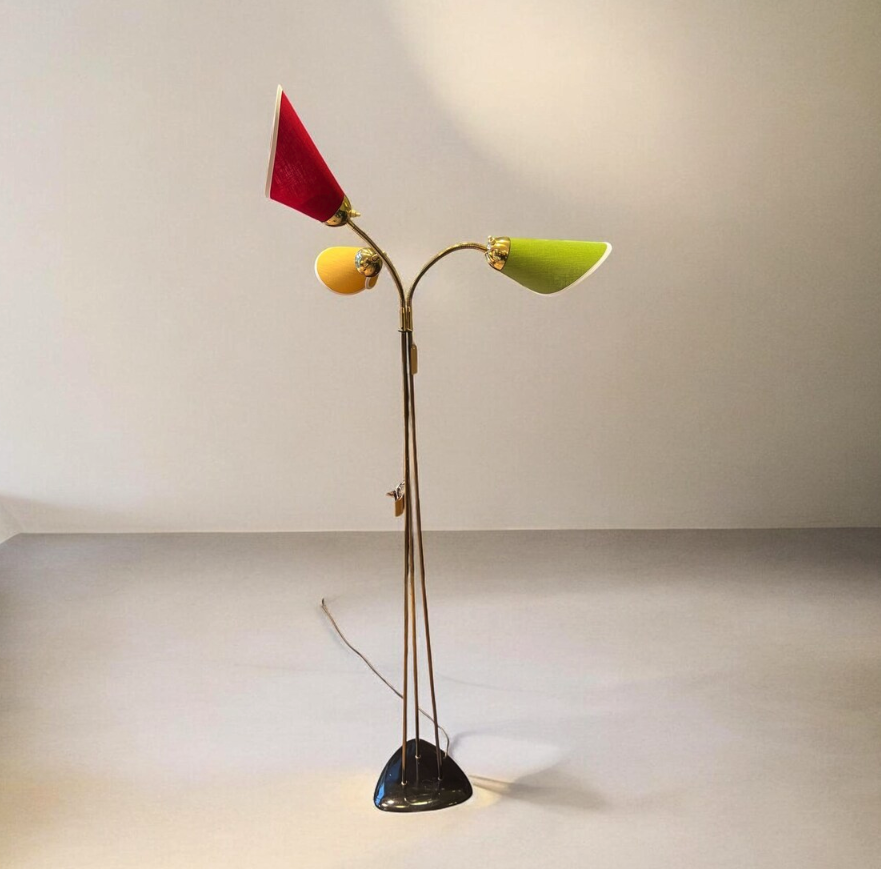
Midcentury Floor Lamp – three-armed with bag shades in Yellow, Green & Red. Find similar at Etsy and Chairish.
-
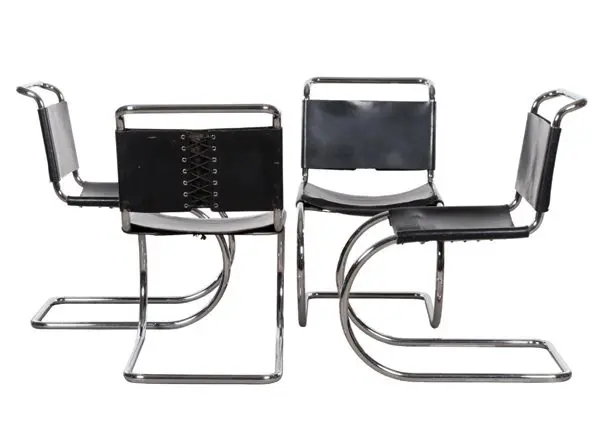
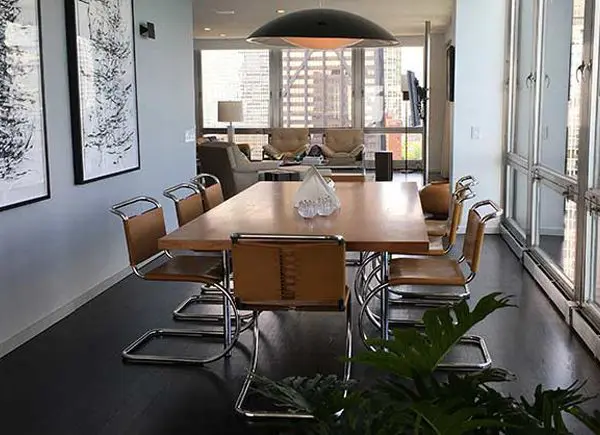
MR cantilever chair, dining chair / side chair by Mies Van der Rohe
Designer: Mies Van der Rohe
Knoll
Directors: Steve McQueen, Johnny Hardstaff
Shop NowThe MR10 cantilever dining chair was designed by Mies van der Rohe and feature chromed legs and leather saddles. We have spotted these dining chairs in films such as Widows.
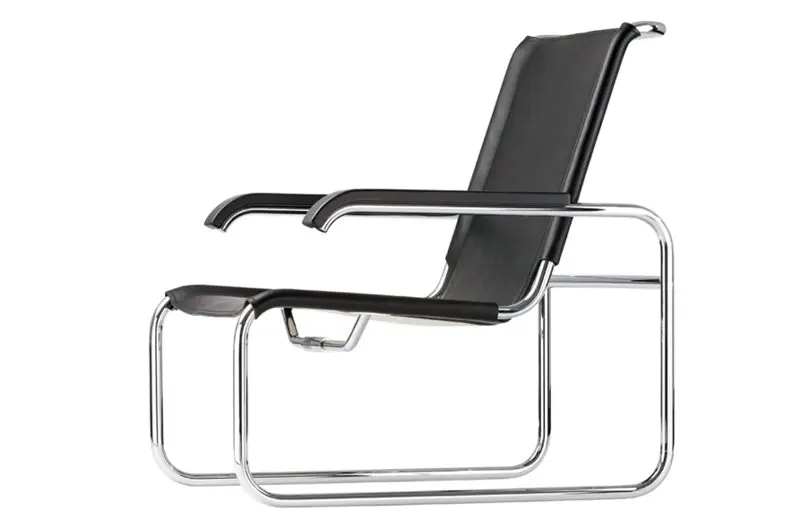
Bauhaus-Style Cantilever Chairs – Black leather with chrome frames; minimalist design, industrial materials, and functional form echo Bauhaus principles. Historically ironic, as the Nazis opposed the Bauhaus school. Those in the film resemble designs like the Mart Stam S34 or variations of Mies van der Rohe‘s cantilever chairs.
This feature is FREE to Classic members.
Join our newsletter community to receive Film and Furniture inspiration direct to your inbox and we’ll UPGRADE you to Classic Membership (which includes access to our exciting giveaway draws) for FREE.




 Facebook
 Twitter
 Instagram
 Pinterest
 RSS
RSS