


Midcentury Marvel: Inside the Retro-Futuristic Design of Fantastic Four: First Steps
What if 2001: A Space Odyssey collided with Mad Men, with a sprinkle of space-age optimism and a dash of superpowers? That’s the visual flavour of Fantastic Four: First Steps, Marvel’s bold new take on the superhero family — the result of a visionary collaboration between director Matt Shakman, production designer Kasra Farahani, set decorator Jille Azis and their super talented teams.
As Farahani told us on The Film and Furniture Podcast, this world is a retro-futurist dreamscape — one shaped by a single, brilliant mind: Reed Richards, aka Mr. Fantastic (Pedro Pascal). In this alternate 1960s, Richards’ influence bends the design timeline, creating a world where architecture, furniture and technology evolve in his image. “The inflection point,” says Farahani, “is the birth of Reed Richards.”
In this reimagined world, flying cars are real, Tulip Tables orbit sunken seating areas, Cobra Lamps glow like celestial objects, and Calder-style mobiles float through the air. Drawing inspiration from the curvaceous forms of Oscar Niemeyer, the clean lines of Eero Saarinen, and the sculptural flair of Verner Panton, the film’s design language implies a refined and elegant version of futurism.
Read on — and watch the full video interview on our YouTube channel below — for more insights from our conversation with Kasra Farahani. You can also listen to The Film and Furniture Podcast on Podbean, Spotify, Apple Podcasts, and all your favourite podcast platforms.
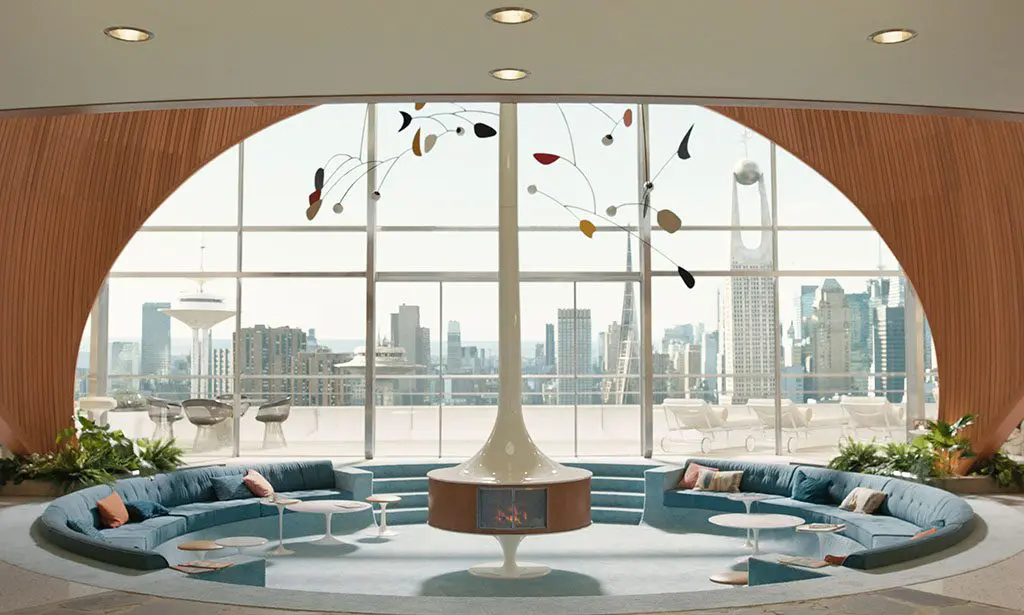
The answer lies in architectural layering: a warm wooden cocoon constructed within a sleek glass skyscraper. This secondary internal structure wraps the penthouse in rich wood panelling and sweeping lines. Flagstone floors lead to a sunken conversation pit, soft and womb-like, anchored by a sculptural fireplace whose flue and base echo Saarinen’s Tulip silhouette.
As the lift doors open, the eye is drawn through a dramatic composition of parabolic curves — a motif repeated throughout the apartment. These sweeping forms are more than decorative. They’re a deliberate homage to Saarinen’s TWA Flight Center and Niemeyer’s Brasília — graceful, expressive gestures that suggest motion, vision and possibility.

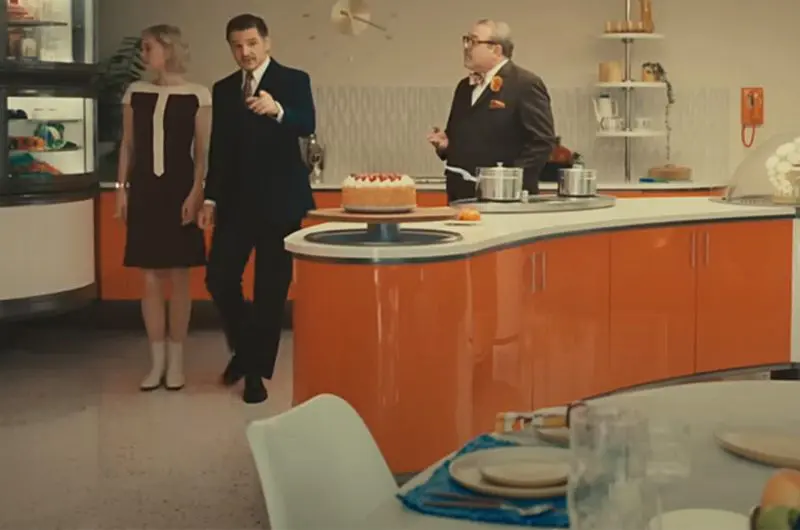
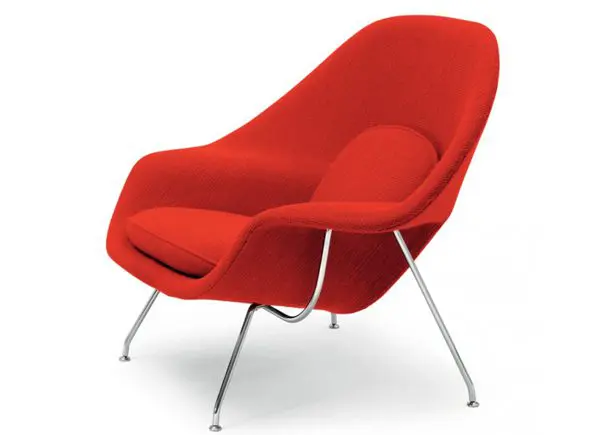
Throughout the apartment, intimate design touches reinforce the sense of family and domesticity: an orange-toned sci-fi kitchen, Johnny’s playful bedroom with a custom round bed and the cocooning comfort of a blue Saarinen Womb Chair.

Farahani’s world-building approach is cinematic and deeply architectural. “We imagined Reed Richards started influencing the world in the 1950s,” he explains. “So New York before 1950 looks familiar — but everything built after? That’s his vision.”
To visualise this timeline split, Farahani leaned into the refined forms of modernist masters: Oscar Niemeyer, Eero Saarinen, Luigi Colani, and Verner Panton. “Their work represents a refinement of futurism,” he explains. “There’s movement and energy, but also restraint — an elegance in materials and colour.”
Furniture and decor you’ll spot include:
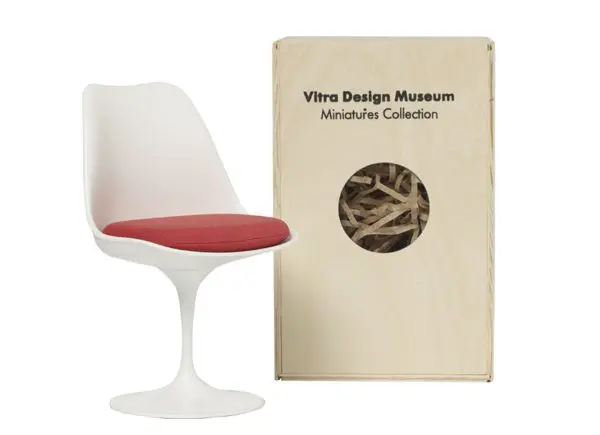
Eero Saarinen’s Tulip Chairs and Tables in the dining area and lounge, clearing the “slum of legs” and offering seamless sculptural simplicity.
-

Tulip chair by Eero Saarinen (armless and armchair) new
As seen in:Designer: Eero Saarinen
Directors: Akiva Goldsman, Steven Spielberg, Greta Gerwig, Matt Shakman
Shop NowConsidered one of the great icons of design, Eero Saarinen’s Tulip chair is characterised by the instantly recognisable cup-shaped frame, emphasised by the reduction of support to a single stem.
Approx £169.00 Inc VAT if applicable / $226
A plethora of low Saarinen side tables orbiting the blue, curved sofa in the sunken conversation pit.
-
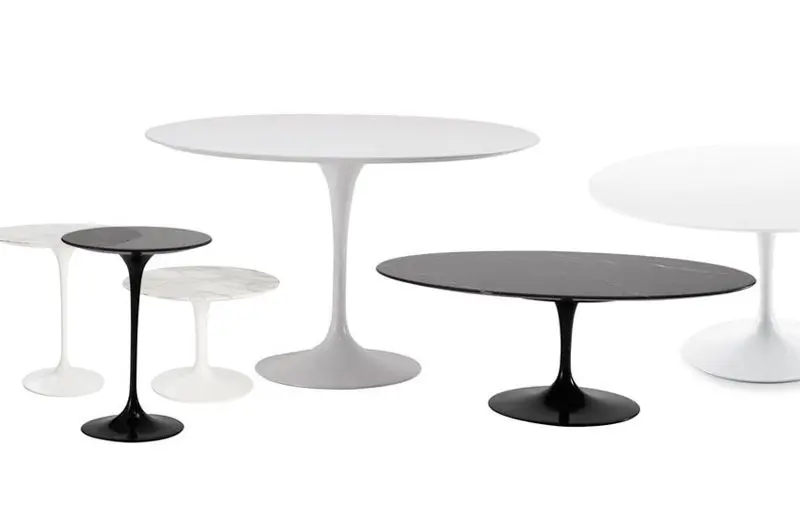
Tulip Table by Eero Saarinen (new and vintage)
As seen in:Designer: Eero Saarinen
Knoll
Directors: Akiva Goldsman, Steven Spielberg, Matt Shakman
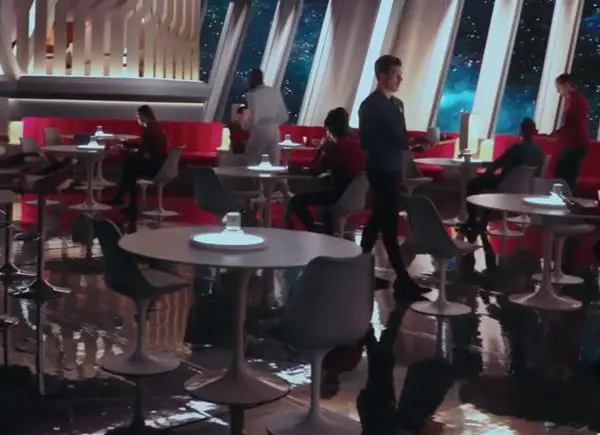
Shop NowThe Tulip table is part of Eero Saarinen’s Pedestal collection which includes the Tulip chair, Stool, Dining Table, Coffee Table and Side Table all designed in the 1950s and still in production today. We see a collection of Tulip Tables in the retrofuturist living room in Fantastic Four: First Steps, Mad Men, Star Trek: Strange New Worlds, The Fabelmans and more.
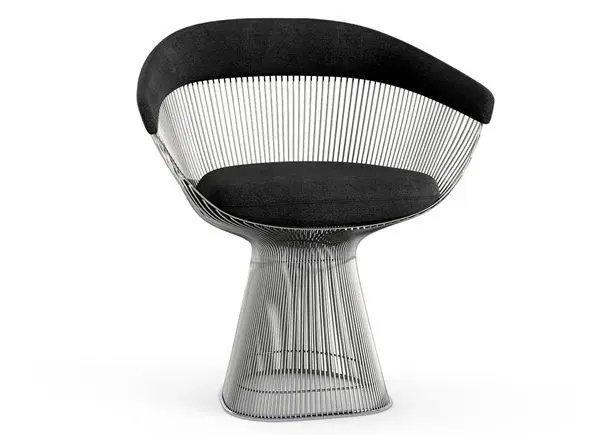
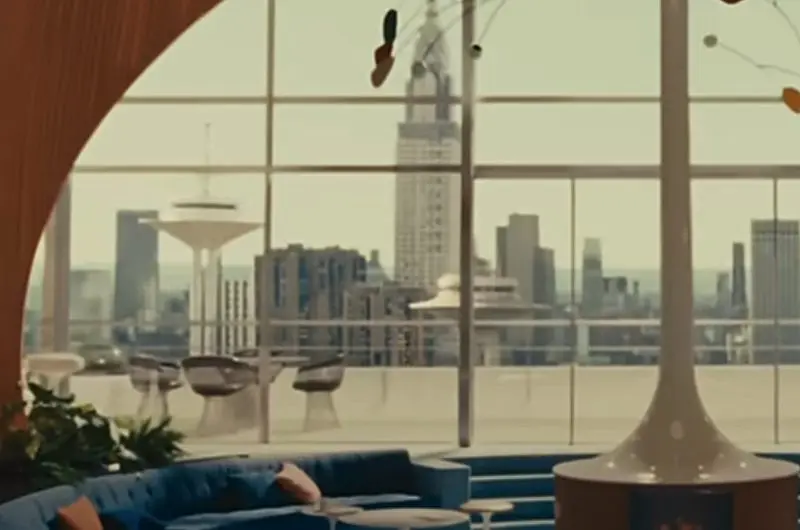
Warren Platner chairs glimmering on the balcony, paired with Knoll 1966 outdoor sunloungers, offering glamour and symmetry against the skyline.
-
Platner side arm chair
Designer: Warren Platner
Knoll
Directors: Ridley Scott, Todd Field
Shop NowFirst introduced in 1966, Warren Platner’s Side Arm Chair remains a masterclass in sculptural sophistication. Part of the revered Platner Collection for Knoll, this piece captured the “decorative, gentle, graceful” forms that were beginning to reshape the modern design vocabulary of the 1960s—a glamorous counterpoint to the era’s often austere minimalism.
Approx £2,600.00 Inc VAT if applicable / $3484
The Womb Chair in Johnny’s room — a Saarinen classic — next to a translucent round-topped record player and Audiorama 8000 speakers by Grundig.
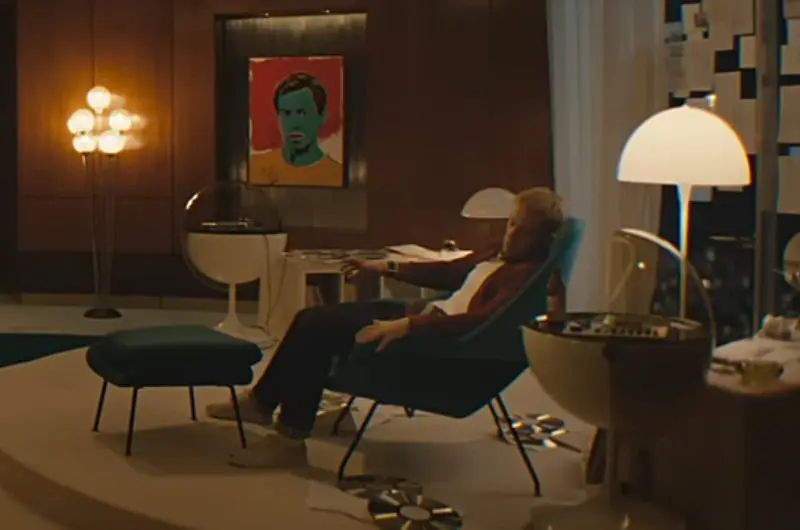
Panthella table and floor lamps by Verner Panton, casting a soft, space-age glow — also featured in Johnny’s bedroom.

-
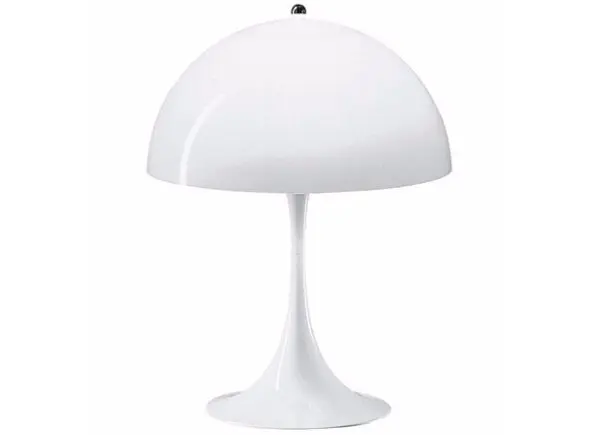
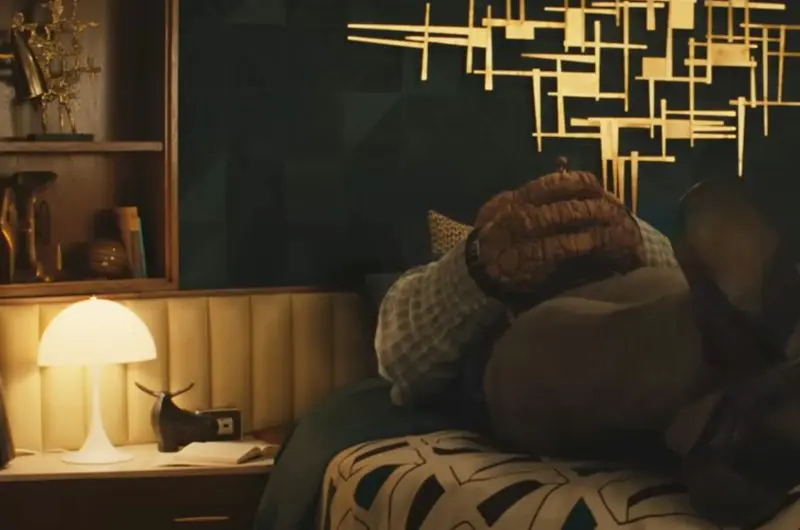
Panthella Table Lamp
Designer: Verner Panton
Louis Poulsen
Director: Matt Shakman
Shop NowOriginally designed in 1971 by Danish design visionary Verner Panton, the Panthella Table Lamp remains one of his most celebrated creations—and it’s easy to see why.
Approx £579.00 Inc VAT if applicable / $775
Elio Martinelli’s Cobra lamps, striking in form and function, appearing in the press conference scene — which was filmed inside the Palacio de Exposiciones y Congresos in Oviedo, Spain, designed by Santiago Calatrava.
-
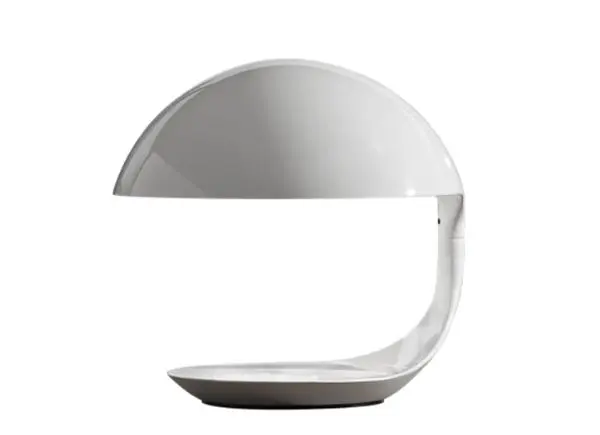

Cobra Table Lamp by Elio Martinelli for Martinelli Luce
Designer: Elio Martinelli
Martinelli Luce
Directors: Ridley Scott, Lenny Abrahamson, Matt Shakman
Shop NowThe Cobra Table Lamp brings a touch of retro-futurism to any setting, and has lit up the screen in several distinctive productions. You’ll spot it in House of Gucci, on the desk of Maurizio Gucci, as well as in the beautifully styled sets of Fantastic Four: First Steps, Conversations With Friends, and Mr Jones. Its rounded, organic form and sculptural presence make it a perfect fit for interiors with cinematic ambition.
Approx £1,000.00 Inc VAT if applicable / $1340
Calder-style mobiles, poised above the living area, providing kinetic motion and doubling as lighting — a poetic fusion of form and function.
-
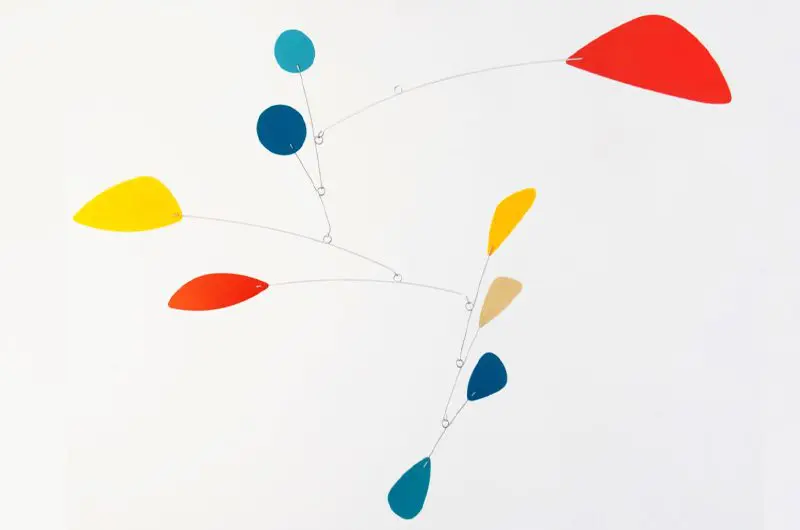

Calder Mobile Midcentury Hanging
As seen in:Director: Matt Shakman
Shop NowHanging from the ceiling in the Baxter Building apartment of Marvel’s Fantastic Four: First Steps is a striking mobile sculpture in bold primary colours—a piece that immediately calls to mind the work of Alexander Calder, the American artist who transformed sculpture by setting it in motion.
Parabolic architecture dominates, with vaulted, fluted arches and a high white envelope that nods to the interiors of 2001: A Space Odyssey, Saarinen’s TWA terminal, and Niemeyer’s Brasília cathedral. The lab becomes a cathedral of science — grand, geometric, and deeply symbolic.

White surfaces reflect a NASA-like cleanliness, while acoustic ribs add rhythm and functional structure. The space is divided into three colour-coded zones:
Red: A workshop zone for robotics and electronics.
Yellow: A reflective space filled with rising and falling chalkboards.
Blue: A high-tech mission control with organically blooming tulip-like monitors, echoing Colani’s biomorphic forms.

The film’s vision of futurism extends to its vehicles. The Fantastic Car is a retro-futurist marvel: streamlined, turbine-powered, with chrome fins and bullet tips. “It’s as long as the longest Cadillac ever made,” says Farahani — and its satisfying door-clunk roots it firmly in the tactile world of 1960s automotive design.
Farahani and the production team favoured physical builds over green screens and CGI. Reed’s lab was entirely practical, built without set extensions. Times Square was recreated at two-thirds scale with working marquees. Much of the furniture was either sourced or custom-built — from Johnny’s record player to the modular tech seen throughout.
Even the Calder-inspired mobiles were functional: “They weren’t just set dressing — we integrated lighting into them,” says Farahani. “They’re sculpture and infrastructure.”

This is not nostalgia for nostalgia’s sake. It’s a carefully constructed vision of what the future might have looked like — if shaped by the mind of a supergenius in the mid-20th century. The film’s design is steeped in reverence for the past, but plays entirely in its own futuristic lane.
And at the heart of it all? Furniture. Architecture. Colour. Form. Together, they tell a story about imagination, optimism and the power of visual storytelling.
This feature is FREE to Classic members.
Join our newsletter community to receive Film and Furniture inspiration direct to your inbox and we’ll UPGRADE you to Classic Membership (which includes access to our exciting giveaway draws) for FREE.



 Facebook
 Twitter
 Instagram
 Pinterest
 RSS
RSS