
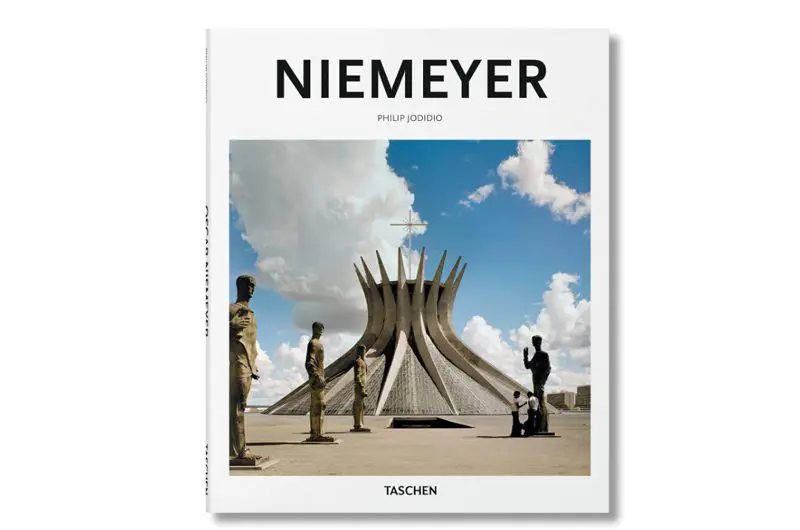
Niemeyer: The Once and Future Dawn (Basic Art) book
By Philip Jodidio
TASCHEN
As seen in:
Designer: Oscar Niemeyer
Director: Matt Shakman
This compelling monograph by Philip Jodidio on Oscar Niemeyer, from the TASCHEN Basic Architecture Series, explores the life and work of one of the most influential architects of the 20th century. Until his death at the age of 104, Niemeyer remained a prolific and unstoppable creative force. Over a career spanning more than seven decades, he designed around 600 buildings, leaving his mark on skylines from Algeria to Paris—and most notably, across his native Brazil.
While rooted in modernism, Niemeyer’s work rejected the rigidity of right angles in favour of sweeping curves and poetic forms. His architecture, whether in the soaring vaults of Brasília’s Cathedral, the swirling Edifício Copan, or the UFO-like Niterói Contemporary Art Museum, brought a new sensuality to concrete. He imagined buildings not just as structures, but as expressions of freedom, movement, and optimism.
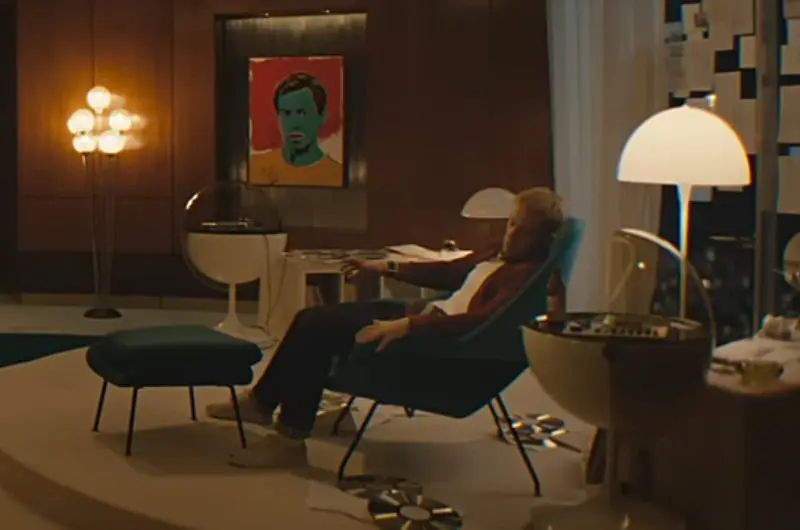
His signature style has not only defined civic architecture but has also made a striking impression on film and television. The Niterói Contemporary Art Museum famously appears in the sci-fi series The Expanse, doubling as a futuristic building on Earth. The bold, utopian spirit of Brasília underpins the visual language of Fantastic Four: First Steps (2025), where the design of the Baxter Building draws on Niemeyer’s vision of a curvaceous, optimistic future. Films like Gattaca and Her echo his influence in their elegant futurism, while The Man from U.N.C.L.E. channels his flair for glamorous modernist escapism. Even Casino Royale and Westworld reflect his legacy in the sleek, cinematic use of modernist settings.
This richly illustrated book offers a concise yet insightful journey through Niemeyer’s life and legacy. It covers his collaborations with Le Corbusier, his central role in the creation of Brazil’s capital city, and his later work abroad during political exile. From civic landmarks and museums to residential buildings and places of worship, Niemeyer’s portfolio reveals a commitment to architecture as both a cultural and humanist pursuit.
With an engaging introduction to his design approach, a chronological overview of major works, and detailed commentary on key projects—including construction challenges and client briefs—the book provides a valuable resource for architects, designers, and film lovers alike. A location map of selected buildings and approximately 120 illustrations—including photographs, sketches, and architectural plans—round out this essential introduction to Niemeyer’s enduring impact.
Related Products

Eames: Beautiful Details
As seen in:
Designer: Charles and Ray Eames
By Demetrios Eames
AMMO Books
Shop Now



1966 Chaise Lounge outdoor sun lounger
As seen in:
Designer: Richard Schultz
Knoll
Director: Matt Shakman
Shop Now


Cobra Table Lamp by Elio Martinelli for Martinelli Luce
Designer: Elio Martinelli
Martinelli Luce
Directors: Ridley Scott, Lenny Abrahamson, Matt Shakman
Approx £1,000.00 Inc VAT if applicable / $1340
Shop Now

 Facebook
 Twitter
 Instagram
 Pinterest
 RSS
RSS