


Venture into Wildwood: an epic tale with extraordinary detail
Talking eagles, an enchanted forest, a battle worthy of The Lord of the Rings and a baby abducted by crows. LAIKA’s stop-motion epic Wildwood gives us plenty to hold our attention. Yet somewhere amid the adventure, I found myself admiring the kitchen tiles and a herringbone wooden floor. Occupational hazard.
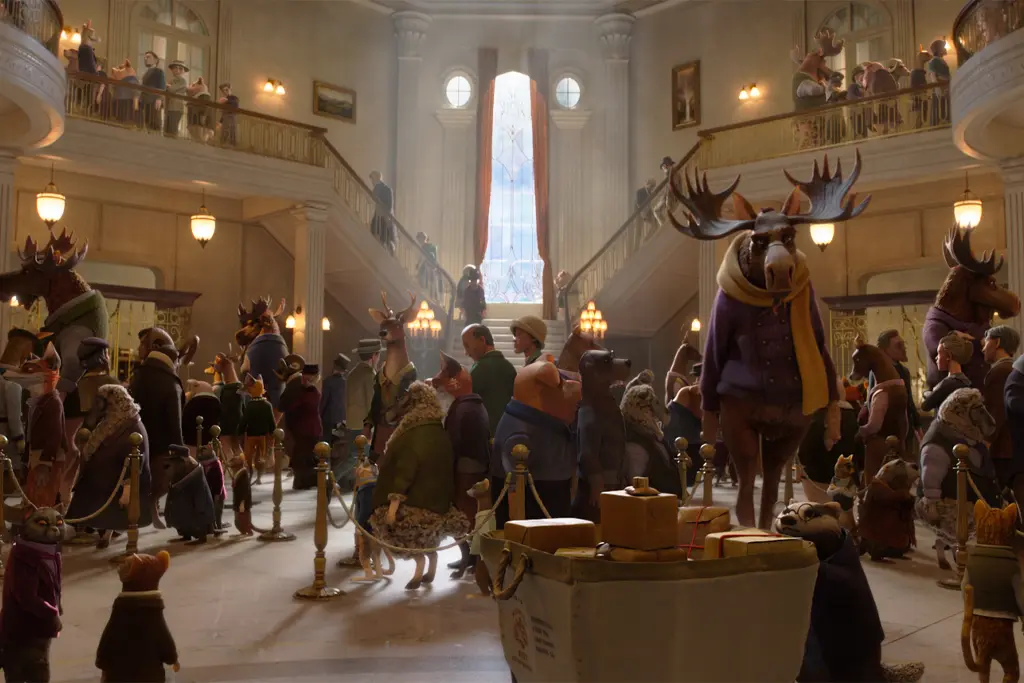
Having seen the film at its London Film Festival world premiere, I came away exhilarated by the scale, humour and extraordinary craft. Directed and produced by Travis Knight, also LAIKA’s president and CEO, this stop-motion adventure has a powerful sense of nature’s strength and some affectionate Portland hippie humour. It also has interiors deserving of further investigation, even if their occupants are puppets and every movement has been painstakingly animated, frame by frame.
Based on Colin Meloy’s novel, illustrated by Carson Ellis, Wildwood follows teenager Prue McKeel (voiced by Peyton Elizabeth Lee) into the Impassable Wilderness after a murder of crows abducts her baby brother, Mac. Accompanied by her classmate Curtis (Jacob Tremblay), she encounters bandit leader Brendan (Mahershala Ali), the formidable eagle known as the General (Angela Bassett), eccentric Owl Rex (Richard E. Grant) and Alexandra, the Dowager Governess (Carey Mulligan), within a forest whose future is at stake.
-
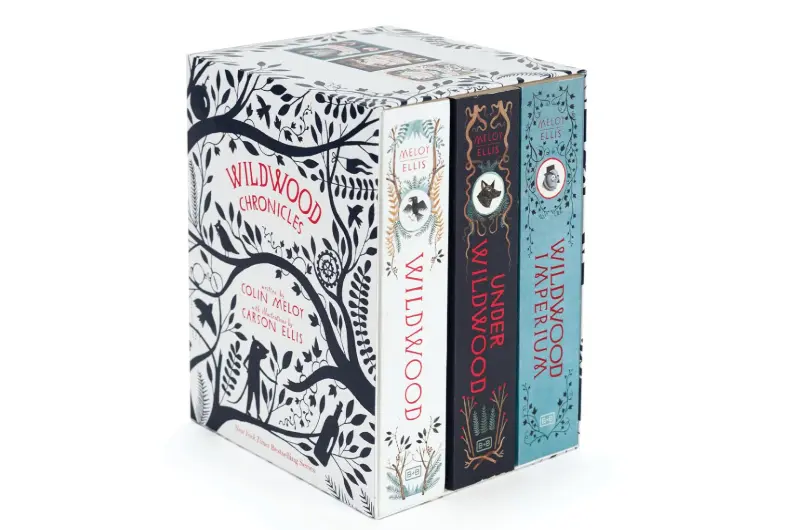
Wildwood Chronicles 3-Book Box Set: Wildwood, Under Wildwood, Wildwood Imperium
As seen in:Director: Travis Knight
Shop NowExplore the illustrated world behind LAIKA’s stop-motion film Wildwood with this paperback box set of Colin Meloy and Carson Ellis’s bestselling trilogy: Wildwood, Under Wildwood and Wildwood Imperium.
At a time when AI is encroaching on so much creative work, Wildwood makes a persuasive case for the value of human hands, patience and care. Hundreds of artists have built, sculpted, stitched and animated its world, moving physical objects by fractions of a millimetre. Their attention extends from a character’s expression, animated using hundreds of interchangeable faces, to a chair or cabinet glimpsed in the background. “Every frame bears the imprint of the artists who brought it to life,” says LAIKA.
That extraordinary workmanship serves Knight’s ambition to make us believe in the characters and their emotional lives. “Our movie was made by hand, a frame at a time, and I believe the audience can feel that human presence in the image,” he says. “We don’t make these movies so people will see the work behind them. We make them so, for a little while, they forget the work entirely and believe in the life in front of them.”
For production designer Nelson Lowry, the journey began close to home.
Portland architectural research, by bicycle
There is a pleasing coincidence in Lowry finding himself designing a fantastical version of the city he calls home. When we met at the opening of Wildwood: The Exhibition at London’s Design Museum, he described how the forest really does loom at Portland’s edge. The story’s relationship between the everyday and the extraordinary has a foothold in the actual landscape.
Prue and the McKeel family live in St. Johns, a historic neighbourhood in north Portland near to Lowry’s own. He described an area that has largely escaped gentrification, preserving the quirks that make it interesting. To create the family house, he spent hours cycling through its streets, photographing homes. He enjoys working in an analogue way, and those photographs became material for a fictional address assembled from several real properties: an architectural feature here, a colour there.
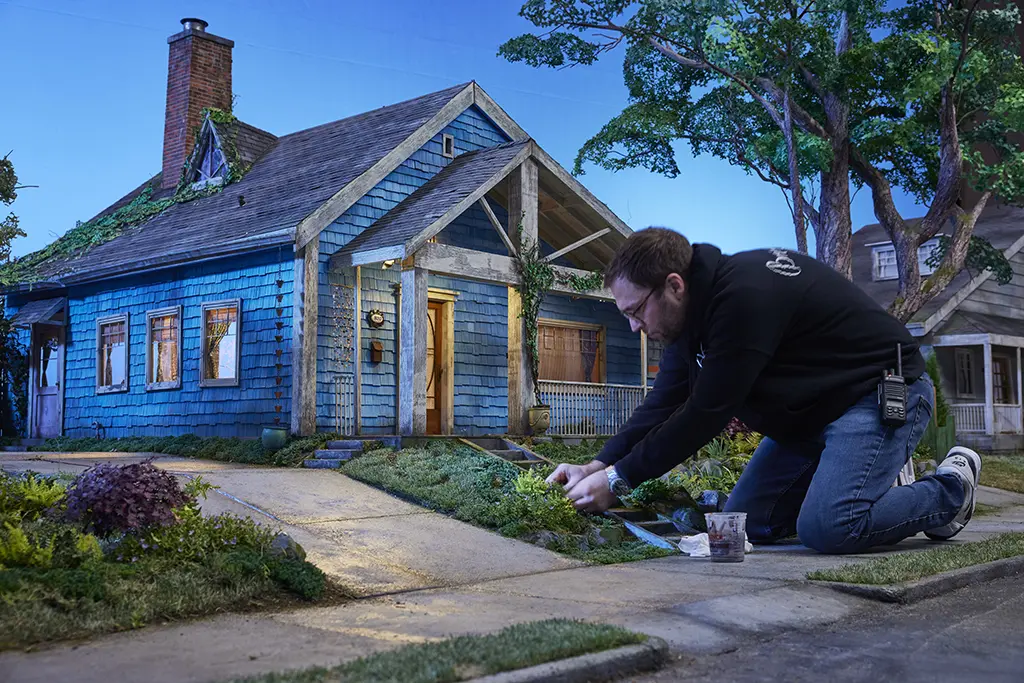
Even the neighbourhood’s unusual paint colours have a real life story. An unpopular colour had been sold off cheaply in a job lot, resulting in several houses wearing the same unexpected shade. A small economic accident had left its mark on the streetscape. For a production designer, that is rather useful local knowledge.
The McKeels’ house emerged in robin’s egg blue, a little brighter and stranger than its neighbours. There is a real 1930s Arts and Crafts Portland home in a similar shade, leaving the possibility that a passer-by might recognise something of it.
The McKeel family home
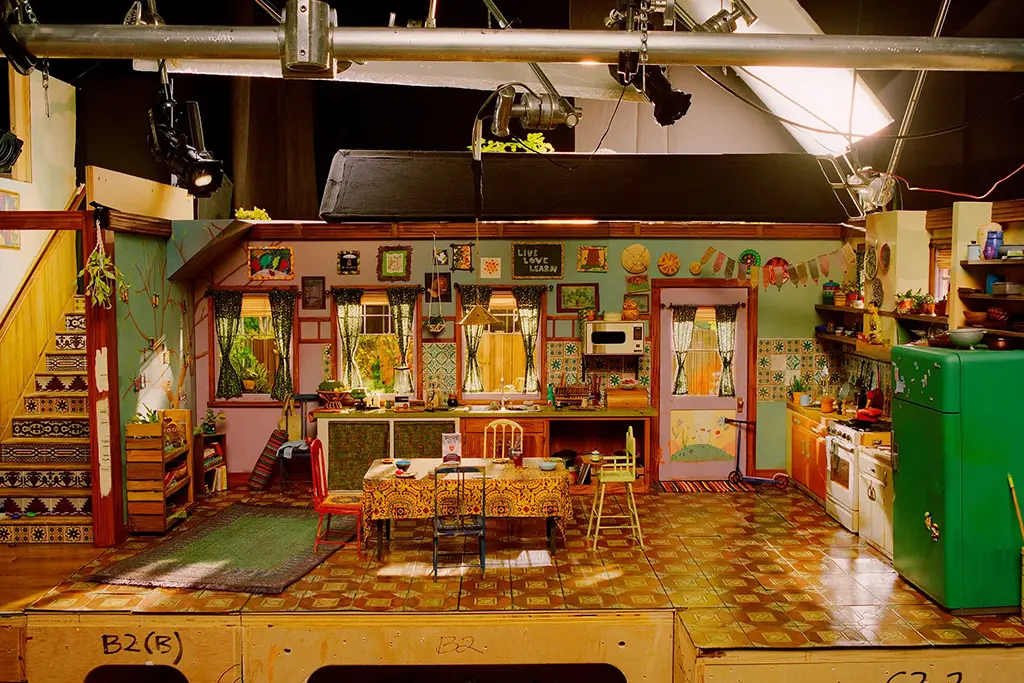
The McKeel home feels warm, cosy and inviting, its eclectic furniture and well-used belongings reflecting the family’s creative, bohemian spirit. The kitchen caught my attention immediately. Prue’s parents are artistic and unconventional, presiding over a home filled with books, music and homemade jam.
And so I find myself at a glamorous London party, three glasses of champagne in, drawing Lowry aside to discuss kitchen tiles. His pleasure in these details was evident. Those small surfaces help establish a family’s world: what its members choose, what they keep and how they use a room.
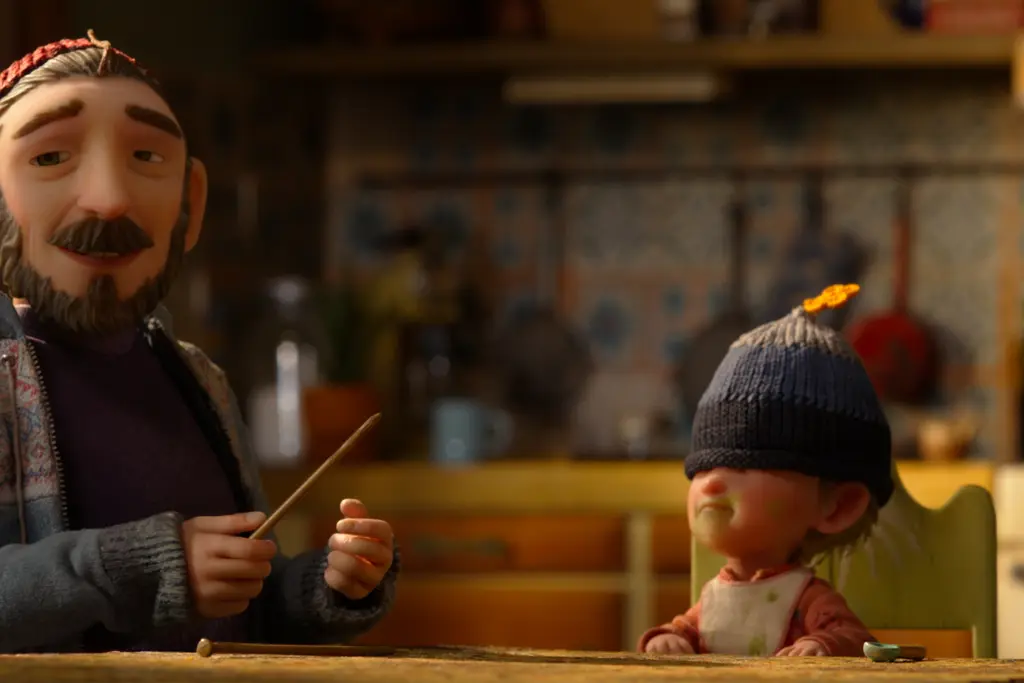
The kitchen’s apparent history was carefully created. A red chair was painted yellow first, allowing chips to reveal an earlier finish. Dented kitchen equipment joins worn surfaces in suggesting years of family use.
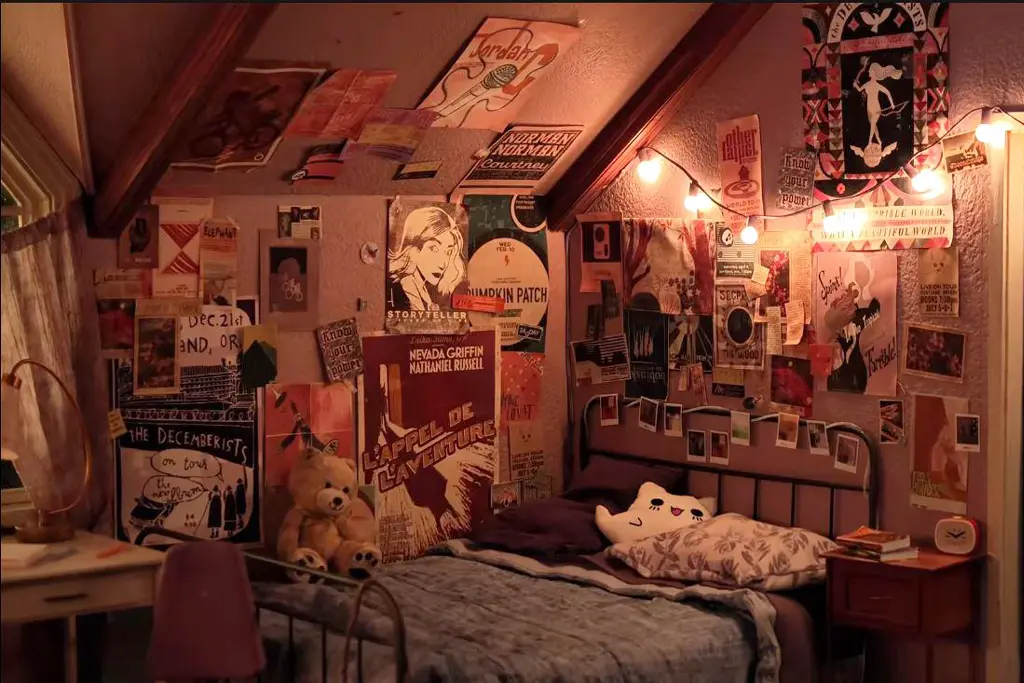
When we spoke about the fun of teenagers’ bedrooms, Lowry described the gradual transition from childhood possessions to rock bands. Prue’s room occupies that in-between stage, where objects from a younger life coexist with emerging tastes and interests, a kind of domestic history.
Bedrooms rarely transform overnight as their occupants grow up. Earlier enthusiasms linger while new ones claim space, creating a portrait of someone still working out who they are. Prue’s room helps establish the girl whose confidence and assumptions will be tested in the forest, while preserving something of the childhood she is moving beyond.
Pittock Mansion: power, parquet and a very large miniature
Beyond Portland, the film opens into a woodland society with its own architecture, commerce and hierarchies. South Wood’s streets contain shops, taverns and food carts, with the Long Road leading towards Pittock Mansion, the seat of government.
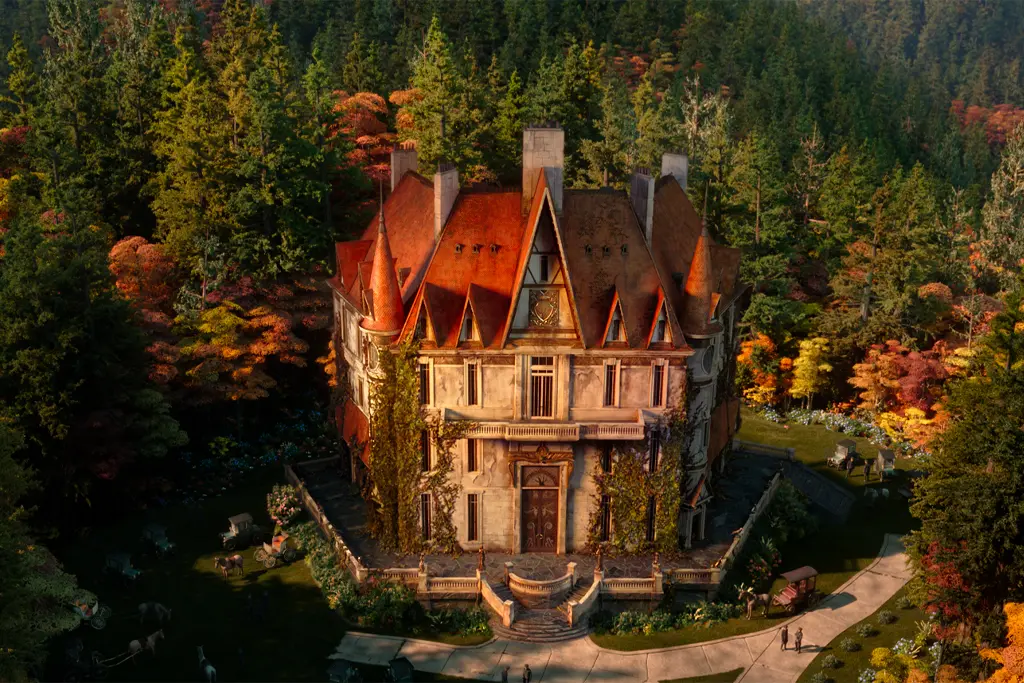
The production design team pays homage to the real French Renaissance-style Pittock Mansion in Portland’s West Hills. Its screen counterpart has red-roofed turrets, golden statues, a jade terrace and a balcony surveying the forest below, with a touch of Eastern European fairy-tale grandeur.
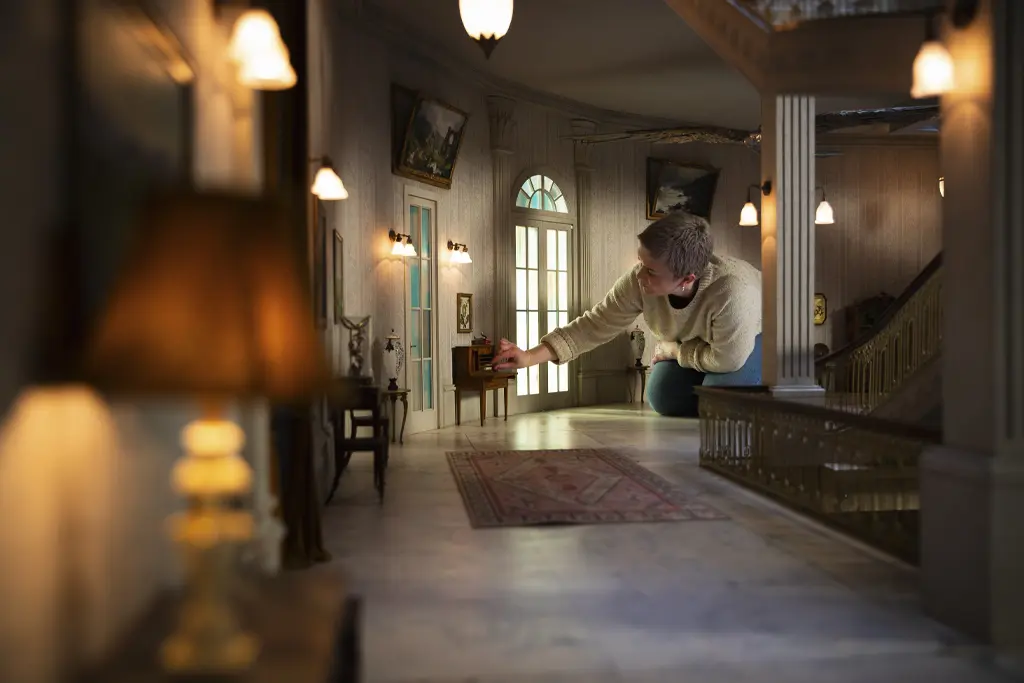
The main hall was designed to suggest granite and glass, with a grand staircase connecting the ground floor to two storeys above. It was also the production’s largest interior set, occupying 400 square feet. “Miniature” is beginning to sound like a misnomer.
Mentioning the herringbone flooring prompted a laugh from Lowry: he was delighted that I’d noticed. But there is good reason to look down. The parquet flooring in the North Tower bedroom, where Prue is briefly held captive, was laser-cut in different directions so that individual boards catch the light differently as the camera moves. It is a practical way of giving a miniature floor the visual behaviour of full-sized timber.
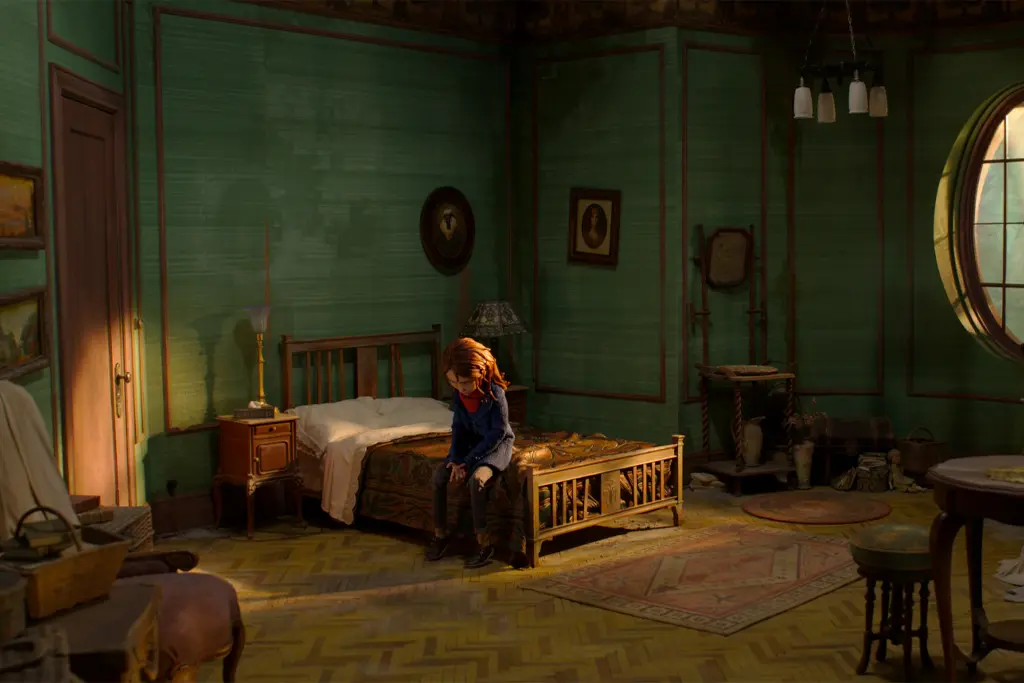
This helps explain why the rooms feel convincing. Our eyes register variations in a surface, even while the action directs our attention elsewhere.
Alexandra’s quarters: possessions from a former life
Alexandra, the Dowager Governess, occupies underground quarters hewn from the earth. Her throne room takes the form of an amphitheatre, with decorative root patterns and soft carpets.
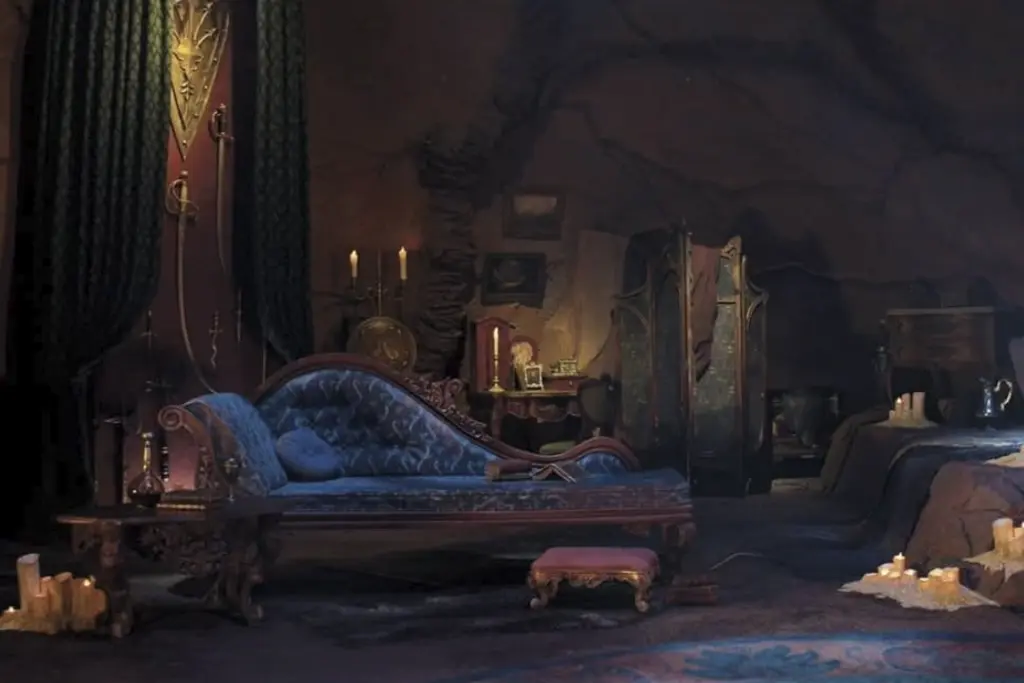
Lowry explained that she has brought possessions from her former life into this subterranean space. Alexandra’s grief shapes both her actions and her surroundings, where familiar furnishings preserve an attachment to the life she has lost.
At the centre stands a throne carved from a single massive tree trunk. Its rails and spindles rise into an ominous spiked crown, giving the furniture a direct relationship to both the forest and its occupant’s power. This is a chair with considerable presence.
The architecture of nature
The same level of attention extends into the woodland. Lowry studied how woodland ground forms over time, using fallen trees, rocks and layers of earth to give the forest floor its uneven structure. His team assembled a library of natural elements, including different rock types and tree species, then combined them to distinguish the forest’s regions. Placement, density, colour and lighting helped each territory acquire its own character.
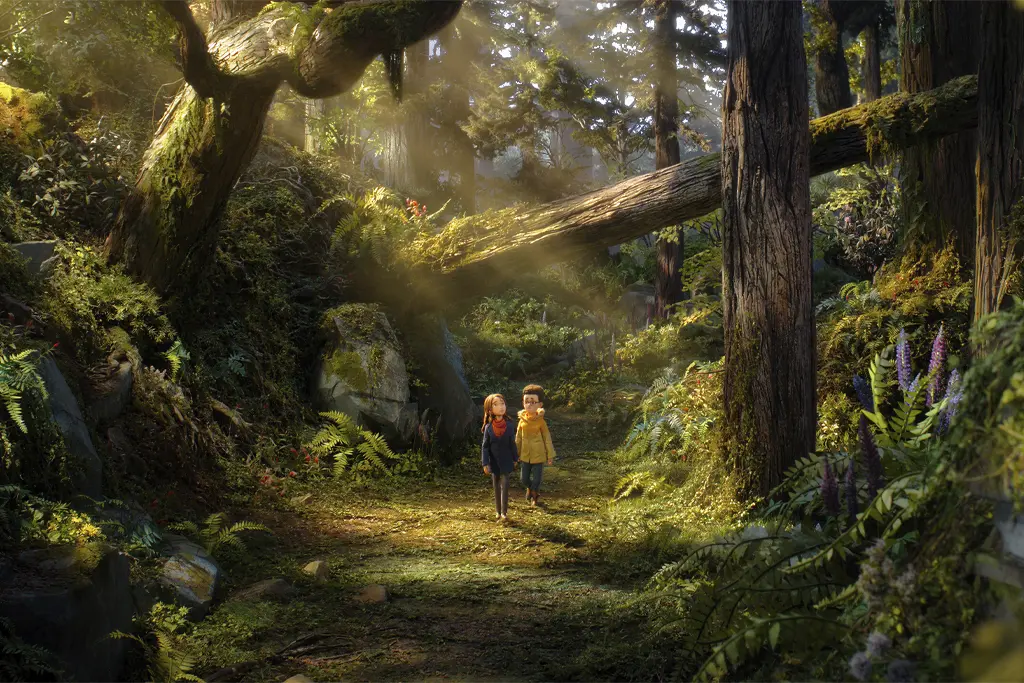
The Council Tree had a particularly local origin. After looking for inspiration among Oregon white oaks on Sauvie Island, Lowry found the right model in his own Portland neighbourhood: an enormous oak near Forest Park that he had passed many times.
That connection between observation and invention runs through Wildwood. A familiar tree, an odd house colour or the remains of fallen timber can become the foundation for something extraordinary.
It also supports what struck me so strongly about the film. Nature has force, complexity and a life of its own. The forest feels worth defending because so much thought has gone into making it feel alive.
Seven years of giving it everything
Wildwood required 132 practical sets, including 43 interiors, and approximately 800 hero props. Behind those numbers are decisions about proportion, texture, wear and how a surface responds to light.
Lowry says he gave the film his all over seven years. I asked if he ever suffered from the creative curse of never being quite satisfied with one’s output and being driven to improve. With Wildwood, he said, he feels sincerely happy with what he has achieved. Coming from someone who has spent so long attending to its smallest details, that satisfaction carries weight.
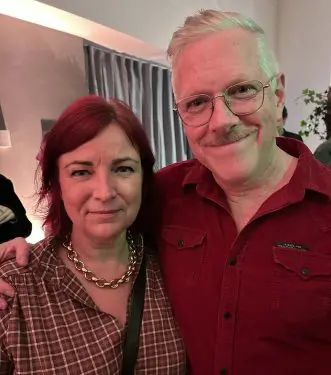
Our conversation ended with me asking for a photograph. Lowry handed my phone to the gentleman beside us, joking that we were in safe hands. The gentleman was Wildwood cinematographer and six-time Oscar nominee Caleb Deschanel. I resisted asking for a second take.
A subsequent conversation with Deschanel’s wife, actress Mary Jo Deschanel, turned to chance and serendipity. We agreed that pursuing something with passion can lead to unexpected and life-affirming encounters. After watching Wildwood, then discussing its rooms and tiny tiles with the person who designed them, it felt particularly apt.
Wildwood arrives in UK cinemas on 23 October 2026. To inspect the craftsmanship at closer quarters, visit LAIKA presents Wildwood: The Exhibition at London’s Design Museum, until 10 January 2027.
This feature is FREE to Classic members.
Join our newsletter community to receive Film and Furniture inspiration direct to your inbox and we’ll UPGRADE you to Classic Membership (which includes access to our exciting giveaway draws) for FREE.





 Facebook
 Twitter
 Instagram
 Pinterest
 RSS