


Kubrick’s Eyes Wide Shut neon signs and more film and TV treasures go to auction
Where does the rainbow end? Stanley Kubrick left us all pondering that question in Eyes Wide Shut, where the recurring rainbow motif has been interpreted as a symbol of illusion, hidden seduction and the elusive pursuit of fantasy.
Now, more than 25 years later, one rather illuminating piece of that mystery is looking for a new place to rest. The original neon sign created for Rainbow Fashions, the fancy dress shop where Tom Cruise’s character obtains his disguise for the film’s mysterious masked gathering, is heading to auction in London.
And it’s not alone. An extraordinary collection of neon signs created by the late London artist Chris Bracey, founder of Gods Own Junkyard, is going under the hammer at Lots Road Auctions on 19 November 2026, as part of The Director’s Cut: Film, Music & Hollywood Icons.
Spanning more than four decades of cinema, music and popular culture, the sale offers plenty to tempt film lovers, memorabilia collectors and design enthusiasts, from neon signs associated with Ready Player One and Judge Dredd to a sculpture connected to another Kubrick classic, A Clockwork Orange.
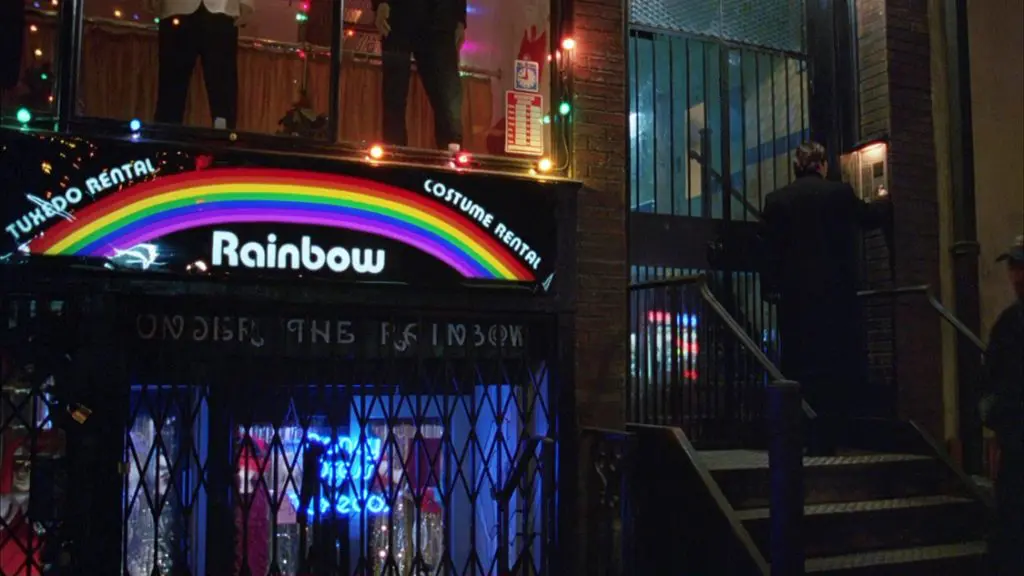
Where the rainbow ends: the neons of Eyes Wide Shut
In Eyes Wide Shut, Tom Cruise plays Dr Bill Harford, whose nocturnal wanderings through New York take him into an increasingly weird world of secrets, desire and elaborate masquerades. At a lavish Christmas party, two models invite him to follow them “where the rainbow ends”. Later, Bill visits Rainbow Fashions, a costume shop where he obtains the cloak and Venetian mask that allow him to infiltrate the masked gathering.
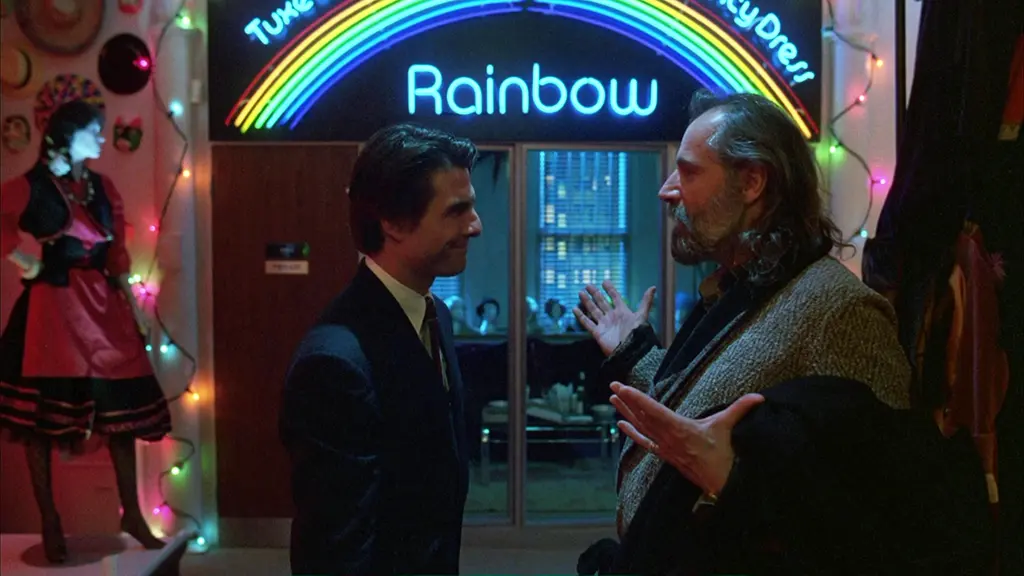
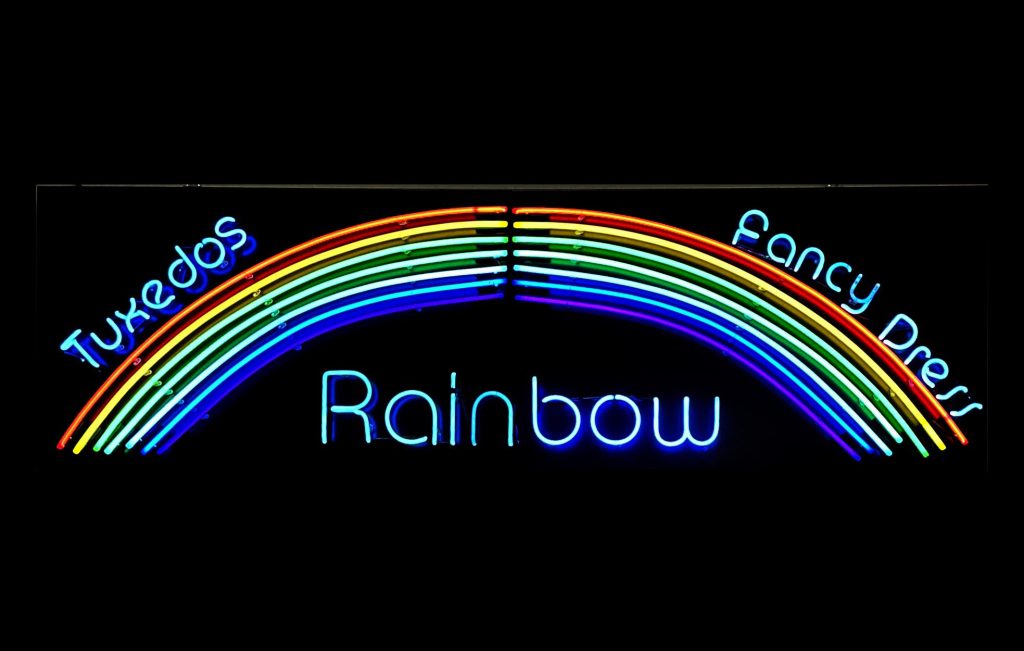
For some viewers, the rainbow represents the elusive pursuit of desire. For others, it marks a threshold between respectable everyday life and the darker world Bill is about to enter. Whatever your interpretation, the visual design is fundamental to the film’s illusory, dreamlike atmosphere.
Although the story takes place in New York, much of Kubrick’s Manhattan was painstakingly recreated at Pinewood Studios in England. Its illuminated shopfronts, coloured Christmas lights and neon signs helped transform British film sets into the streets of Greenwich Village.
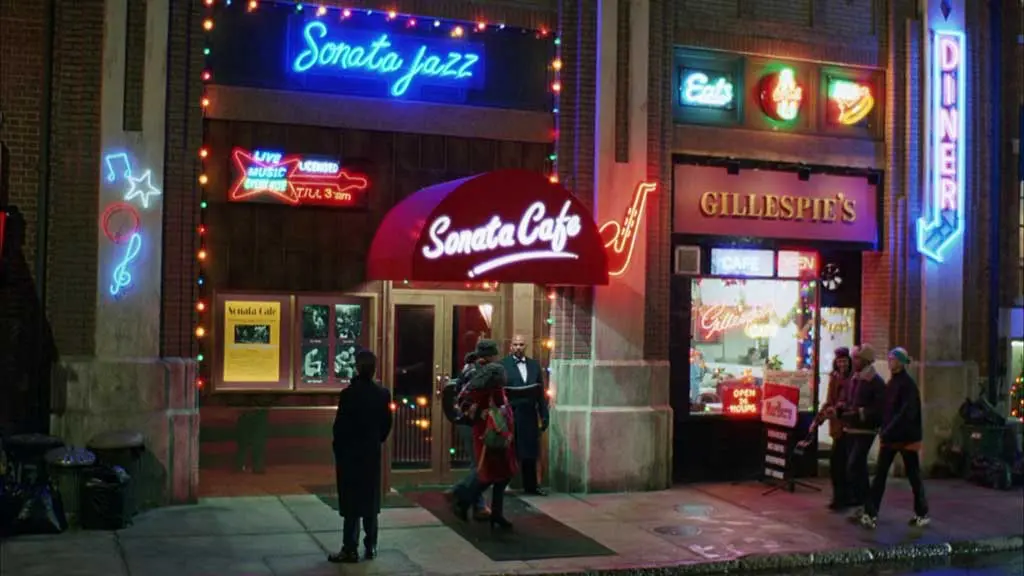
The person responsible for much of that neon was London artist and master sign-maker Chris Bracey, founder of Gods Own Junkyard. Three remarkable screen-used pieces associated with the film are included in the sale: the Rainbow Fancy Dress (estimate £18,000-£20,000), Dogs (estimate £4,800-£5,400) and Saxophone (estimate £4,800-£5,200) neon signs.
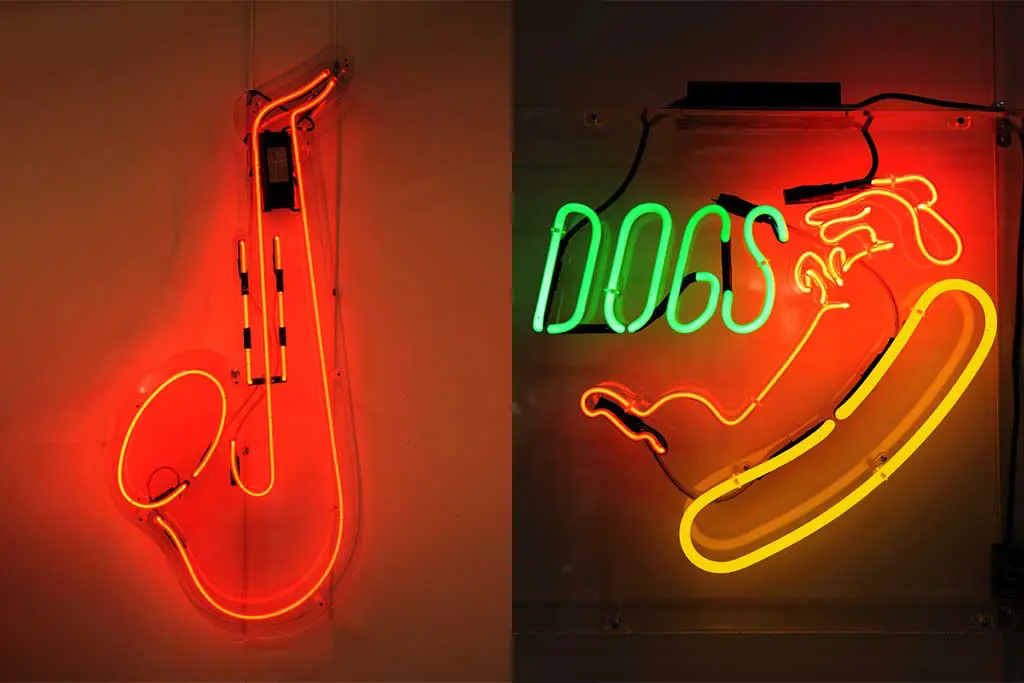
Find the full catalogue at Lots Road Auctions website.
There’s another intriguing design connection here. Film researcher Idyllopus has identified the former Greenwich Village boutique of costume designer Patricia Field, best known for Sex and the City, as the apparent real-life inspiration for Rainbow Fashions. Located at 10 East 8th Street, the shop bears striking similarities to Kubrick’s recreated storefront, right down to architectural details. A fitting connection for a fictional costume shop in a film so preoccupied with appearances and disguise.
For Kubrick enthusiasts, these are particularly fascinating objects. They belong to the visual world of the director’s final film, where even the smallest details contribute to the memorable atmosphere. And if Eyes Wide Shut is your alternative Christmas movie of choice, you might just have found the ultimate Christmas present to yourself.
From Ready Player One to Judge Dredd: more film and TV neon for collectors
The Eyes Wide Shut signs may be the headline attraction, but the Lots Road sale offers a much broader journey through film, television, music and popular culture.
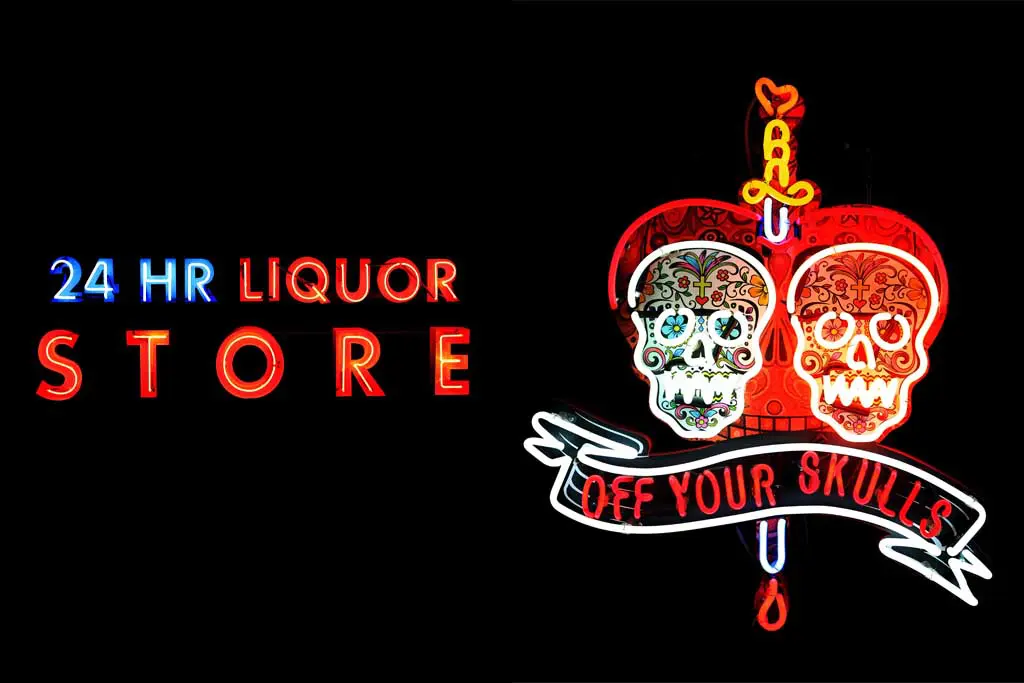
Among the highlights are the Stark Industries neon from Captain America: The First Avenger (2011), starring Chris Evans, with an estimate of £30,000-£32,000; the Green Dragon neon from Fast & Furious 6 (2013). starring Vin Diesel, Paul Walker and Dwayne Johnson, estimated at £18,000-£20,000; and the 24 Hour Liquor Store and Off Your Skulls from Steven Spielberg’s Ready Player One starring Tye Sheridan, Olivia Cooke, Mark Rylance, and Simon Pegg. The latter is estimated at £24,000–£26,000.
Also going under the hammer are neons from Judge Dredd (1995), starring Sylvester Stallone, including Striptease (estimate £4,800-£5,200), Erotic Art Shop (estimate £7,200-£7,600) and Hollywood USA.
Works from Tomb Raider 2, The Flash, The Expendables 4, Gangs of London and The Gentlemen also feature.
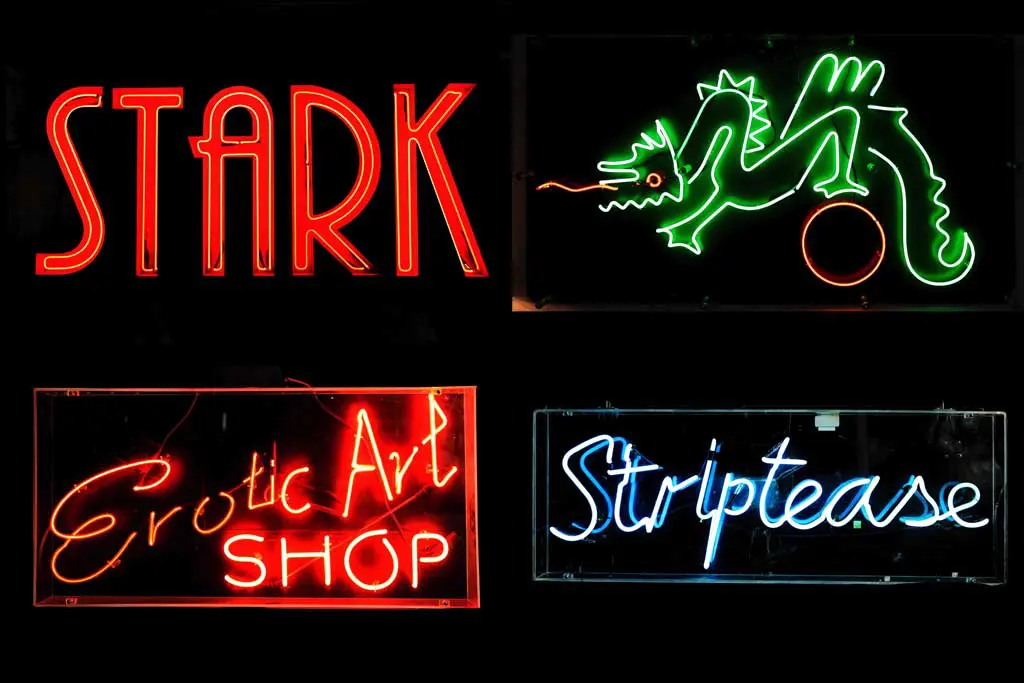
For film fans, interior designers and collectors, the appeal extends beyond their screen appearances. These are substantial pieces of decorative design, with craftsmanship and visual impact that can be appreciated independently of the productions for which they were created.
The collection also ventures into music and television, with works associated with Strictly Come Dancing, First Dates and Elton John’s performances at the London Palladium.
Explore the film and TV neon collection at Lots Road Auctions.
Another Kubrick connection: A Clockwork Orange
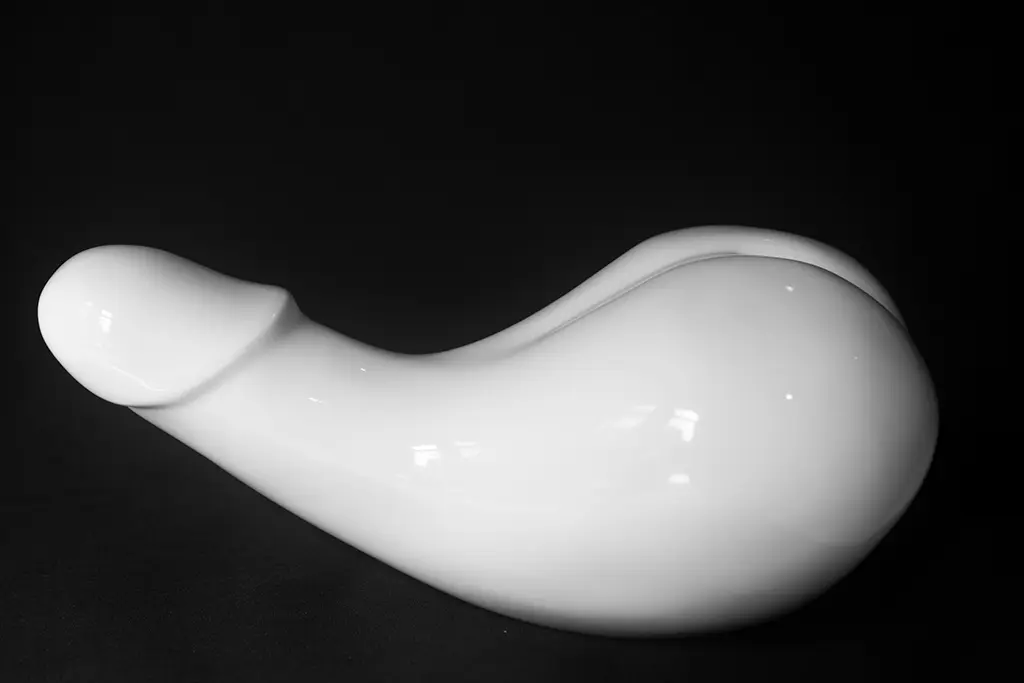
There’s another interesting Stanley Kubrick connection in the sale. The Herman Makkink Estate is contributing Artist’s Proof #1 of Rocking Machine (The New Generation), a contemporary edition of the provocative sculptural design made famous by its appearance in Kubrick’s A Clockwork Orange (1971), with an auction estimate of £2,500-£5,000.
Makkink’s extraordinary sculpture is one of the film’s most memorable pieces of set decoration, appearing in the home of the Cat Lady. For those who follow Film and Furniture, it will be a familiar object, and a reminder of how a single piece of furniture or sculpture can become inseparable from the on-screen world in which it appears.

The newer edition, smaller and more manageable than the full-size Rocking Machine edition, brings that remarkable design into the present day, adding another strand of film and design history to the auction.
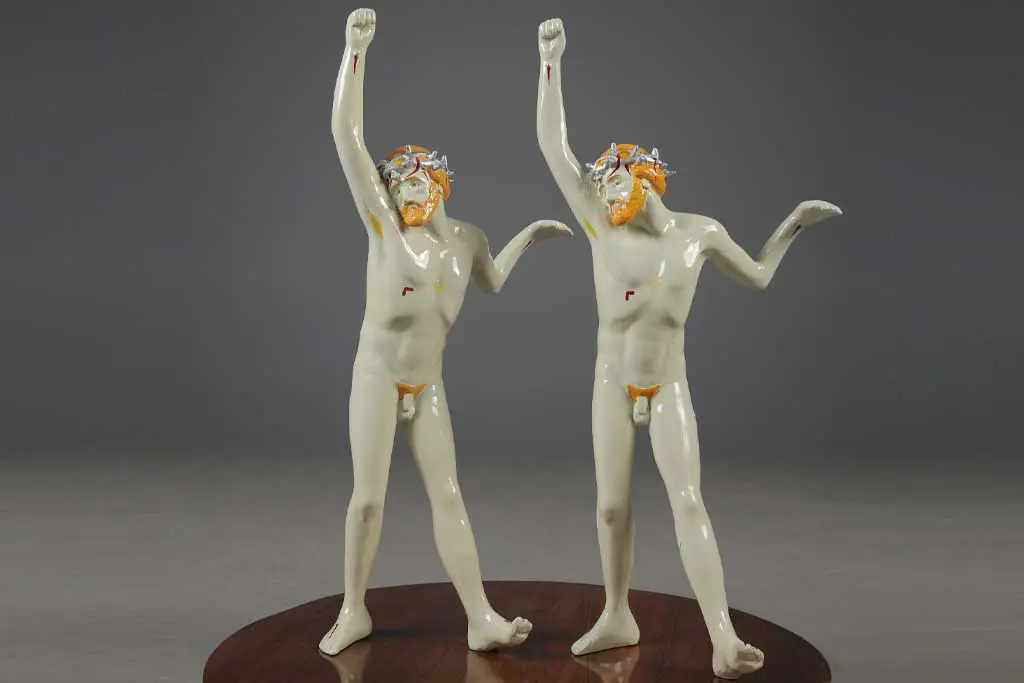
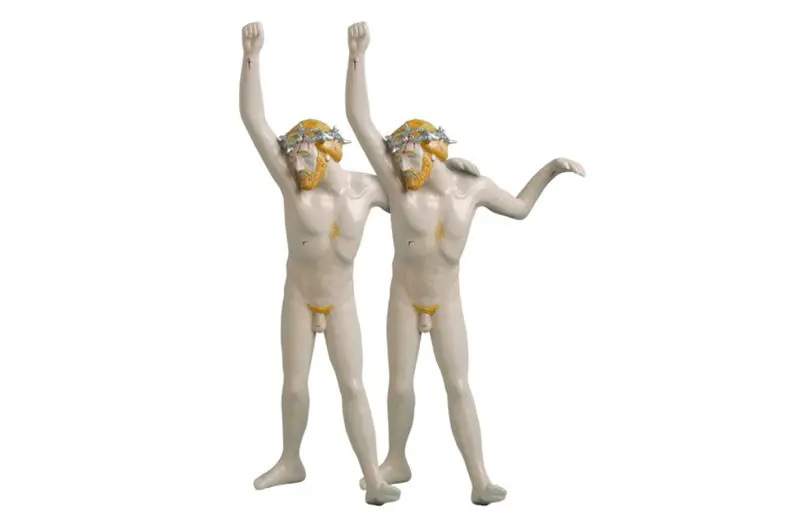
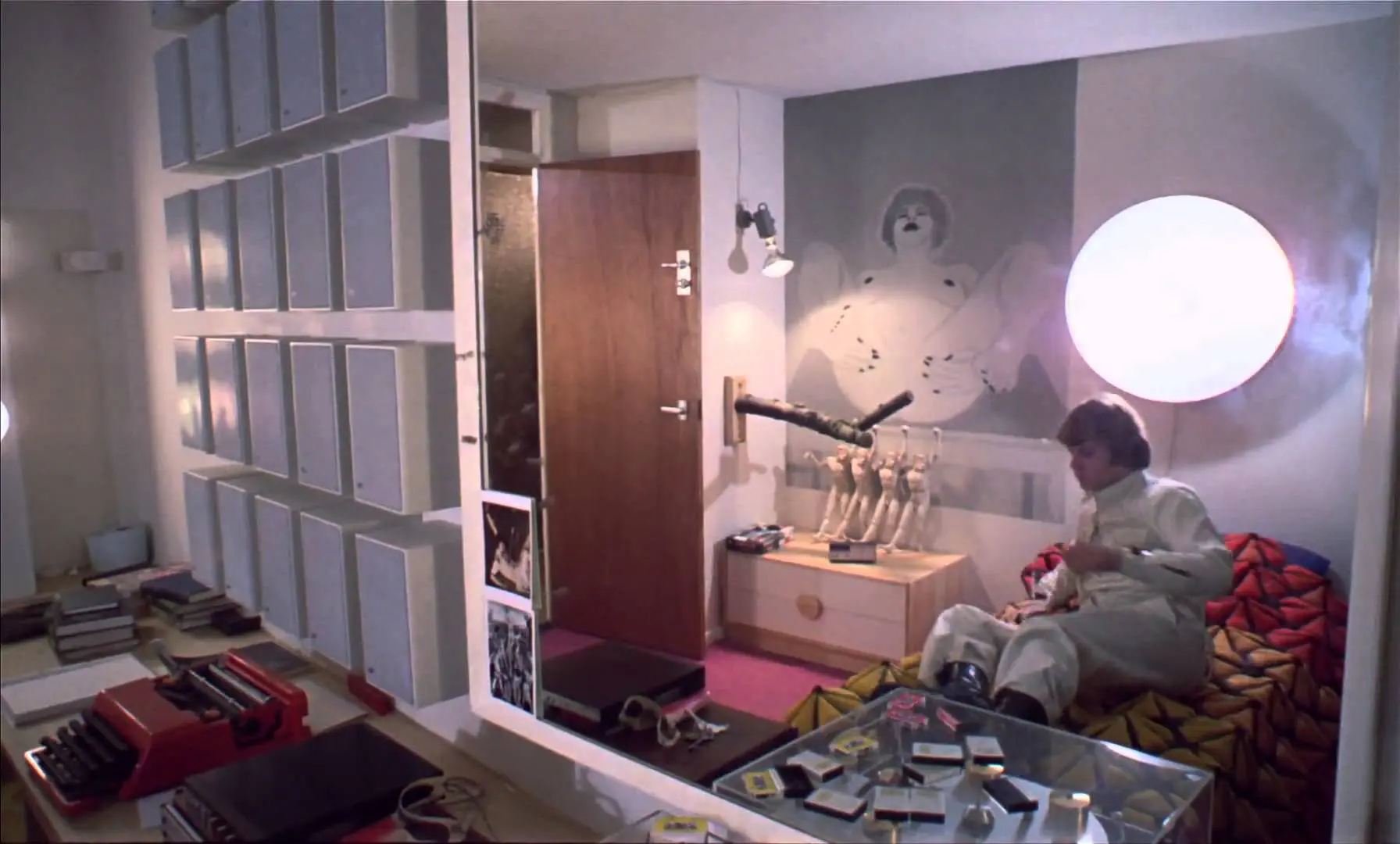
Also going under the hammer is a pair of Herman Makkink’s Christ Unlimited sculptures, better known as the Dancing Christs, a design famously featured in Alex’s bedroom in A Clockwork Orange. Made from painted cast resin, the pair offered at Lots Road is the last remaining set of the 2012 Medicom Toys edition, still in its original packaging, with an auction estimate of £1,800–£2,500.
Chris Bracey: from Soho to Hollywood and Gods Own Junkyard
Long before his work illuminated Hollywood productions, Chris Bracey was making London glow. His father, Dick Bracey, established Electro Signs in 1952, supplying signage for the capital’s entertainment businesses. Chris joined the family firm in 1973 and developed a wonderfully exuberant approach to neon, transforming the shopfronts of Soho with vivid colours and provocative designs. Nightclubs, bars, theatres and strip clubs became his early canvas.
A chance encounter while working on a sign in Soho led to Bracey’s involvement in Neil Jordan’s Mona Lisa (1986), opening the door to film production. Before long, his creations were appearing in films including Batman, Beetlejuice, Mission: Impossible, Tomb Raider, Charlie and the Chocolate Factory and Casino Royale.
But working with Stanley Kubrick was particularly meaningful. Bracey had long admired the director, and his family recalls that the opportunity to contribute to Eyes Wide Shut was a dream come true. Working alongside his son Matthew, Bracey helped recreate the illuminated streets of New York for the film. It was a demanding assignment, requiring far more than a selection of attractive shop signs.
Kubrick wanted much of the lighting to come from the sets themselves. Neon and thousands of multicoloured Christmas lights helped give the film its extraordinary atmosphere, blurring the boundaries between the tangible world and Bill Harford’s increasingly disorientating experiences.
Bracey later recalled sitting with Kubrick to choose the neon colours for the Rainbow Fancy Dress sign. It’s a wonderful insight into the director’s exacting approach to production design and the importance of objects that might otherwise be dismissed as background decoration.
In his later years, Bracey’s work increasingly became recognised as contemporary art. Inspired in part by Bruce Nauman, he explored neon as an expressive medium in its own right, collaborating with artists including David LaChapelle and Martin Creed.
Bracey died in 2014, but his remarkable legacy lives on through Gods Own Junkyard in Walthamstow, a destination for anyone fascinated by light, typography, found objects and visual culture.
The Lots Road collection brings together different chapters of his creative journey, from the streets of Soho to the imagined worlds of Hollywood.
As Maureece Mical Taylor, who curated the auction catalogue, explains: “We are absolutely thrilled to be bringing this extraordinary collection of Chris Bracey neons to auction. Gods Own Junkyard is a true London institution, much like Lots Road Auctions, and to be entrusted with works of such cultural and cinematic significance is incredibly exciting.”
For anyone interested in how films are made, or the objects that give their fictional worlds such convincing character, it’s a fascinating opportunity to see these pieces beyond the screen. And perhaps even take one home.
When and where is the auction?
The Director’s Cut: Film, Music & Hollywood Icons
Auction: Thursday 19 November 2026, 3pm
Location: Lots Road Auctions, The Piper Building, Fulham, London
Viewing: Daily, 10am–5pm
Catalogue and bidding: Lots Road Auctions
A selection of the illuminated neon works is being displayed at Lots Road ahead of the sale, giving visitors an opportunity to appreciate their colours, scale and craftsmanship in person.
Estimates exclude the buyer’s premium and any applicable additional charges. See Lots Road Auctions’ conditions of sale for details.
This is a sponsored editorial feature produced in partnership with Lots Road Auctions.
This feature is FREE to Classic members.
Join our newsletter community to receive Film and Furniture inspiration direct to your inbox and we’ll UPGRADE you to Classic Membership (which includes access to our exciting giveaway draws) for FREE.







 Facebook
 Twitter
 Instagram
 Pinterest
 RSS