


Backrooms: The Furniture Film of the Year?
Forget the hype. Backrooms deserves every bit of it. On the surface, it’s an unsettling horror film. Underneath, it’s one of the strangest and most fascinating pieces of furniture cinema we’ve seen in years. Every chair, wallpaper pattern and fluorescent light fitting seems to have been selected with forensic care, creating an environment that feels unnervingly familiar whilst refusing to make any logical sense.
Directed by Kane Parsons, the film expands the internet’s “liminal spaces” phenomenon into an endless architectural nightmare buit from fragments of everyday interiors. Drawing heavily on the aesthetic of dead shopping malls, budget furniture warehouses and forgotten big-box stores from the 1990s and early 2000s, it weaponises the mundane.
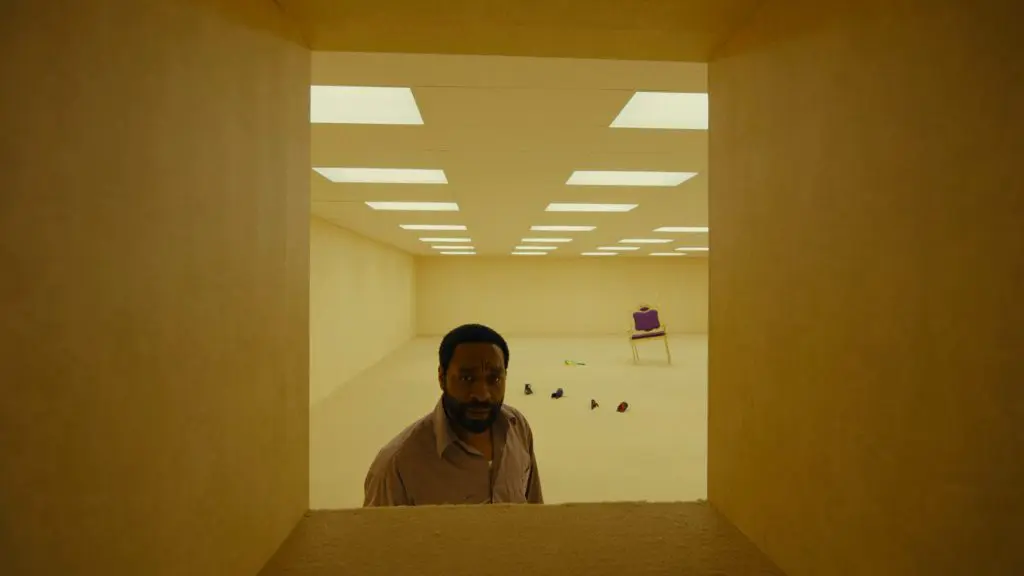
Rather than relying primarily on CGI, production designer Danny Vermette, working alongside art director Alan Derksen and set decorator Trevor Johnston, created more than 30,000 square feet of practical Backrooms sets spread across four sound stages. So labyrinthine was the construction that members of the cast and crew reportedly needed maps to avoid getting lost themselves.
-
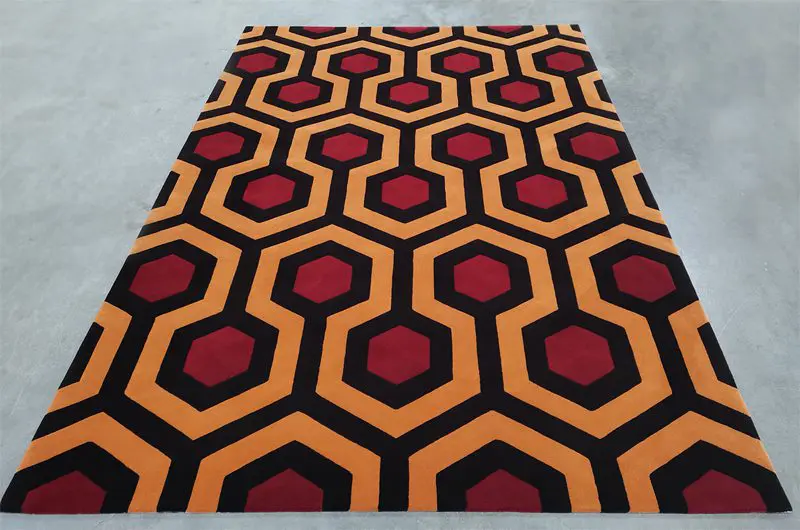
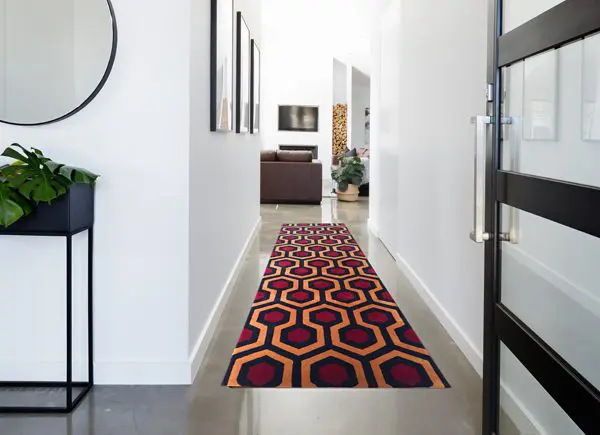
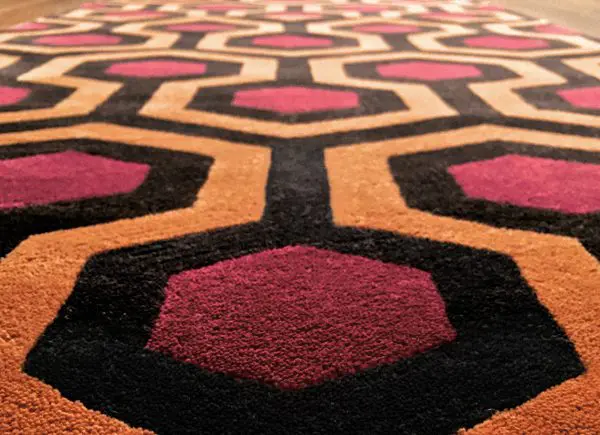
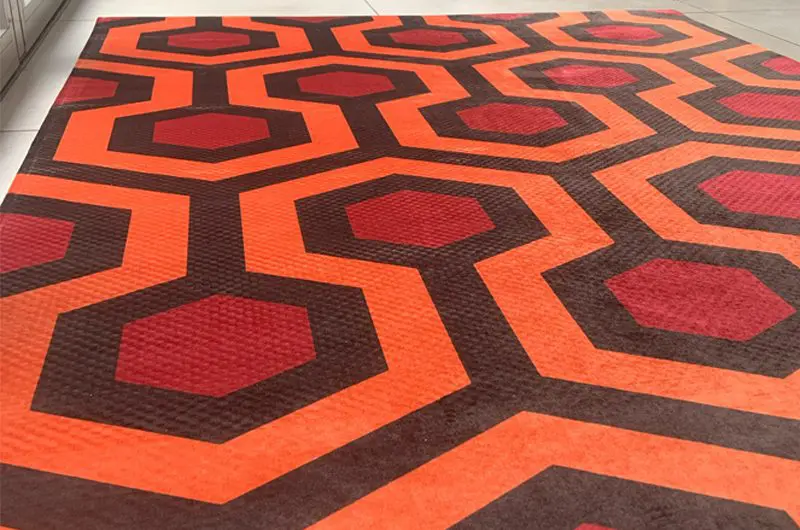
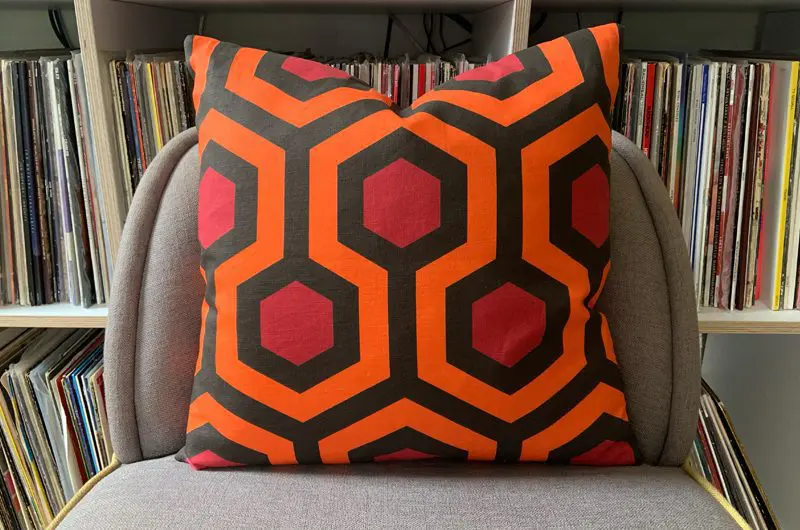
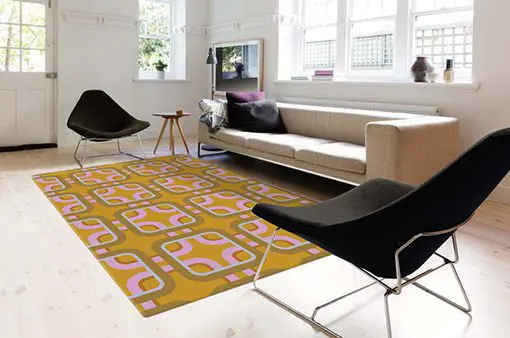
Hicks’ Hexagon officially licensed luxury rugs and runners, designed by David Hicks, as seen in The Shining Overlook Hotel
Designer: David Hicks
Film and Furniture
Directors: Stanley Kubrick, Steven Spielberg, Mike Flanagan
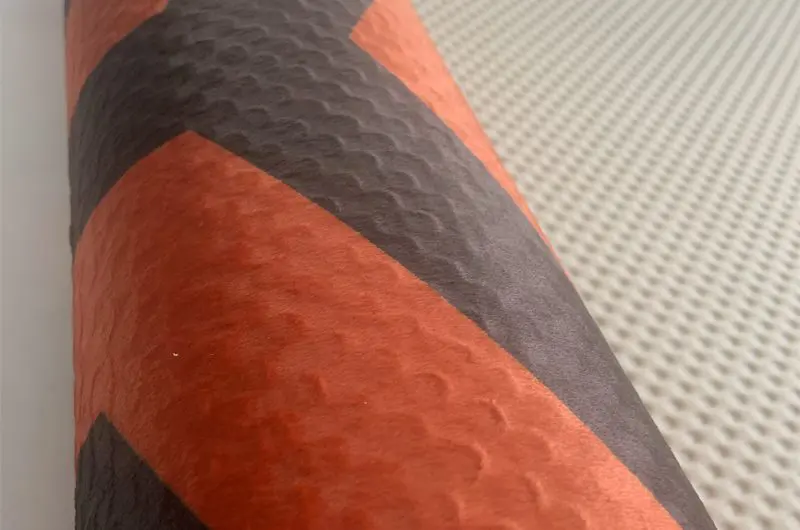
Shop NowOfficially licensed Hicks’ Hexagon rugs and runners as seen in The Shining‘s Overlook Hotel (original design by David Hicks). High quality, custom made, hand tufted 1 ply wool. One of the most iconic carpets in film
Approx Price range: £1,572.00 through £7,342.00 Inc VAT if applicable / $2106
Ironically, some viewers may assume Backrooms owes a debt to Severance. The endless corridors, anonymous offices and oppressive corporate interiors certainly invite comparison. In fact, the influence may well run the other way. Parsons’ first Backrooms (Found Footage) short, uploaded to YouTube in January 2022 when he was just 16 years old, transformed an existing internet myth into a cinematic universe of his own and ultimately led to the feature film. The short became an online phenomenon and has since been cited as an influence on the creative direction of Severance.
Those original films also established much of the mythology that the feature develops. Shot with a deliberately degraded 1990s camcorder aesthetic, they introduced the fictional Async Research Institute, whose experiments accidentally opened portals into an endless alternate reality made up of impossible spaces stitched together from fragments of memory.
Furniture as Psychological Horror
The story begins with Clark (Chiwetel Ejiofor), whose bargain furniture business, Cap’n Clark’s Ottoman Empire, conceals a portal into another reality.
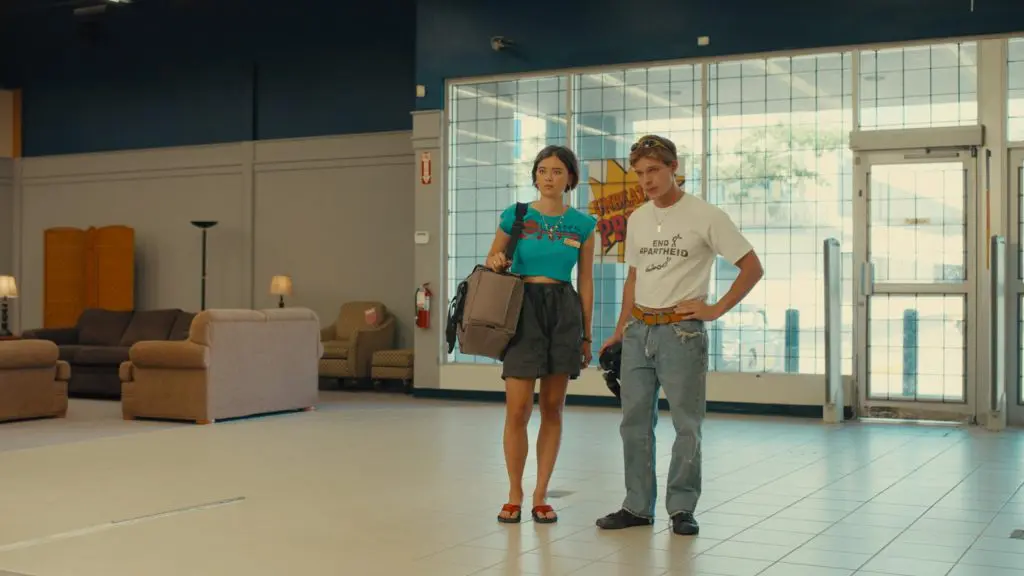
For Film and Furniture readers, however, the production design is the real star.
The furniture is wonderfully, gloriously odd and fabulously 1990s. Wooden ladder back dining chairs appear to clip through floors, borrowing the visual language of low-resolution video game glitches, or stacked up and abandoned in oversized rooms. Cheap moulded plastic seating sits in improbable arrangements. Orange motel doors are paired with bright blue chairs and yellow tables. Everywhere you look, everyday objects have been nudged only slightly away from normality, yet the cumulative effect becomes deeply unsettling.
One of the most memorable locations is the Furniture Pile Room, the first space encountered after entering the Backrooms through the Null Zone in the basement of the furniture store. It initially resembles the familiar yellow wallpapered corridors of the classic Backrooms before revealing an enormous heap of domestic objects dumped in the centre of the room.
Restaurant chairs. Televisions. Cabinets. Sofas. Shelving. Dressers. Lamps. Hatstands.
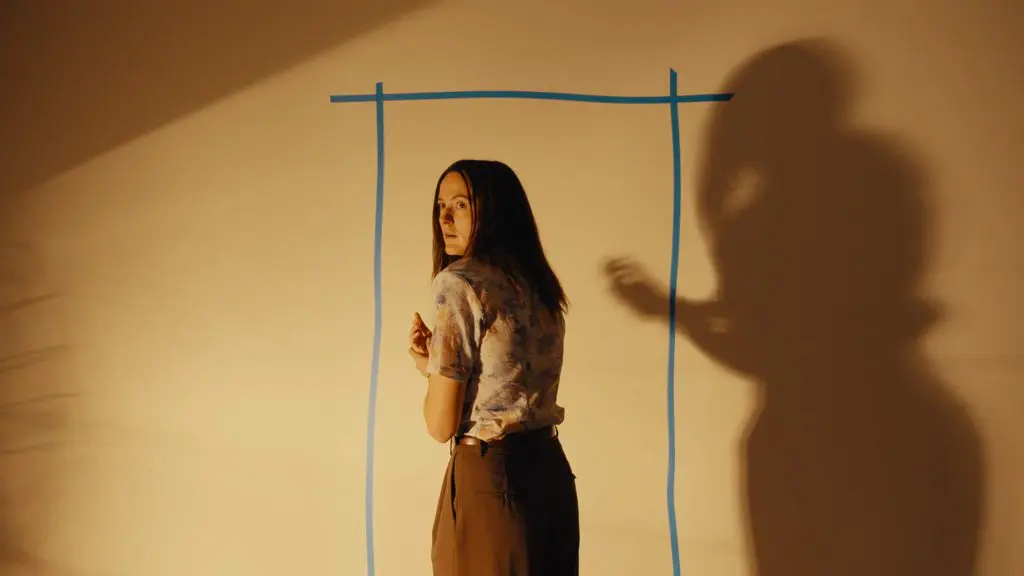
The boundary between the furniture showroom and the impossible world beyond is later marked out with blue tape, an absurdly ordinary detail that somehow makes the transition even more disturbing. Blue-taped rooms and doorways have since become a defining part of Backrooms lore. Popularised by Parsons’ viral found footage series, and later embraced in the film’s marketing campaign, mysterious blue-taped doorframes began appearing on buildings and bridges in cities such as Vancouver. Fans quickly joined in, taping out their own ‘portals’ in overlooked corners, abandoned spaces and alleyways.
Wallpaper, Perspective and Impossible Architecture
Even the thin pine spindle balustrades that lead down to the shop basement where the portal is discovered feel at odds with their surroundings.
The Backrooms wallpaper deserves special mention. Its repetitive yellow-beige pattern wraps every corridor beneath relentless fluorescent lighting until perspective itself begins to dissolve. The sickly colour palette was no happy accident either. Vermette’s team spent weeks refining the exact shade and pattern through dozens of camera tests until it produced precisely the level of visual discomfort they were after.
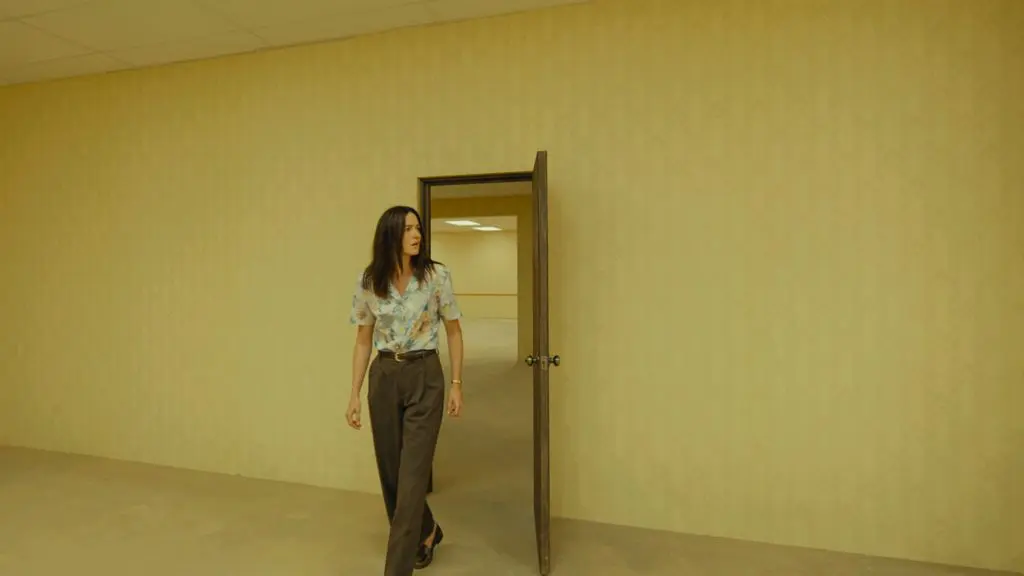
Half-finished spaces bleed into completed ones. Forced perspective plays tricks on the eye. Murals materialise without explanation. At one point, a vast gold throne sits majestically in a room where no throne has any business existing.
The spaces often feel less as though they have been designed than remembered imperfectly. Furniture appears to have been dropped into rooms by someone who understands the concept of a chair or sofa but has never actually watched people use one.
The underground swimming pool sequence is surreal enough on its own. The Christmas tree room somehow makes it stranger.
Some interiors feel as though Alice has wandered into Wonderland after everyone else has gone home.
-
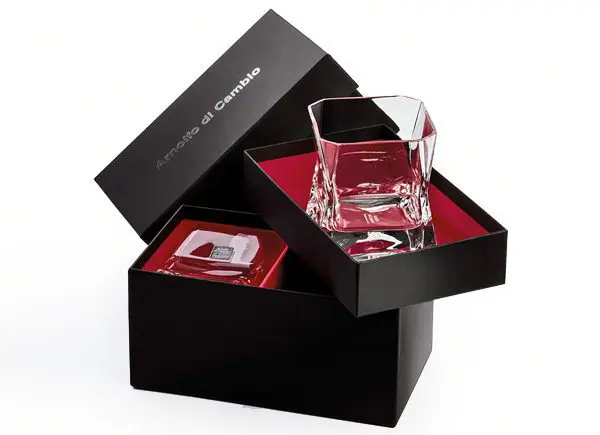
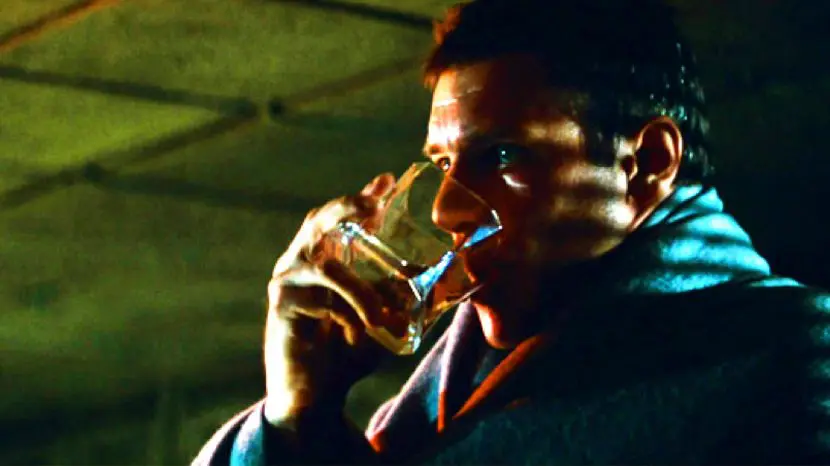
Blade Runner whisky glasses gift boxed set of 2 (37cl)
Designer: Cini Boeri
Arnolfo di Cambio
Directors: Denis Villeneuve, Ridley Scott
Shop NowThe exact ‘CIBI’ glass tumbler design that Deckard (Harrison Ford) is seen drinking whiskey from in Blade Runner (1982).
Approx £149.95 Inc VAT if applicable / $200
Echoes of Film History
The film is full of subconscious echoes from cinema history. There are moments that recall The Shining, both through certain sound cues and through its impossible architecture that seems to rearrange itself beyond rational understanding. Elsewhere, the vast empty spaces evoke 2001: A Space Odyssey, whilst the shifting geometry and impossible viewpoints occasionally resemble an M.C. Escher drawing made tangible.
One enormous multi-level interior even reminded us of the recently opened V&A East Storehouse, except stripped of logic and filled with anxiety rather than artefacts.
Every Detail Matters
What impressed us most is the obsessive attention to detail. Every fluorescent tube. Every stretch of wallpaper. Every slightly wonky piece of joinery. Every abandoned chair has clearly been considered.
The furniture carries as much eerie emotional weight as the performances themselves. In many scenes it becomes almost impossible to separate architecture from psychology. These rooms are active participants in the horror.
Backrooms is likely to become required viewing for horror fans, film lovers and anyone fascinated by the psychology of architecture and interiors. We’d be surprised if its visual language doesn’t influence both films and interior design for years to come.
And perhaps the film leaves us with one final lesson.
Never trust a cheap furniture showroom.
Especially if it’s called Cap’n Clark’s Ottoman Empire.
This feature is FREE to Classic members.
Join our newsletter community to receive Film and Furniture inspiration direct to your inbox and we’ll UPGRADE you to Classic Membership (which includes access to our exciting giveaway draws) for FREE.





 Facebook
 Twitter
 Instagram
 Pinterest
 RSS
RSS