


Toy Story 5 Is Coming: Tech vs Toys and Why the Design Details Matter
Pixar’s Toy Story franchise has spent more than three decades reimagining playrooms, bedrooms and the secret lives of toys. Along the way it has given us some wonderfully observed interiors, memorable pieces of furniture and design Easter eggs that reward repeat viewing. With Toy Story 5 arriving in cinemas on 19 June, we revisit some of the series’ most compelling design moments and explore what the trailer reveals about its next chapter.
What We Know So Far
Toy Story 5 is the fifth main instalment in Pixar’s flagship series, written and directed by Andrew Stanton, a Pixar veteran whose credits include Finding Nemo and WALL-E. Lindsey Collins returns as producer, while Randy Newman once again provides the score.
Tom Hanks, Tim Allen and Joan Cusack reprise their roles as Woody, Buzz Lightyear and Jessie, joined by Greta Lee as Lilypad, a brand new tablet device whose arrival appears set to challenge the toys’ place in Bonnie’s world.
Disney has summed up the film with the tagline “Toy meets Tech”, with the story exploring what happens when traditional toys come face to face with the digital distractions competing for a child’s attention.
The teaser also marks the long-awaited reunion of Woody and Buzz after Woody’s departure at the end of Toy Story 4, promising another emotional chapter for Pixar’s most enduring characters and the gang’s role in Bonnie’s room will be challenged when they confront the world of screens and smart gadgets, a contemporary theme that feels ripe for visual and thematic storytelling.
Interiors Have Always Been Part of the (Toy) Story
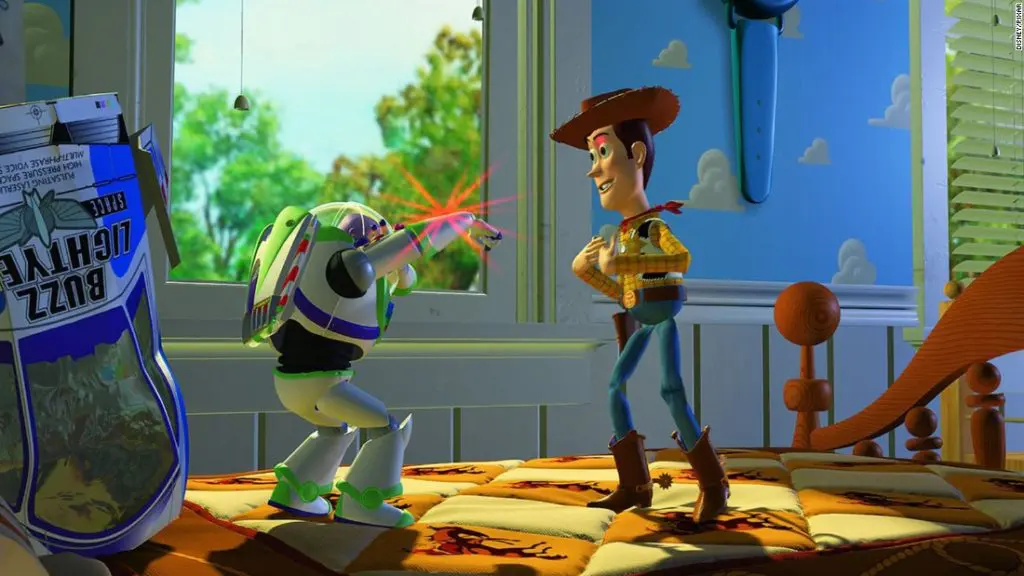
Across five films, Pixar’s production designers have continually expanded the visual language of the series. It all begins with Andy’s bedroom in the original Toy Story (1995), where the cloud-covered walls and child-sized furnishings establish a world built around imagination and play.
From there, each sequel broadens that design vocabulary. Toy Story 2 (1999) moves beyond the family home with the retro styling of Al’s Toy Barn and the museum-like nostalgia of Woody’s Roundup memorabilia. Toy Story 3 (2010) explores the contrasting spaces of Sunnyside Daycare to reflect the realities of growing up, while Toy Story 4 (2019) pushes technical and artistic boundaries inside the densely layered Second Chance Antiques store, where every dusty shelf and carefully placed object contributes to the storytelling.
The environments evolve alongside the characters, with rooms establishing mood, creating a sense of scale and underscoring the emotional stakes from a toy’s perspective.
Andy’s Room

Few animated interiors are as instantly recognisable as Andy’s bedroom in the original Toy Story. The blue sky wallpaper decorated with white clouds creates an optimistic backdrop that perfectly reflects childhood imagination.
Simple timber furniture, colourful storage and generous open floor space reinforce the sense that this is a room designed for play.
Perhaps the cleverest aspect of Andy’s bedroom is that it never stands still. As Andy matures, so does the room around him. By the end of the first film, Andy’s cowboy-themed décor has begun to give way to Buzz Lightyear-inspired furnishings, reflecting his newfound fascination with his latest toy.
In Toy Story 2, the room evolves again with its distinctive blue wallpaper decorated with yellow stars. By Toy Story 3, the room has become unmistakably teenage, with posters, photographs and stickers covering the walls while the familiar furniture remains in place. Even the lighting feels more pared-back, reflecting a child on the brink of adulthood and foreshadowing the emotional farewell to come.
-
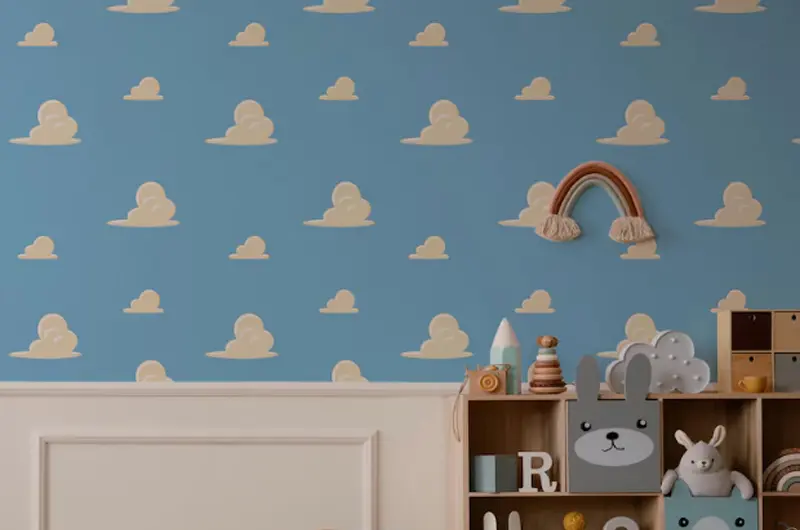
Toy Story Wallpaper
As seen in:Shop NowFrom the opening moments of the original Toy Story (1995) film, Andy’s bedroom establishes one of animation’s most recognisable interiors. The blue sky wallpaper decorated with white clouds creates an optimistic backdrop that perfectly reflects childhood imagination.
Sid’s House and a Familiar Carpet
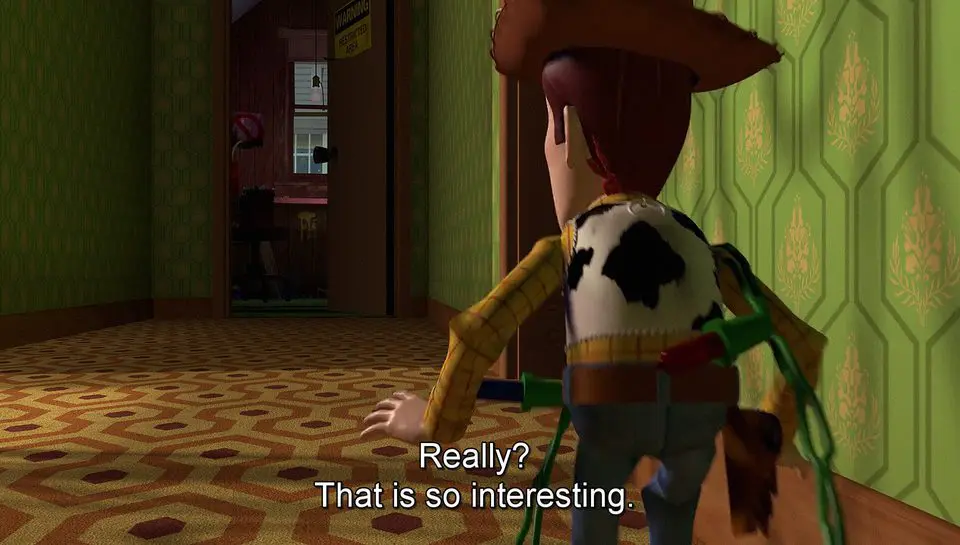
In complete contrast, Sid Phillips’ home immediately feels unnerving.
One of Pixar’s best-loved visual references appears as Woody and Buzz navigate Sid’s hallway, where the geometric carpet unmistakably recalls the famous Overlook Hotel carpet design from The Shining. The nod to the Hicks Hexagon carpet, reportedly encouraged by art director Ralph Eggleston and championed by Pixar filmmaker Lee Unkrich, rewards eagle-eyed design fans while subtly reinforcing the unsettling shift from Andy’s reassuring world into Sid’s altogether darker one.
-
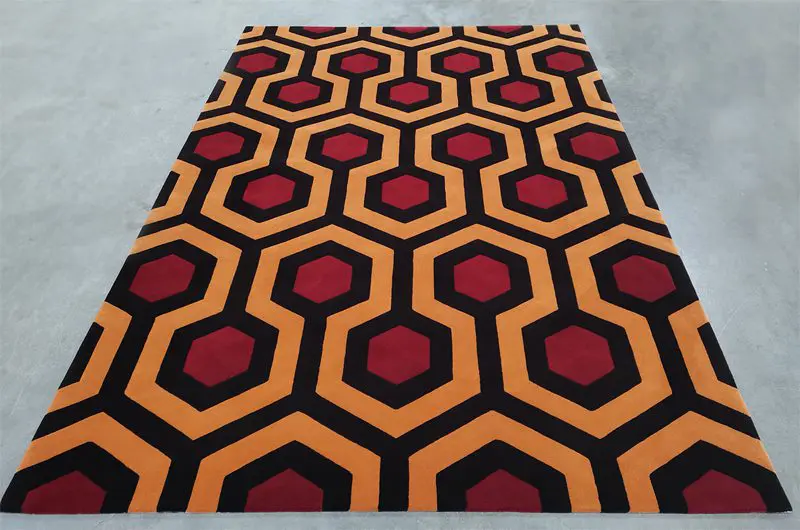
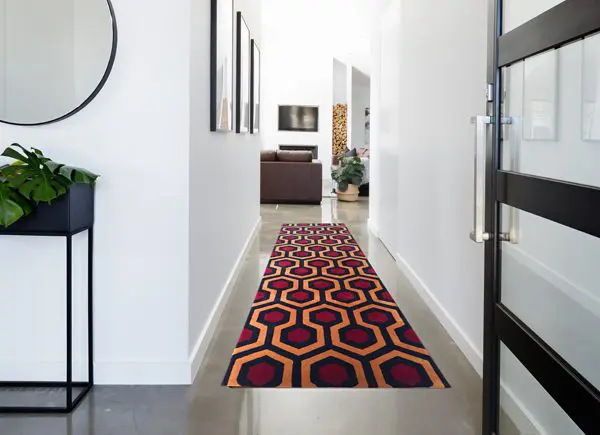
Hicks’ Hexagon officially licensed luxury rugs and runners, designed by David Hicks, as seen in The Shining Overlook Hotel
Designer: David Hicks
Film and Furniture
Directors: Stanley Kubrick, Steven Spielberg, Mike Flanagan
Shop NowOfficially licensed Hicks’ Hexagon rugs and runners as seen in The Shining‘s Overlook Hotel (original design by David Hicks). High quality, custom made, hand tufted 1 ply wool. One of the most iconic carpets in film
Approx Price range: £1,572.00 through £7,342.00 Inc VAT if applicable / $2106
Al’s Apartment and the Cherner Chair

In Toy Story 2, Woody finds himself in the apartment of obsessive collector Al McWhiggin. Among the furnishings sits a Norman Cherner Armchair designed in 1958. Its elegant moulded plywood form and sculptural silhouette underline the difference between living with toys and collecting them as objects of value.
Viewed from Woody’s perspective, the chair becomes another towering architectural element within an unfamiliar world.
-


Cherner armchair
As seen in:Designer: Norman Cherner
Cherner Chair Company
Shop NowThe 1958 moulded plywood armchair by Norman Cherner is an icon of mid-century furniture design, showcased in exhibitions worldwide, including the Vitra Design Museum in Germany. The chair makes a surprising appearance in Toy Story.
Approx £1,130.00 Inc VAT if applicable / $1514
Second Chance Antiques
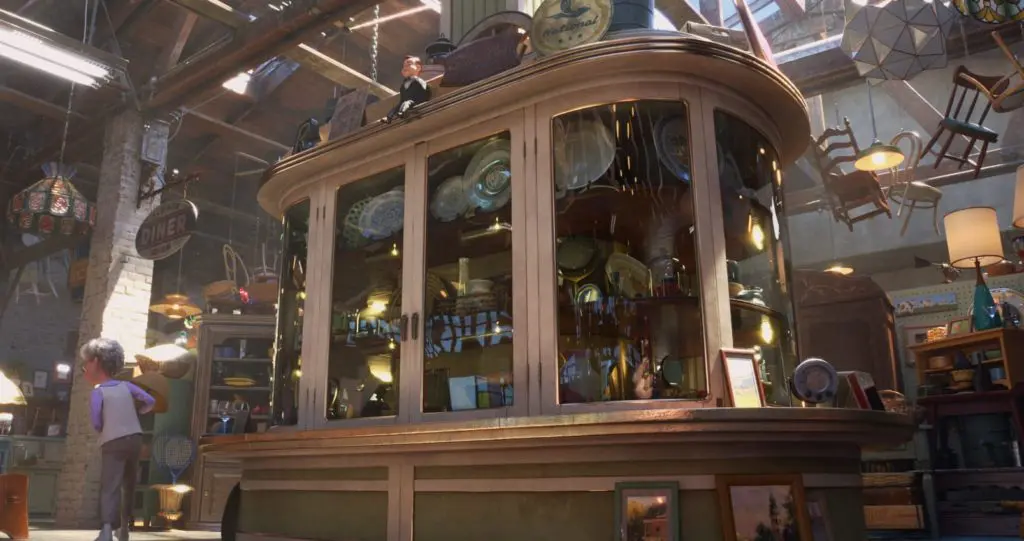
Perhaps the richest interior in the series arrives with Second Chance Antiques in Toy Story 4.
Packed with clocks, lamps, cabinets, seating and decorative objects, the shop resembles an archive of lost lives and second chances. Every shelf and display hints at stories that extend beyond the main narrative, creating one of Pixar’s most densely layered environments. Every object feels like a story waiting to be told.
Bonnie’s House Takes Centre Stage
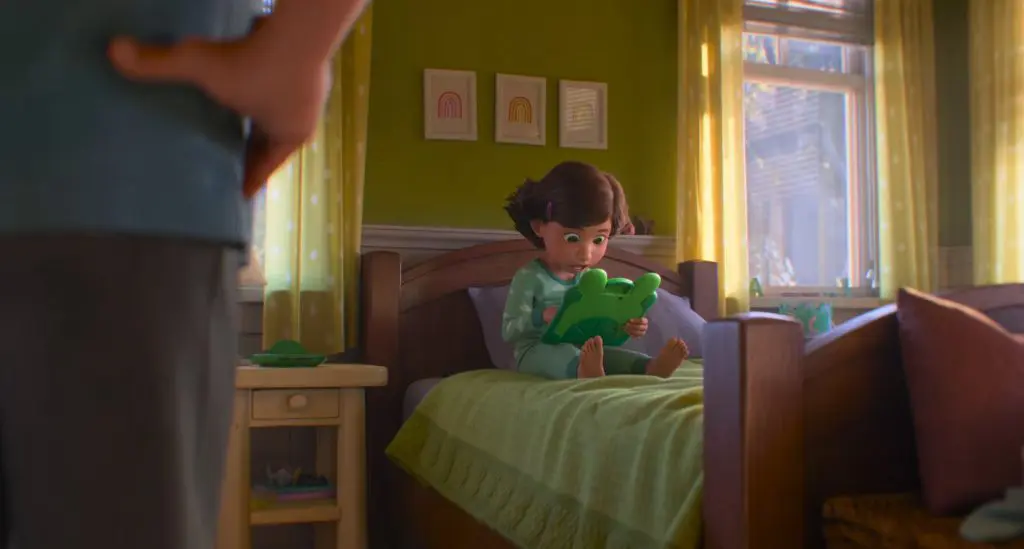
Early footage suggests that Toy Story 5 will once again be rooted primarily within Bonnie’s home, but this time through a noticeably more contemporary lens.
Bonnie’s bedroom remains colourful and inviting, with lime green walls, yellow-green curtains decorated with white polka dots and shelves filled with books alongside the familiar collection of toys. Blue and purple storage baskets overflow with playthings, while a lilac upholstered desk chair adds to the cheerful palette that has characterised Bonnie’s environment since Toy Story 3.
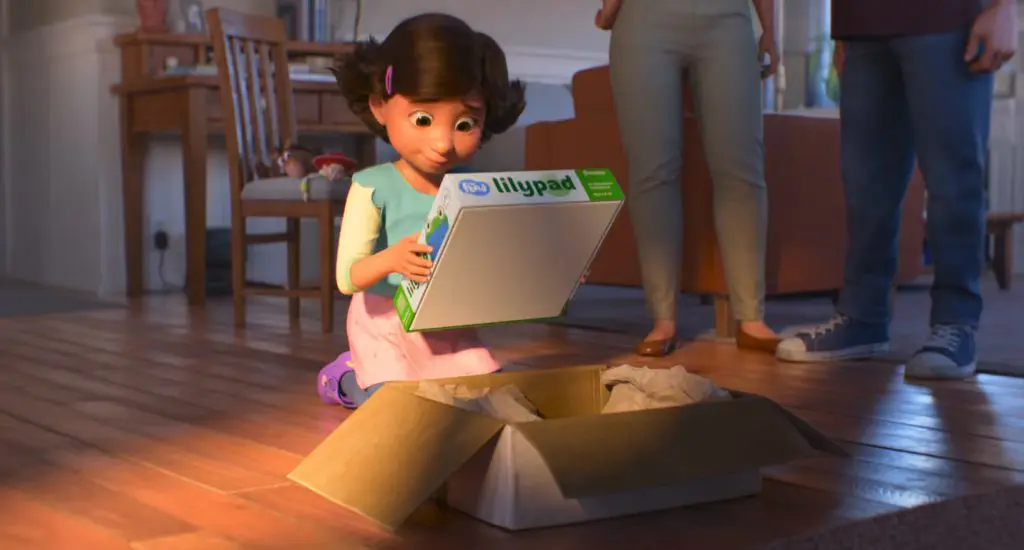
The living room provides a different impression. Brief shots reveal terracotta-coloured armchairs paired with timber furniture including a wooden console table and dining chair. A robot vacuum quietly moves across the floor, immediately signalling a household where technology has already become part of everyday life.
These details may seem incidental, yet Pixar has always excelled at using ordinary domestic objects to communicate larger themes.
Enter Lilypad
The film’s central newcomer is Lilypad, a tablet device voiced by Greta Lee.
According to Disney, Lilypad arrives believing she knows what is best for Bonnie, setting up the conflict between tactile play and digital entertainment that drives the story.
The trailers position Bonnie’s bedroom as the battleground for this clash of old and new. Surrounded by books, baskets and well-loved toys, the arrival of an intelligent screen-based companion threatens to redefine what play looks like for a new generation.
Rather than inventing futuristic worlds, Pixar appears to be exploring a challenge already familiar to many households.
A New Design Conversation
The original Toy Story films celebrated bedrooms filled with physical objects, handmade imagination and spaces shaped around toys. Toy Story 5 appears ready to explore what happens when those carefully constructed environments must compete with screens for a child’s attention.
Bonnie’s house looks set to become the physical embodiment of that tension, balancing warm domestic interiors with the growing presence of connected technology, reflecting a shift that will feel familiar in many modern homes.
Looking back across the series, Pixar has always used interiors to chart childhood itself. Andy’s bedroom evolved as his interests moved from cowboys to space rangers and eventually to adolescence, while Bonnie’s home introduced a brighter, more handcrafted aesthetic that reflected her creativity. If Toy Story 5 follows that tradition, the arrival of Lilypad and other digital devices will reshape more than the story. They will reshape the spaces around them, using furniture, décor and technology to explore what childhood looks like in an increasingly screen-led world.
As always with Pixar, the smallest background details often reveal the biggest ideas. We’ll certainly be paying close attention to every piece of furniture, every room layout and every carefully chosen prop because, in the world of Toy Story, design has always been part of the storytelling.
This feature is FREE to Classic members.
Join our newsletter community to receive Film and Furniture inspiration direct to your inbox and we’ll UPGRADE you to Classic Membership (which includes access to our exciting giveaway draws) for FREE.





 Facebook
 Twitter
 Instagram
 Pinterest
 RSS
RSS