


The Verity house: interiors worth watching
From its striking sawtooth roof to acres of timber panelling and faceted sunken seating, the house in Verity has the edge in more ways than one. We explore the architecture, furniture and interiors in the screen adaptation of Colleen Hoover’s novel, starring Dakota Johnson, Anne Hathaway and Josh Hartnett.
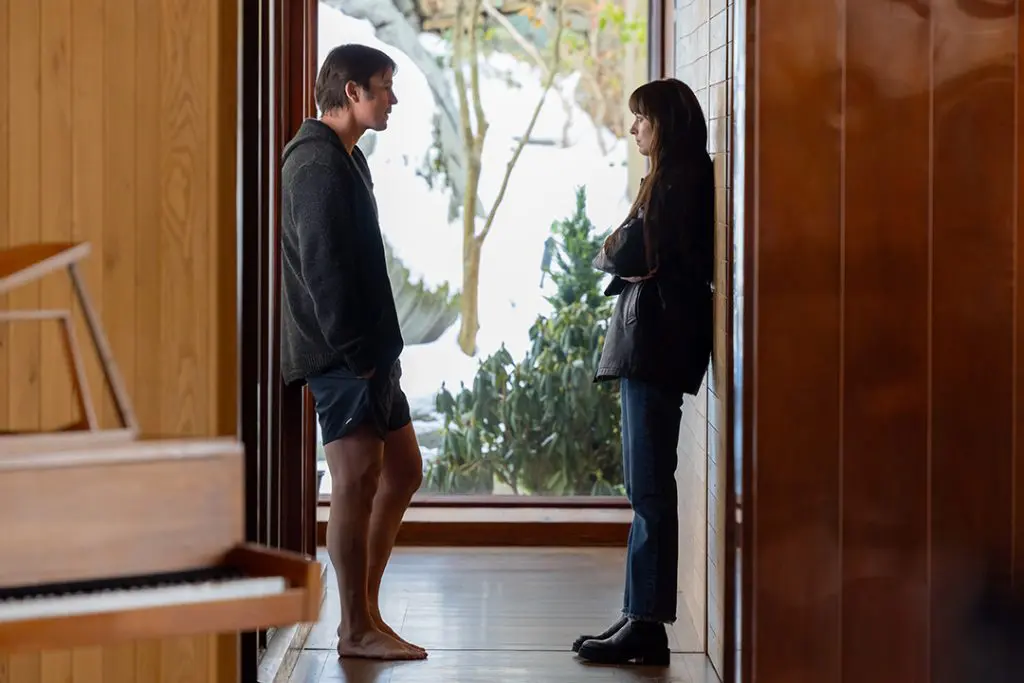
Photo credit: Alisha Wetherill © 2026 Amazon Content Services LLC. All Rights Reserved.
Watching Verity, you may find yourself yearning for a considerably longer tour of the house. Preferably before anyone moved in with a manuscript and a complicated backstory. Directed by Michael Showalter, the psychological thriller follows struggling writer Lowen Ashleigh (Dakota Johnson), who arrives at the snowy Crawford estate in Vermont to ghostwrite for celebrated author Verity Crawford (Anne Hathaway). Verity’s husband Jeremy, played by Josh Hartnett, provides another reason to make herself comfortable.
The film has its melodramatic moments, but the interiors offer plenty of sophistication. If you’re part of the Film and Furniture community, you may find your attention drifting towards the sculptural furniture, beautifully grained timber and rocks pushing their way into rooms. We would happily have traded a few lingering close-ups of Johnson’s face for longer looks at the house.
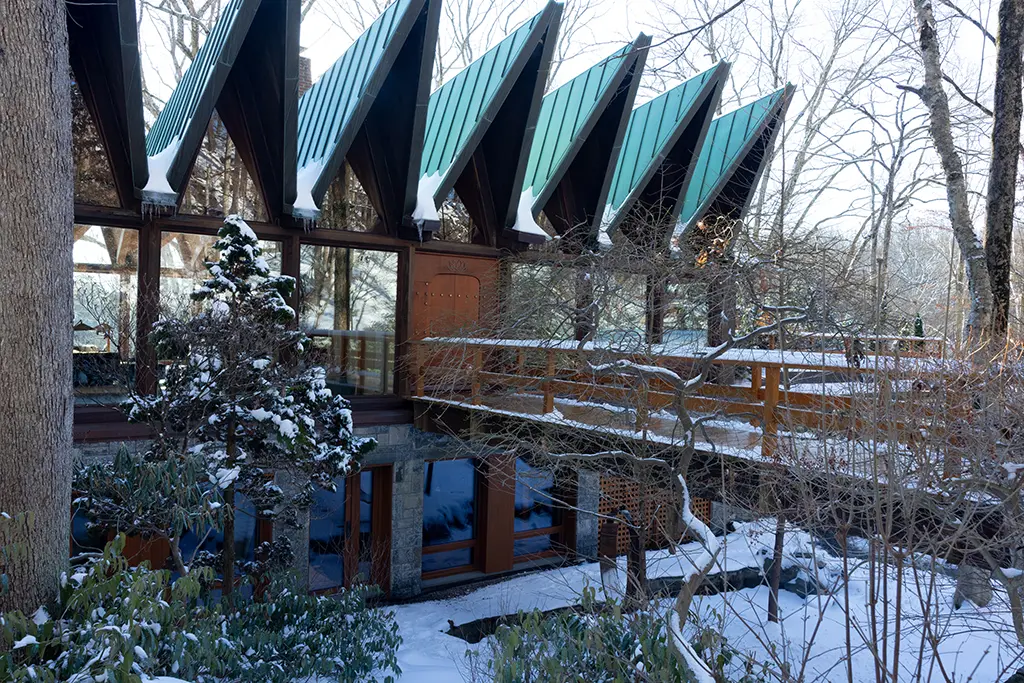
Where is the house in Verity?
The real house used in Verity is Beckoning Path in Armonk, New York, standing in for the Crawfords’ Vermont estate. Designed in the early 1960s by Danish sculptor and designer Jens Quistgaard, it was built for Martha and Ted Nierenberg, founders of Dansk, the American homeware brand that helped bring Scandinavian design to American tables. Today, the property functions as a wellness retreat.
Quistgaard conceived the house as a shipwrecked boat embedded in the landscape, a remarkable starting point for a building whose serrated roofline appears to claw at the sky. Those sharp angles establish a visual language that continues indoors through angled corridors, faceted furniture and the irregular edges of exposed rock.
Lowen’s ramshackle flat, half-packed into boxes with its mattress on the floor, establishes the distance between her circumstances and the Crawfords’. At the estate, space, materials and furnishings announce a level of wealth that scarcely needs discussing. The writing commission offers access to an entirely different life.
The interiors of the Verity house
This is a glossy, mainstream thriller with an appetite for excess, and its cinematic references help explain the flavour. Showalter cites Hitchcock, Adrian Lyne and Brian De Palma among his influences, while screenwriter Nick Antosca invokes Rebecca. The imposing house, troubled marriage and newcomer drawn into somebody else’s private world have a distinguished ancestry.
Production designer Amy Williams recalls Showalter asking for a “beautiful, glamorous popcorn thriller”. Seen through that lens, the heightened drama makes rather more sense. The interiors certainly fulfil the glamorous part of the brief.
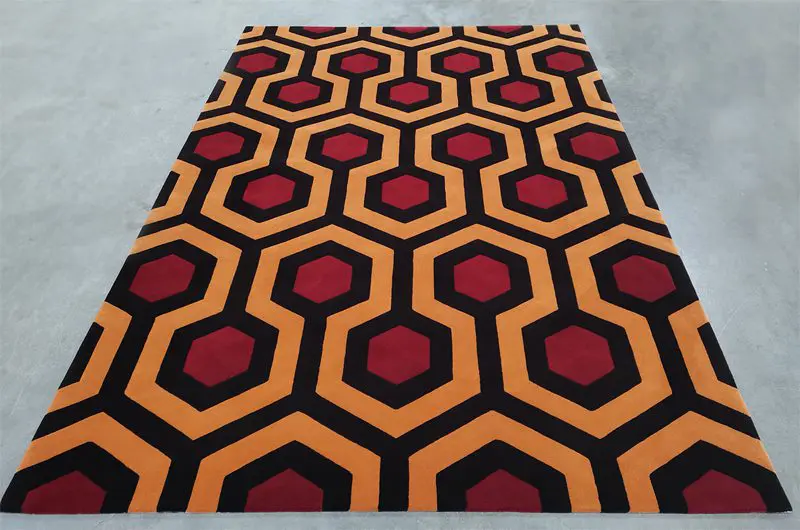
There are specific tributes, too. Wallpaper outside the Crawfords’ earlier New York apartment echoes the hallway wallpaper in Dressed to Kill, while an ice pick in Verity’s desk drawer nods to Basic Instinct.
Williams and set decorator Kendall Anderson created the film’s interior world by combining the real location with constructed sets. Bedrooms, hallways and Verity’s office were built at Broadway Stage in Queens, New York, extending Quistgaard’s design language into spaces created for the camera. Williams wanted “daring, almost dangerous spaces”, developing changes in level, intrusive stone, low ceilings and long, narrow passages. The house can open generously around Lowen, then appear to squeeze her into a corridor.
Its convoluted circulation is deliberate. Viewers are intended to struggle to grasp the building’s size and the connections between its rooms. If you occasionally lose your bearings, the design is doing its job.
The timber panelling contributes beautifully and gives the walls depth and rhythm, while dark corners complicate the warmth of the grain. These are handsome materials arranged with a distinctly sharp disposition.
Verity’s office and living area: somewhere to settle, cautiously
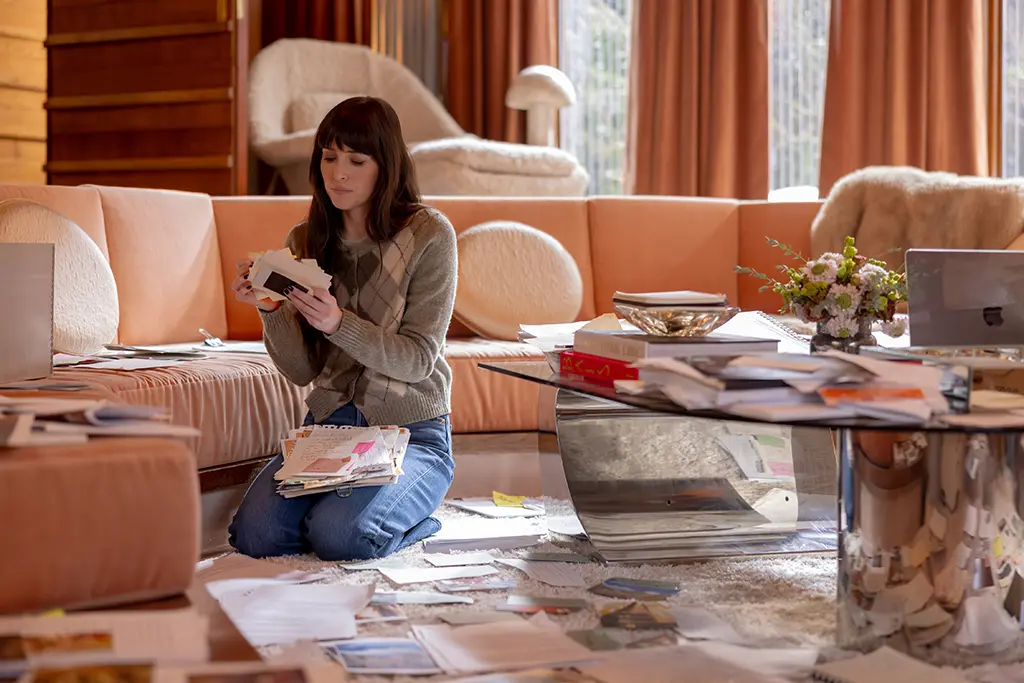
Dakota Johnson as Lowen Ashleigh in director Michael Showalter’s VERITY. Photo: Alisha Wetherill © 2026 Amazon Content Services LLC. All Rights Reserved.
Verity’s writing quarters combine a luxurious living area with an opulent office, an extravagance we could very easily grow accustomed to.
The living area offers generous seating, tactile surfaces and views of the winter landscape through an octagonal skylight and broad expanses of glazing whose light draws attention to the timber and upholstery. The seating area creates a many-angled sweep and an enclosure within the room. The pink palette, cushions and shag carpet soften the affect. This custom-made sectional sofa is inspired by a midcentury design by Harvey Probber. Its substantial presence makes the furniture feel closely bound to the architecture.
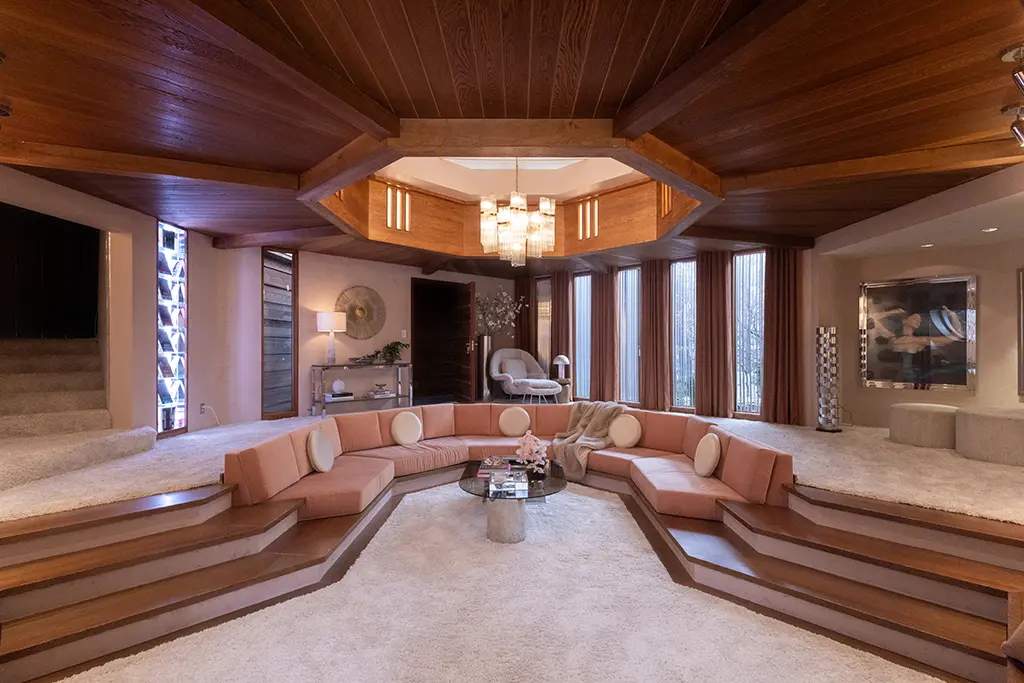
An Eero Saarinen Womb chair provides a more enveloping silhouette. Designed for Knoll in 1948, it looks particularly inviting in the thick, textured upholstery of the chair in which Lowen reads. An excellent choice for settling down with a book (of Verity’s secret notes), although we might recommend different reading material.
Chrome and mirrored surfaces punctuate both spaces, from the coffee table and console, a mirrored sideboard with a midcentury chrome paper tray, to the gleaming curved desk that dominates Verity’s office.
The 1970s reflective desk gives Verity a commanding position. Its broad curve has something of a throne about it, a place from which to write, receive visitors and remain firmly in charge of the narrative.
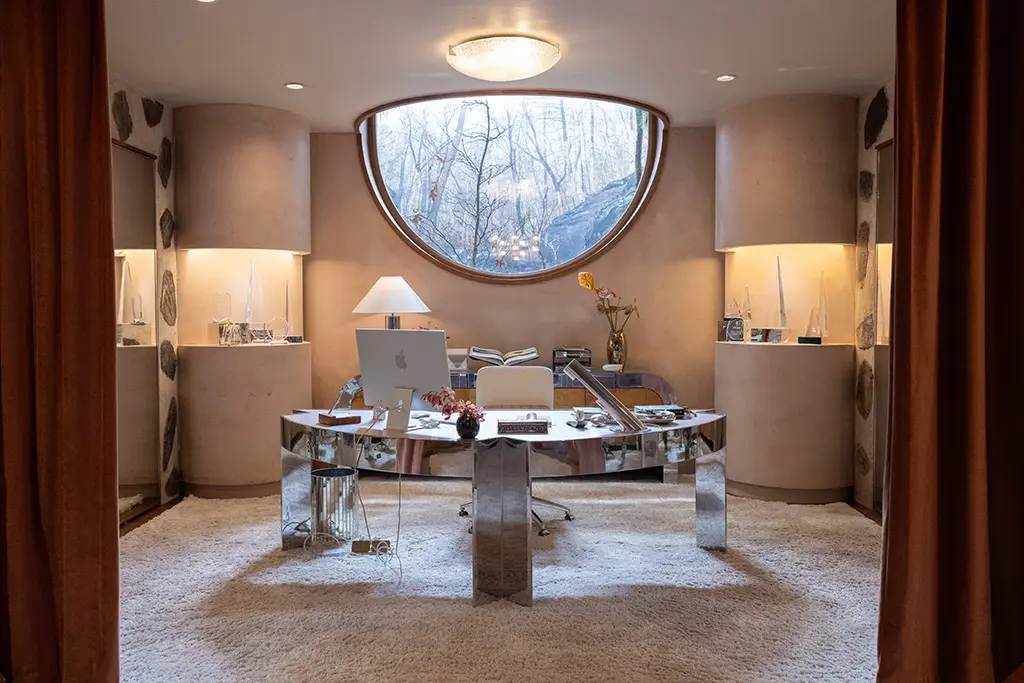
Hathaway helped shape the office, discussing colours, fabrics and ideas with Williams during preparation. The room expresses its owner’s personality even in her absence: cultivated, comfortable and highly conscious of presentation.
The kitchen and dining area: edges at the table
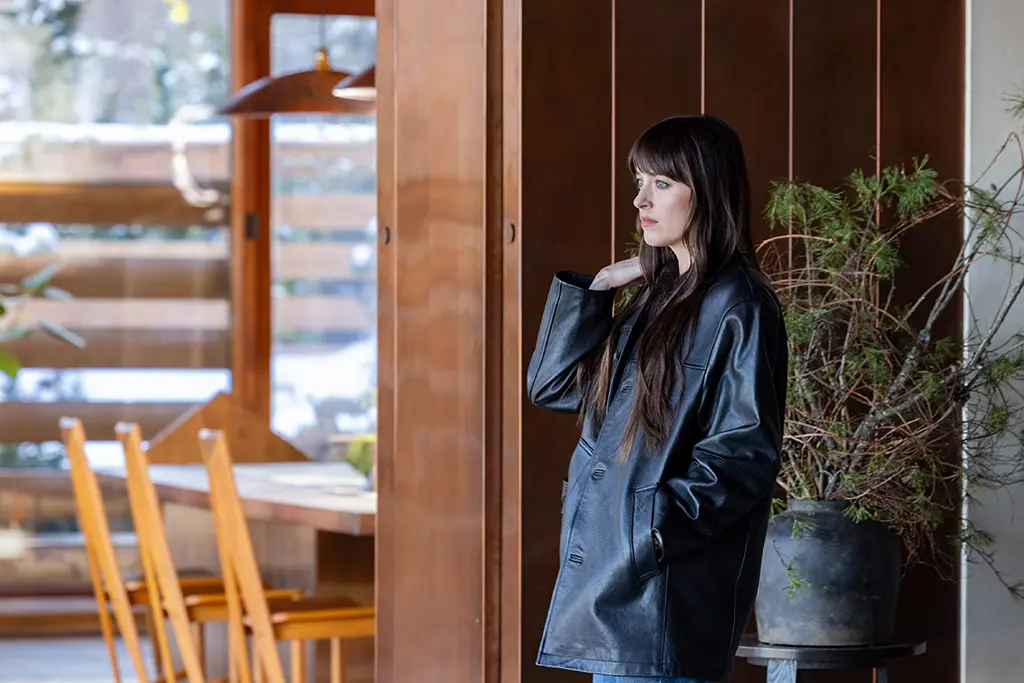
Dakota Johnson as Lowen Ashleigh in director Michael Showalter’s Verity. Photo: Alisha Wetherill. © 2026 Amazon Content Services LLC. All Rights Reserved.
The dining chairs carry the angular theme. Designed by Søren Nissen and Ebbe Gehl for Seltz, their sculptural outlines lend a certain formality to the room, and beautifully echo the sharp geometry of the roof.
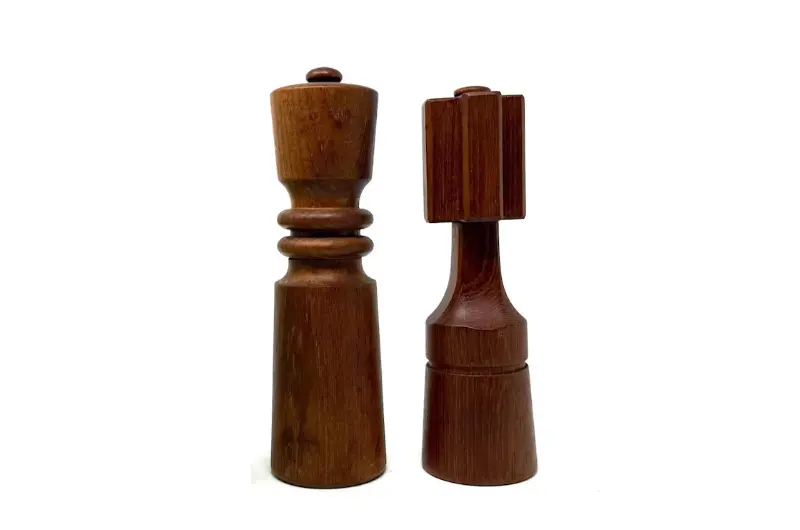
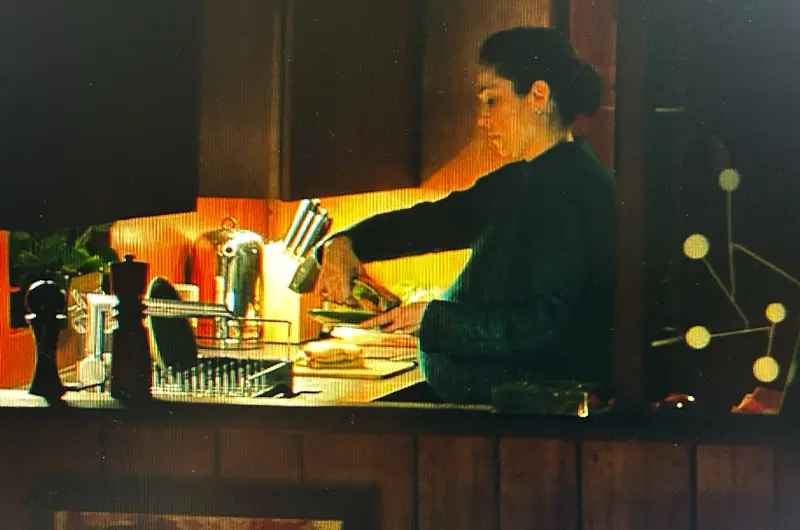
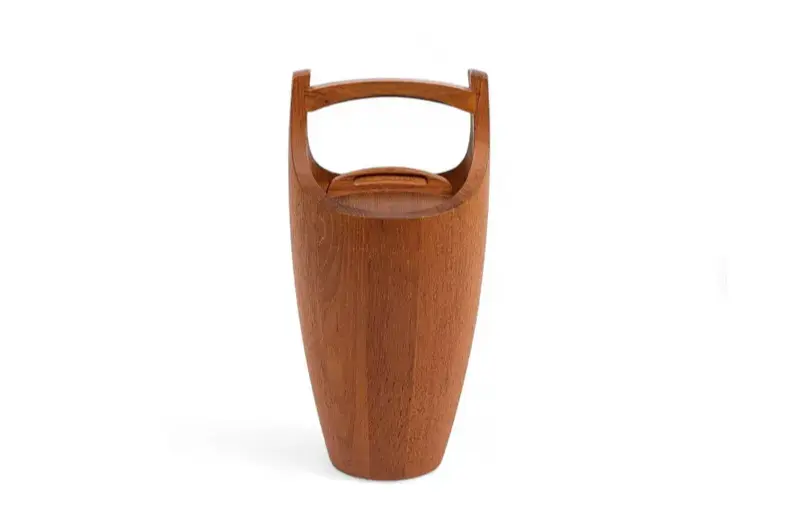
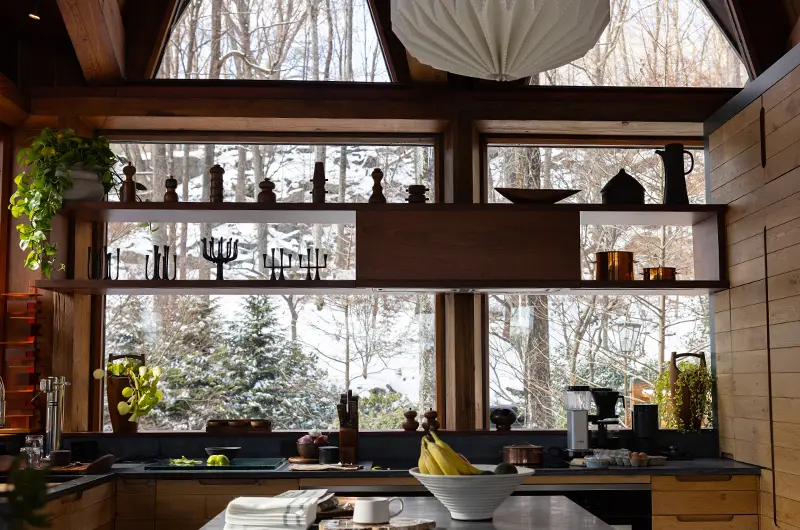
Smaller objects reward closer inspection, particularly the work of Jens Quistgaard, whose designs for Dansk were incorporated into the film as references to the house’s original designer and clients. His wooden salt and pepper mills and sculptural teak ice bucket sit comfortably among the dark metal candelabras and other objects displayed on the open kitchen shelves.
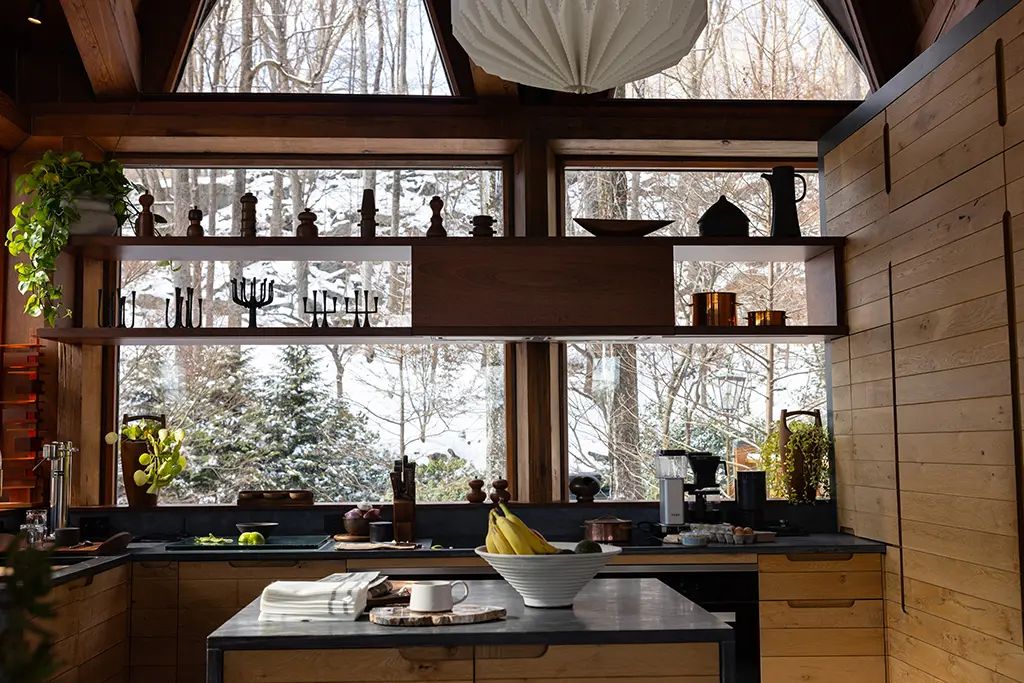
Quistgaard had a remarkable ability to transform everyday utensils into miniature sculptures. His pepper mills come in multiple forms, some ingeniously combining salt storage and a pepper grinder in one object. His elegant Fjord cutlery, combining timber and metal, and colourful Købenstyle cookware further demonstrate the breadth of a designer whose sensitivity to materials could extend from the smallest table accessory to an entire house.
Hathaway described the house as monastic and medieval, qualities that production designer Williams developed alongside its midcentury and Japanese influences. The dark timber, sculptural furnishings and candlelight lend these interiors an almost ritualistic atmosphere, with an underlying sense of unease.
Even the telescope feels particularly well chosen. In a story preoccupied with watching, interpreting and deciding what to believe, an instrument devoted to looking seems entirely at home.
For those inspired by Verity’s interiors, Quistgaard’s smaller pieces offer an appealing place to start. Explore our Film and Furniture Marketplace for furniture and décor with a story to tell. After all, a sculptural wooden pepper mill is considerably easier to accommodate than a woodland estate.
The bedroom: a headboard with responsibilities
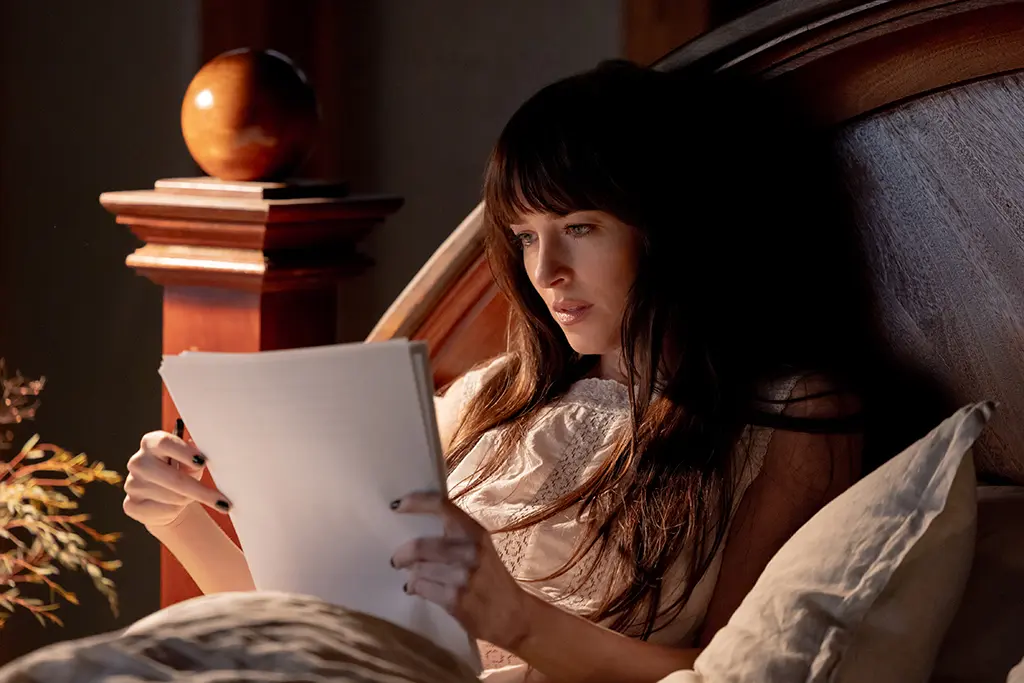
Dakota Johnson as Lowen Ashleigh in director Michael Showalter’s VERITY. Photo: Alisha Wetherill © 2026 Amazon Content Services LLC. All Rights Reserved.
The curved wooden headboard of the bed where Lowen sleeps introduces a smoother line into the house’s vocabulary. Its generous surface gives the bed a substantial presence, with the timber maintaining continuity with the surrounding interiors.
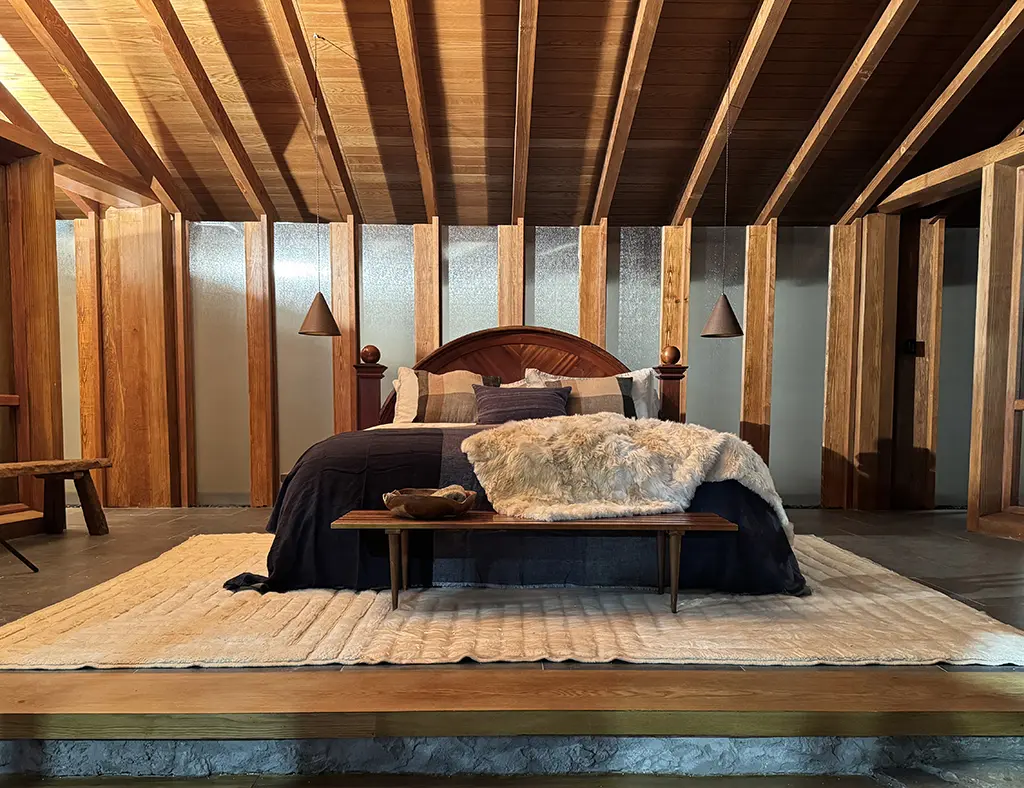
It also had a rather particular practical duty. The bed was custom-built to accommodate a scene familiar to readers of the novel, with a removable balsa wood section designed to take actual bite marks. Even the finish required consideration, with food colouring used in place of conventional wood stain. The team tested the material for bite-mark depth and taste. We will leave the scene itself for the film to explain, but there can’t be many screen beds whose development has involved quite so much taste testing. All in a day’s work for the art department.
The bathroom: bathing at the rock face
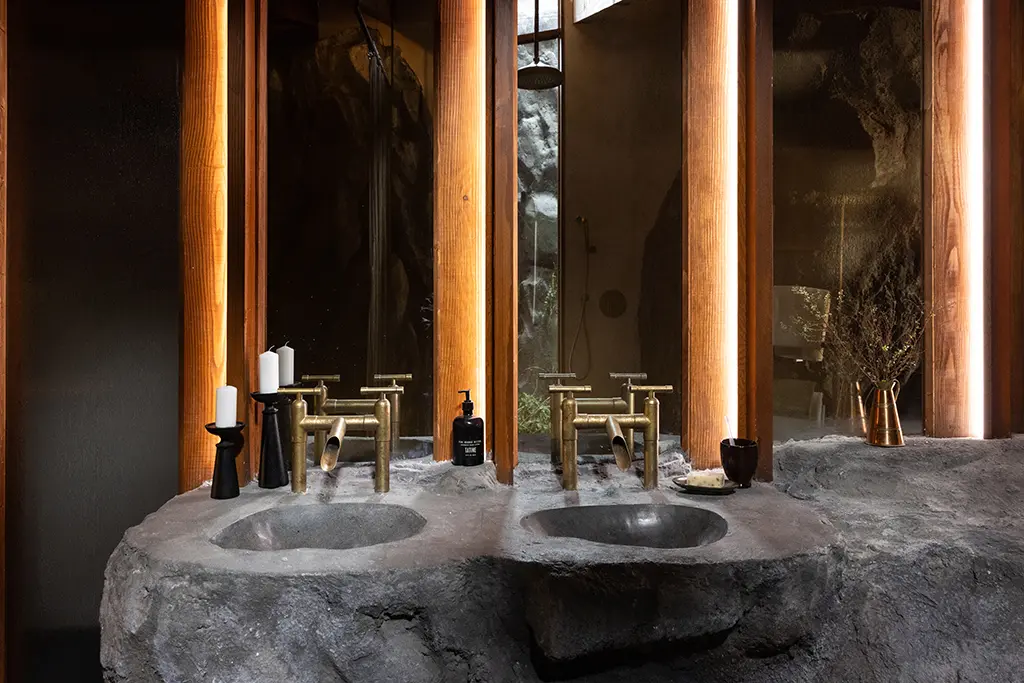
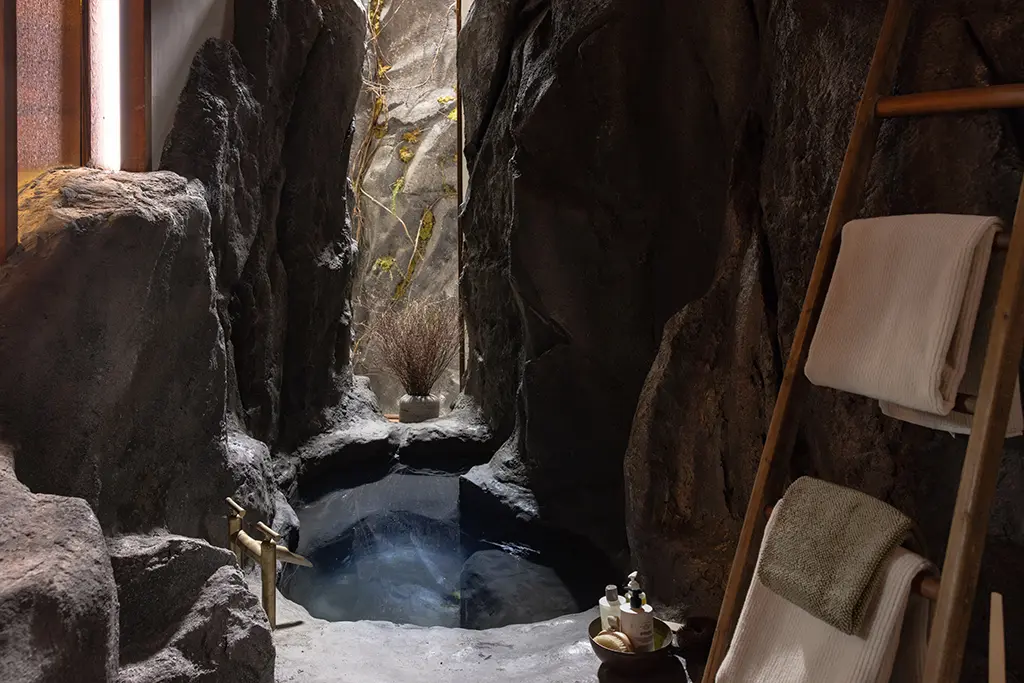
The bathroom might take your breath away. Created on a soundstage, this extraordinary space demonstrates the skill of the production design and scenic teams, who made an entirely fabricated geological landscape feel convincingly part of the original building.
Rock appears to break through the room’s enclosure, and the dark bath is excavated from the same geological world. Its irregular outline and apparent weight make bathing seem an unusually dramatic undertaking.
Throughout the house, smooth timber meets rough stone. Here, that relationship becomes the main event. The room has the material richness of an expensive retreat, with the faint suggestion that the landscape may still have the upper hand.
A final literary connection
One final detail caught our eye. Hachette, Verity’s publisher in the film, also has a real-world connection to the production: its New York offices were used as a filming location, and we spotted the publisher’s name on the labels of boxes of books being delivered.
A pleasing coincidence for us at Film and Furniture, as our founder Paula Benson’s forthcoming book, Design on Screen, will be published by Laurence King, part of the Hachette publishing family. We’re hoping Paula’s literary adventures prove rather less dramatic.
As for Verity, the house remains our favourite reason to watch. With its extraordinary midcentury pedigree, beautifully considered furnishings and architecture that seems to have a few secrets of its own, this is one screen home we’d happily explore further.
This feature is FREE to Classic members.
Join our newsletter community to receive Film and Furniture inspiration direct to your inbox and we’ll UPGRADE you to Classic Membership (which includes access to our exciting giveaway draws) for FREE.





 Facebook
 Twitter
 Instagram
 Pinterest
 RSS
RSS