


The Night Manager Interiors and Locations: Designing Layers of Deception
In season 2 of The Night Manager, Jonathan Pine (Tom Hiddleston) thought he’d buried his past, until a chance sighting of an old Roper mercenary prompts a call to action and leads Pine to a violent encounter with a new player: Colombian businessman Teddy Dos Santos.
With its themes of espionage, deception, and hidden motives, the series places weight on its interiors. Production designer Victor Molero used spaces to hide identities, embed metaphors, and offer subtle insights into character. Hiding things in plain sight extended beyond the page: Although the story unfolds largely in Colombia, filming took place across Colombia, Spain, Tenerife and London, creating the challenge of evoking a coherent Colombian atmosphere across two continents.
We spoke with Molero about the design and locations of The Night Manager season two — from building sets across multiple countries to sourcing distinctive hotels and private residences, and shaping environments that both reveal and conceal the characters who inhabit them.
Film and Furniture: Season 2 was shot in London, Colombia, Spain, and Tenerife, while most action took place in Colombia. Can you walk us through your approach to this feat?
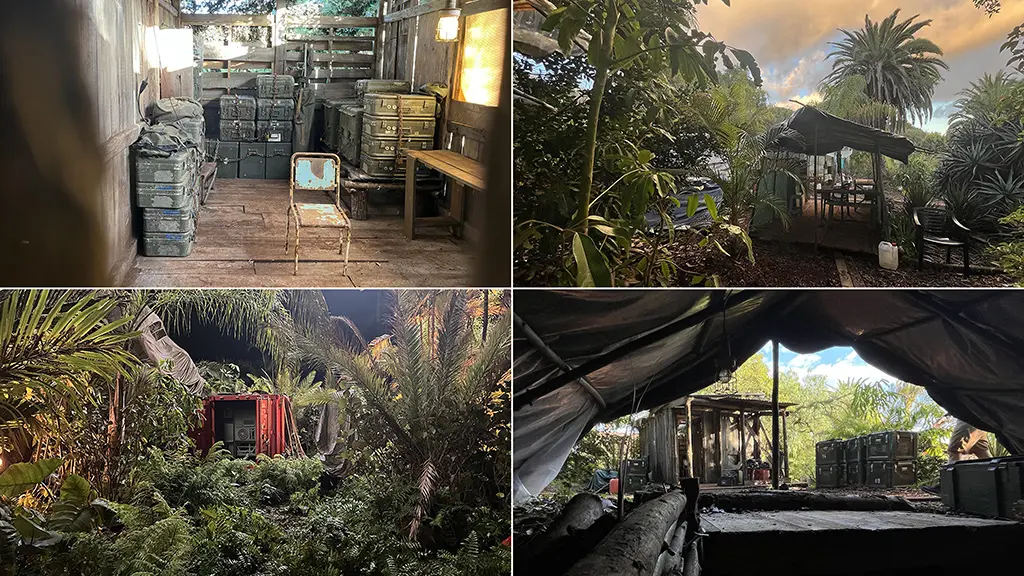
Victor Molero: Season two was conceived as a truly international production, but from the outset, the challenge wasn’t simply where we were shooting — it was how to make those places feel coherent. I joined the project through Stephen Garrett, with whom I’d previously collaborated on Culprits, and very early on, we discussed how Spain could convincingly double for key Colombian locations once the production decided to base most of the shoot in Europe.
Research was absolutely fundamental. It always is, but on this project, it became the backbone of every decision. Before designing anything, we spent a long time understanding the specific identities of Cartagena, Medellín, and the jungle — not as generic locations, but as lived-in environments with their own logic. After extensive scouting across the UK, Colombia, and Spain, Barcelona and Tenerife became the pillars of the Spanish shoot, carefully mapped to those Colombian settings so transitions between countries would feel completely invisible on screen.
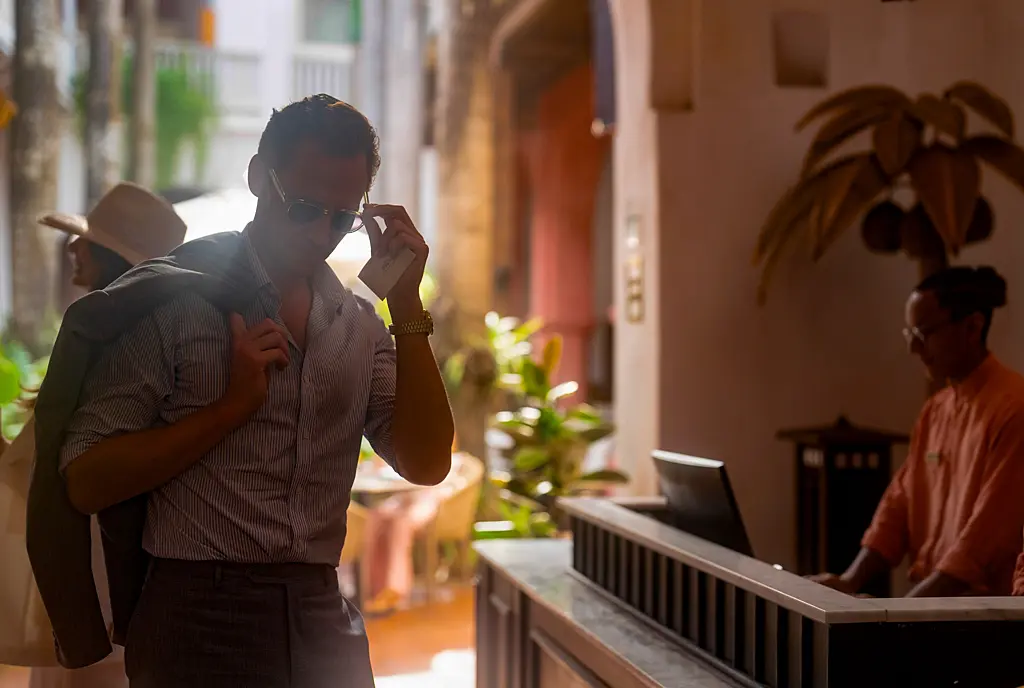
At the same time, the real challenge was psychological as much as logistical. A project like this requires a mindset that allows you to constantly improvise while remaining absolutely consistent. Every location becomes a piece of a larger puzzle, and every decision — architectural, graphic, material, or tonal — has to support the same visual language, even when the geography is fragmented. Authenticity lives in details audiences may never consciously notice, but would immediately feel if they were wrong. Working closely with a Colombian art team was essential in grounding that authenticity and avoiding clichés, ensuring the environments felt emotionally and culturally rooted rather than designed from a distance.
Ultimately, the success of the season came down to research, planning, and flexibility — understanding that production design isn’t just about creating spaces, but about making fragmented locations feel like one continuous, believable world.
F&F: Textiles, tiles, and other decor are always deeply grounded in local cultures. Tell us about the process of sourcing some of them in Colombia for the location shots in other places? Can you give an example of a piece or pieces that you sourced that was/were your favourite or most special?
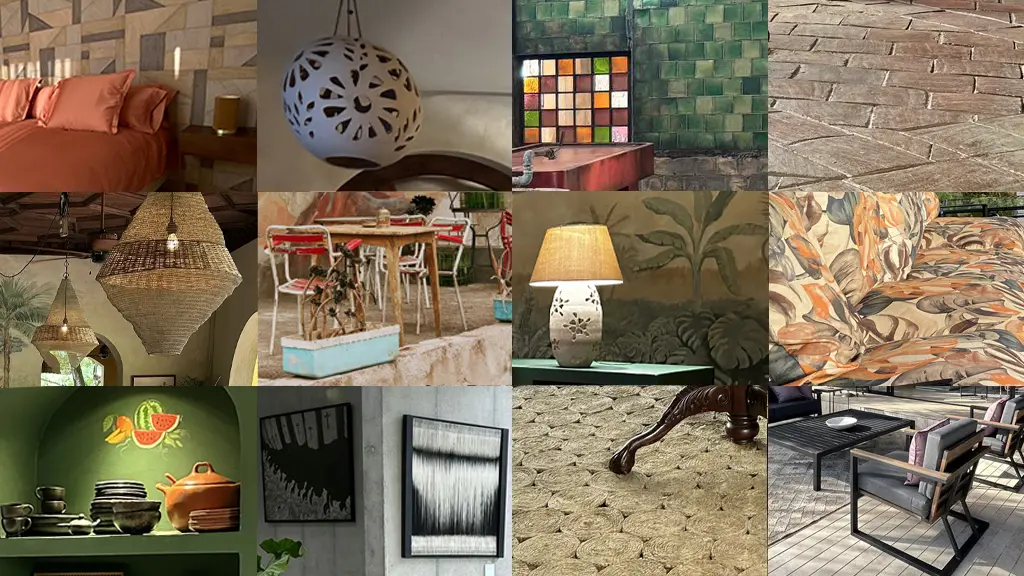
VM: I come from a family of artisans in the south of Spain, and I still think of myself as an artisan within this industry. That background has shaped how I approach materials — with a lot of respect for what culture produces with its hands, time, and traditions.
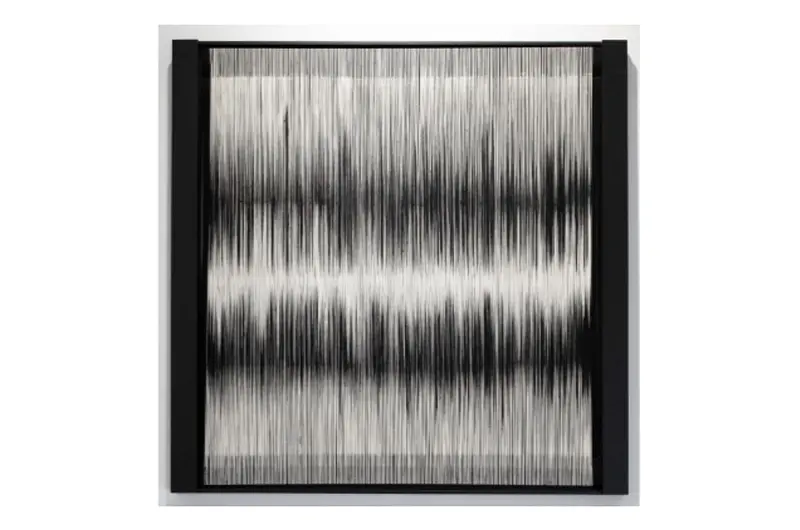
On this project, sourcing textiles, tiles, and decorative elements wasn’t about filling spaces, but about finding pieces that carried real cultural weight. Rather than relying solely on references or suppliers, I worked very closely with our Colombian set decorator, Melissa Villegas, who introduced me to local artists and makers whose work resonated with the characters and environments we were building. We met them in person, talked about the project, and only moved forward when the collaboration felt genuine on both sides. For La Estancia, we used textile pieces by Colombian artist Vanessa Valero, whose woven works have an extraordinary sense of craft and material presence. We also collaborated on Teddy’s villa with artist Vanessa Gómez, who has an incredible background in the textile world, and with artist and photographer Javier Venegas. Their work fit perfectly with the more indigenous visual language we were looking for, helping us connect the space to Teddy’s roots in a subtle but meaningful way.
Interestingly, not having prior personal experience in Colombia forced me to slow down and observe more carefully. It made me question assumptions and listen more — to materials, to people, and to context. The Colombian art team became a cultural anchor, helping us avoid clichés and ensuring the work felt emotionally grounded rather than designed from a distance.
One of the most special pieces for me was the artwork of Vanessa Gómez, who has an incredible background in the textile world, not because it stood out visually, but because it carried a real sense of place. Those are the elements audiences may never consciously identify, but instinctively feel — and that’s where authenticity really lives.
F&F: Hugh Laurie is back, and we see him in the context of narcos style mansion in the jungle. Can you share how you dressed the house and maybe include symbolism to where his character is this season?
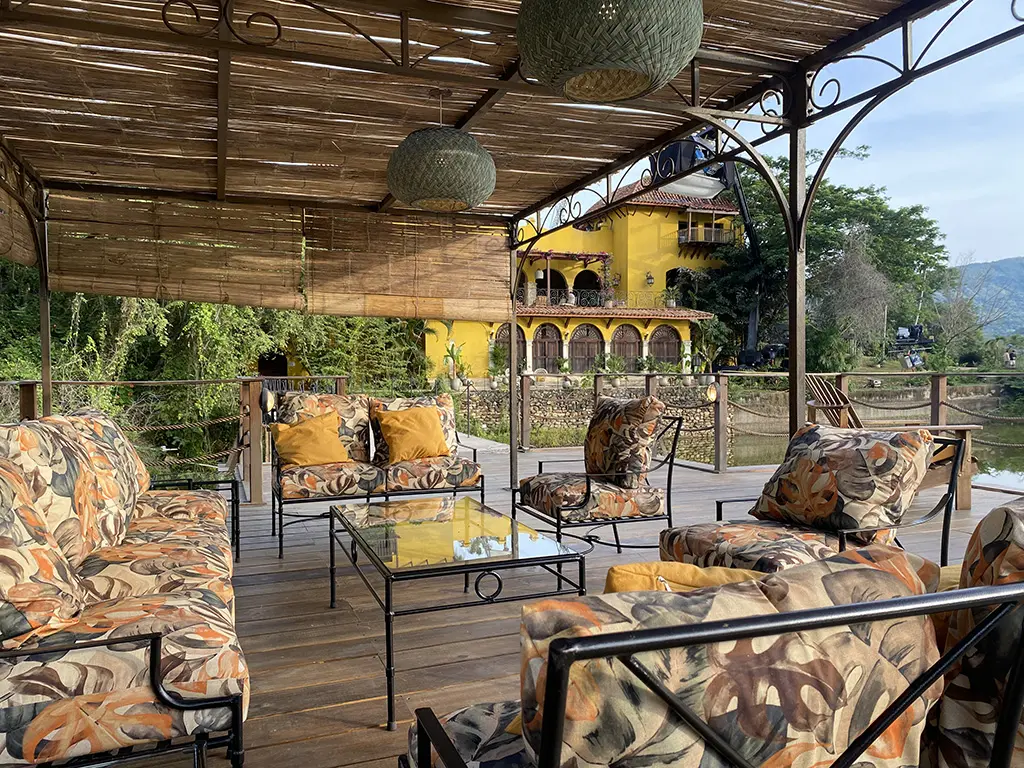
VM: La Estancia is where Richard Roper is hiding — and that idea of hiding became the spine of the design. We found an extraordinary hacienda in Nilo, about four hours from Bogotá, reached by a long, winding road. For the story, it was essential that the house felt completely isolated, almost swallowed by the landscape. In Colombia, there are still estates built during the years when powerful narcos were spending their fortunes without limits, and La Estancia clearly came from that world.
The house was partially abandoned, so we undertook an extensive renovation, often working in extreme heat alongside the Colombian crew. From the beginning, I wanted the space to feel like a gilded cage. This is not the British elegance of Roper’s Mallorca house in season one — that version of him is gone. Here, the architecture feels heavy, rooted, almost oppressive.
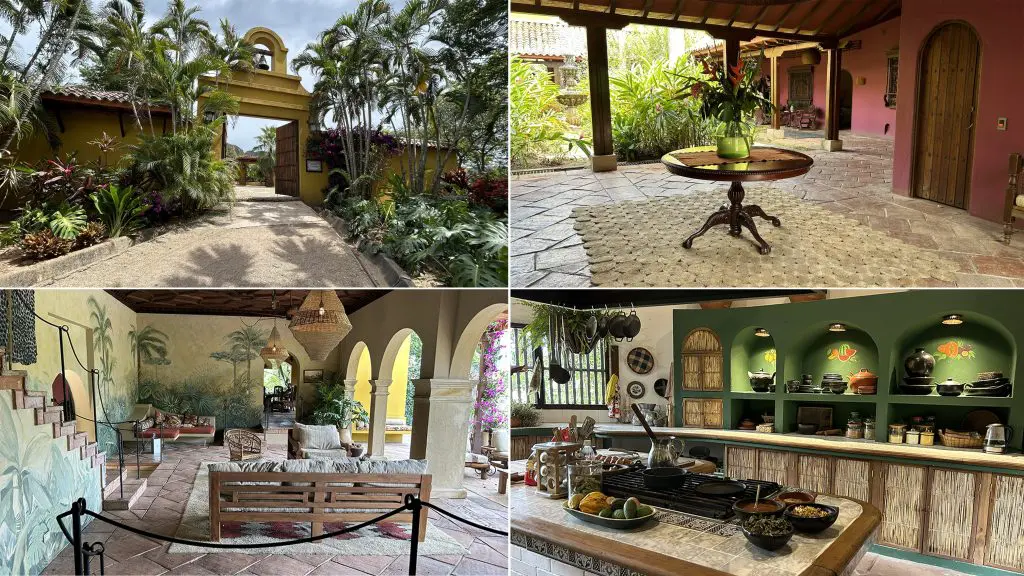
With the help of our talented scenic painters, we created large vegetation murals so the house appears to dissolve into nature. It’s beautiful, but also claustrophobic — as if the jungle is slowly closing in on him. Roper is surrounded by luxury, but it no longer represents freedom. It’s camouflage.
One of the most striking elements was a large statue of Jesus already on the property. In a country with such a strong Christian tradition, that presence carries a lot of weight. Placing Roper next to it created a quiet but powerful tension — a kind of unspoken confrontation between god and the devil, belief and corruption. Roper is hiding in plain sight, wrapped in symbolism he no longer controls.
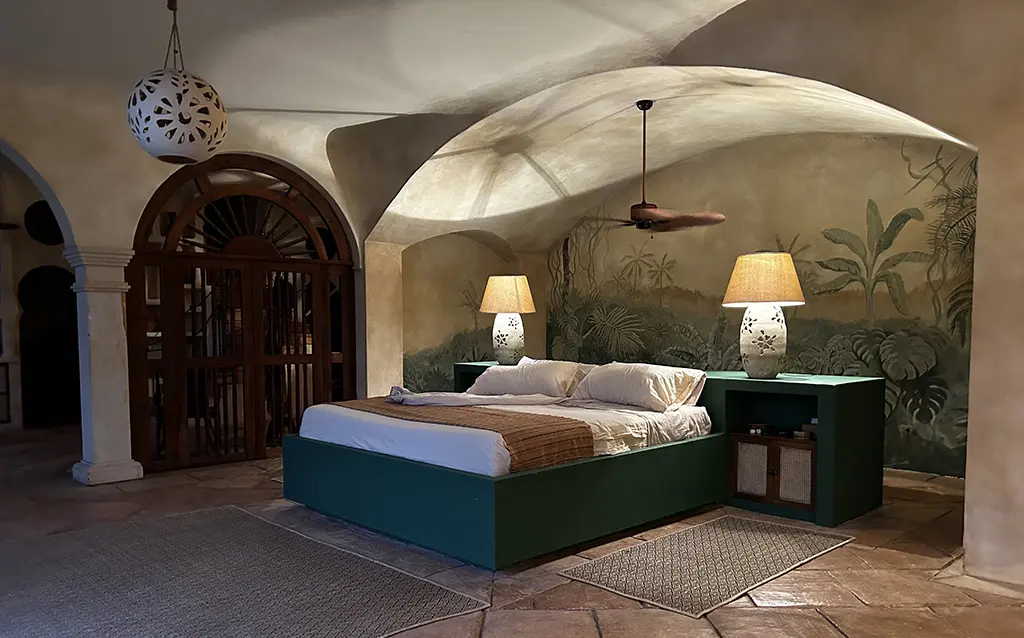
Crucially, La Estancia was never meant to feel like a home. Unlike season one, this isn’t an extension of Roper’s ego or taste. It’s a place he’s been put in. He’s supposed to be dead — and so is the mythology we built around him before. The mansion reflects that loss of control: opulent, isolated, and ultimately, a prison.
F&F: Mansions are such an important element of the show. We also see a modern glass house on the hill. Tell us about adapting it and then dressing it?
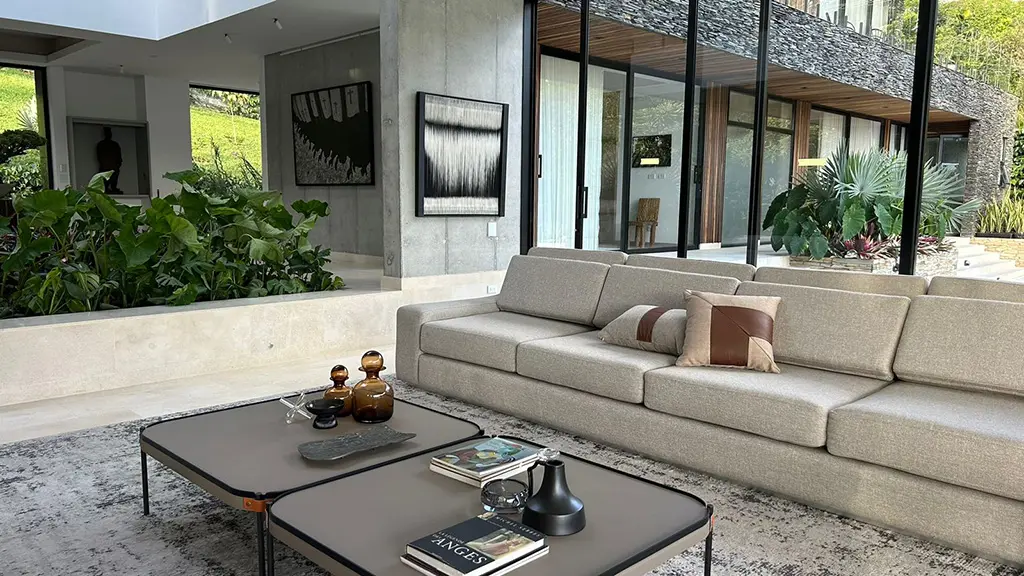
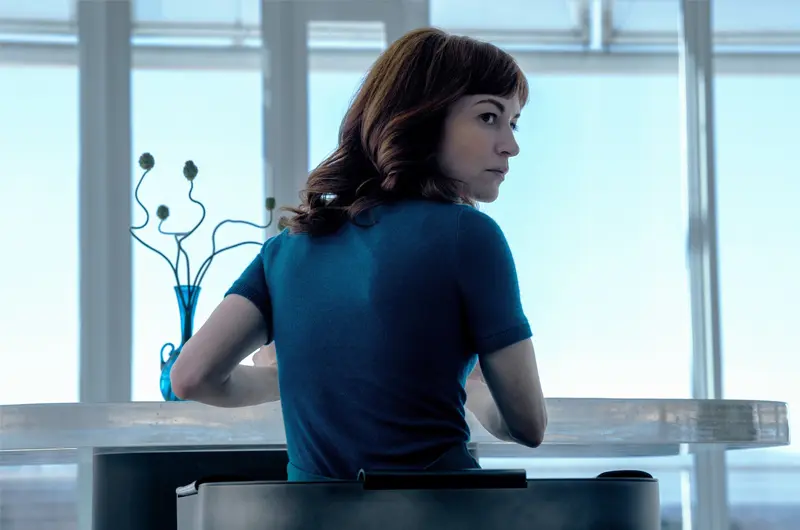
VM: For me, mansions in this season are never just statements of wealth — they’re psychological landscapes. Analysing the character is always the starting point, and Teddy’s modern glass house was a perfect example of that.
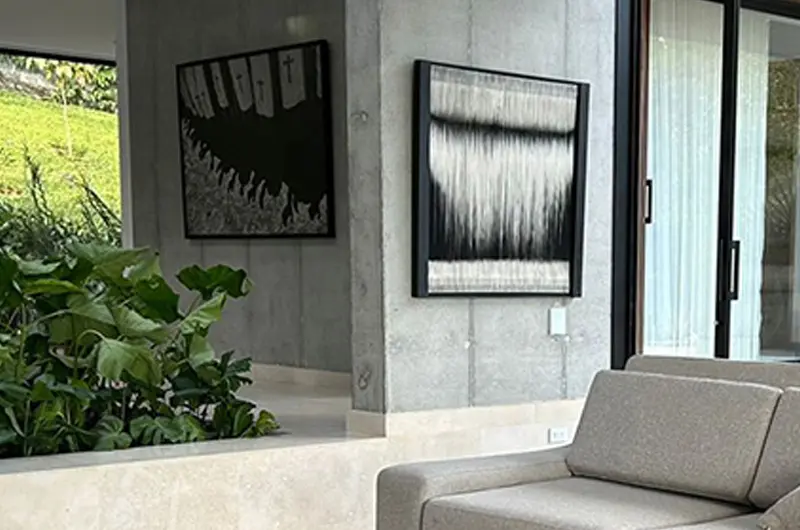
On the surface, the villa is clean, modern, almost immaculate. But Teddy is dangerous not because he’s powerful, but because he’s tortured. He was abandoned as a child, raised in a convent under a strict Catholic faith, and that contradiction — rage mixed with fear and humanity — shaped every design decision. The architecture gave us transparency and exposure, but what interested me was what we placed inside it.
I dressed the house with Colombian art and photography as a way of revealing his more sensitive side — the wounded, abandoned child beneath the control. I was fortunate to work with local artists whose work aligned naturally with what I imagined Teddy’s personal taste could be: restrained, emotional, and quietly intimate.
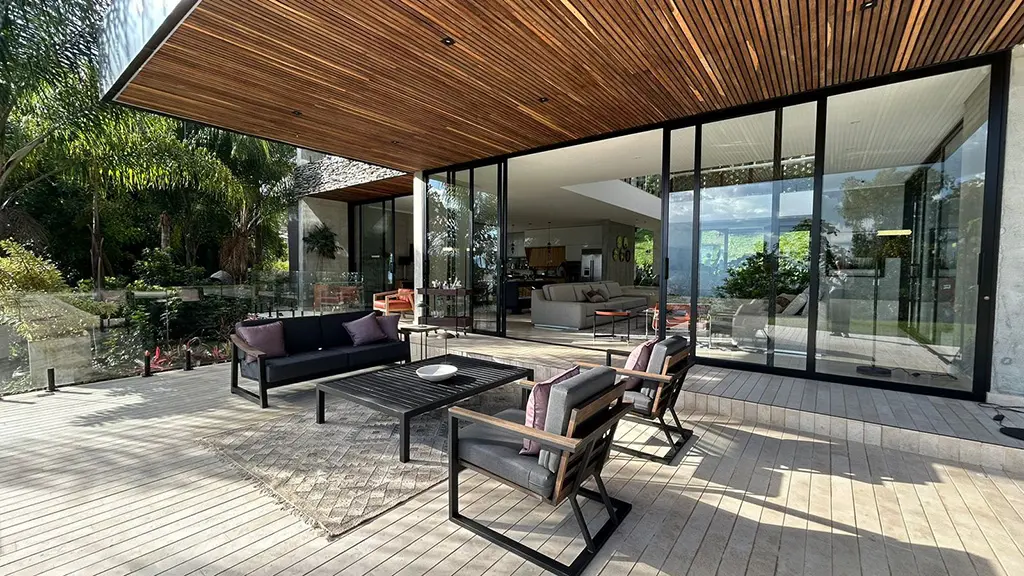
At the same time, I wanted to honour his austere upbringing. The decoration is measured and minimal, but layered with specific religious elements — a cross in his bedroom, a painting of the Virgin in his study. Those details leave a trace of his past and introduce a sense of guilt and self-inflicted punishment into the space.
The result is a house that looks calm and rational, but feels emotionally loaded. Like Teddy himself, it’s controlled on the surface — and deeply unsettled underneath.
F&F: You also feature so many beautiful restaurants and hotels. What were some of your favourite ones, and to what extent did you redress them and add touches for the needs of the show?

VM: Restaurants and hotels were crucial in season two because they often sit at the intersection of intimacy and exposure. They’re public spaces where very private things happen, so the approach was always about knowing how much to intervene — and when not to.
One of the most important locations was the Hill Top restaurant near La Estancia. What mattered most to us wasn’t the restaurant itself, but the view over the Colombian hills. We needed to feel isolation and distance from the world. In Colombia, these rural country bars are known as fondas, and we found one not far from Medellín that already had the right authenticity. We barely touched it — just added a few handmade lamps — allowing the palm-built ceiling and the vast landscape beyond to frame what became a very iconic encounter. Sometimes the best design decision is knowing when to step back.
The Night Manager (both Season 1 and 2) is available to stream on Amazon Prime Video, and also on BBC iPlayer in the UK.
Sponsored post
This feature is FREE to Classic members.
Join our newsletter community to receive Film and Furniture inspiration direct to your inbox and we’ll UPGRADE you to Classic Membership (which includes access to our exciting giveaway draws) for FREE.





 Facebook
 Twitter
 Instagram
 Pinterest
 RSS
RSS