


Bugonia: Inside the bonkers, beautiful and brilliantly built worlds of Yorgos Lanthimos’s latest film
Bugonia is bonkers, beautiful, and built around contrast.
Yorgos Lanthimos’s latest film moves between worlds that are visually distinct and psychologically opposed – spaces that actively shape how the story unfolds. This is a film where interiors do subtle but important work, where furniture signals power, paranoia or control, and where realism is slowly (and gleefully) abandoned.
To understand how those worlds were conceived, we sat down with production designer James Price, whose design for Bugonia spans three radically different environments: Teddy’s chaotic, time-stalled house; Michelle’s immaculate corporate and domestic spaces; and a final Andromedan world that pushes design well beyond the boundaries of realism.
Each is governed by its own logic, and it’s that clarity of thinking that makes the film’s tonal shifts feel so confident, even when the story veers into the gloriously unhinged.
Read on — and watch the full video interview from our YouTube channel below for more insights or listen to The Film and Furniture Podcast on all your favourite podcast platforms.
Teddy’s house: Clutter from a life that hasn’t moved on
Teddy and his cousin are conspiracy theorists on a mission. Their house reflects that mindset perfectly: a space that feels suspended in time, layered with obsession, and quietly collapsing under the weight of its own accumulation.
Crucially, this wasn’t a found location. Teddy’s house was built from scratch — landscape, house and basement included. For James, that opportunity was irresistible. “This was an opportunity to do something I’ve always wanted to do — build a house in a landscape for real, and then build the interior as well,” he explains. “Traditionally, you’d build the exterior and then go into a studio to do the inside. I pitched doing it all together.”
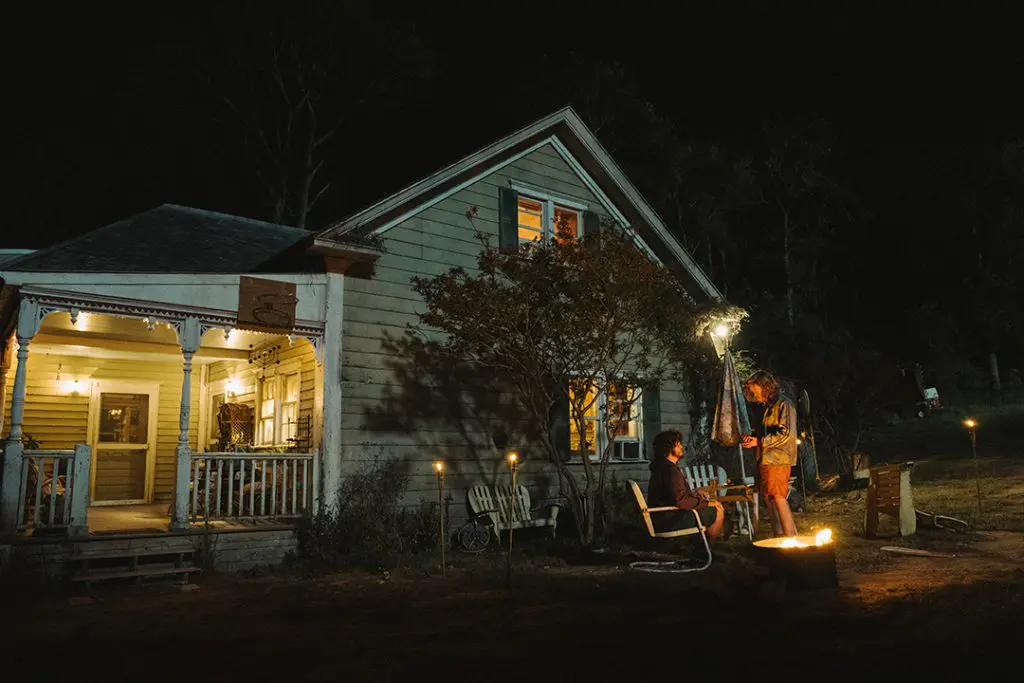
Credit: Atsushi Nishijima/Focus Features © 2025 All Rights Reserved.
What began as an ambitious idea quickly became even more extreme. The basement — where Michelle is held captive — was not originally part of the plan. “I didn’t think we’d build the basement on site because I thought it was too insane,” James admits. “But Yorgos said, ‘Think of the benefit for the film.’ And he was right.”
The solution was as ingenious as it was nerve-wracking: digging a vast hole, lowering seven shipping containers into the ground, cutting and welding them together, then building the house above. From excavation to filming, the entire structure was completed in just ten weeks.
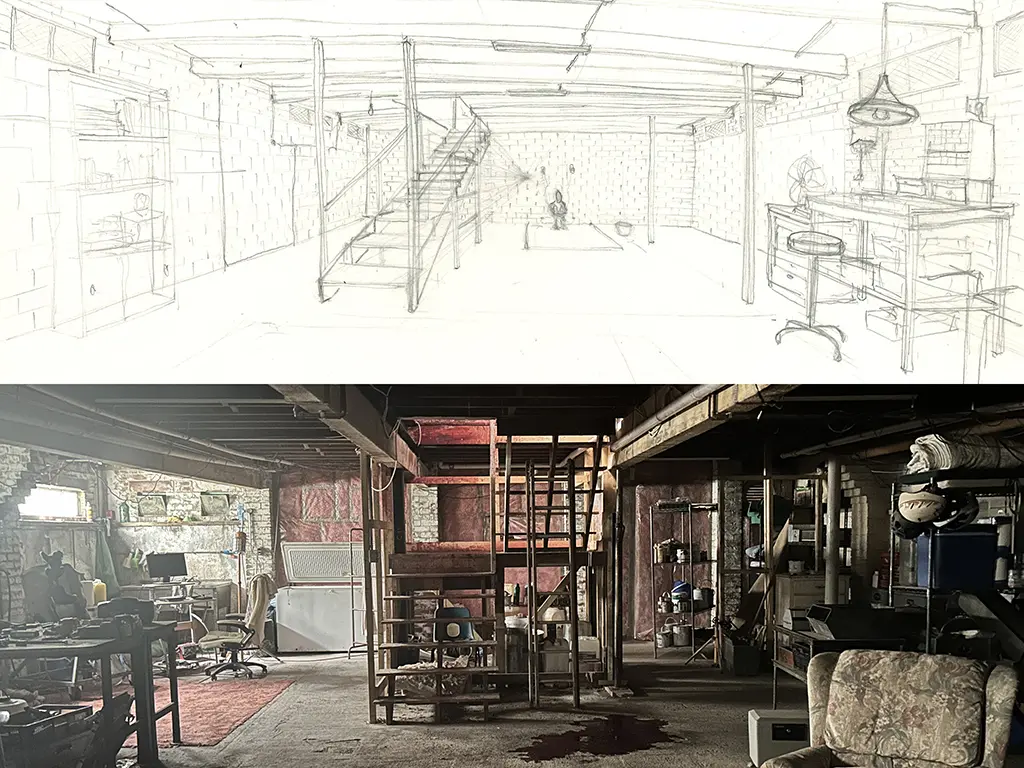
That physical reality matters on screen. This house doesn’t feel like a set; it feels oppressive, awkward, difficult to inhabit. And that was entirely intentional.
Rather than stylising chaos, James and set decorator Prue Howard focused on accumulation: outdated technology, half-finished ideas, mismatched furniture, and years of neglect layered carefully over time. “It’s cluttered because this is a life that hasn’t moved forward” James says.
The kitchen is a perfect example. Mismatched cupboards, awkward joins and two different kitchen styles bolted together create a subtle sense of unease. “That actually came from necessity,” James explains. “We got kitchens from eBay — people selling their old kitchens. We didn’t have enough cupboards, so we mixed them. And suddenly you realise: this is perfect.”
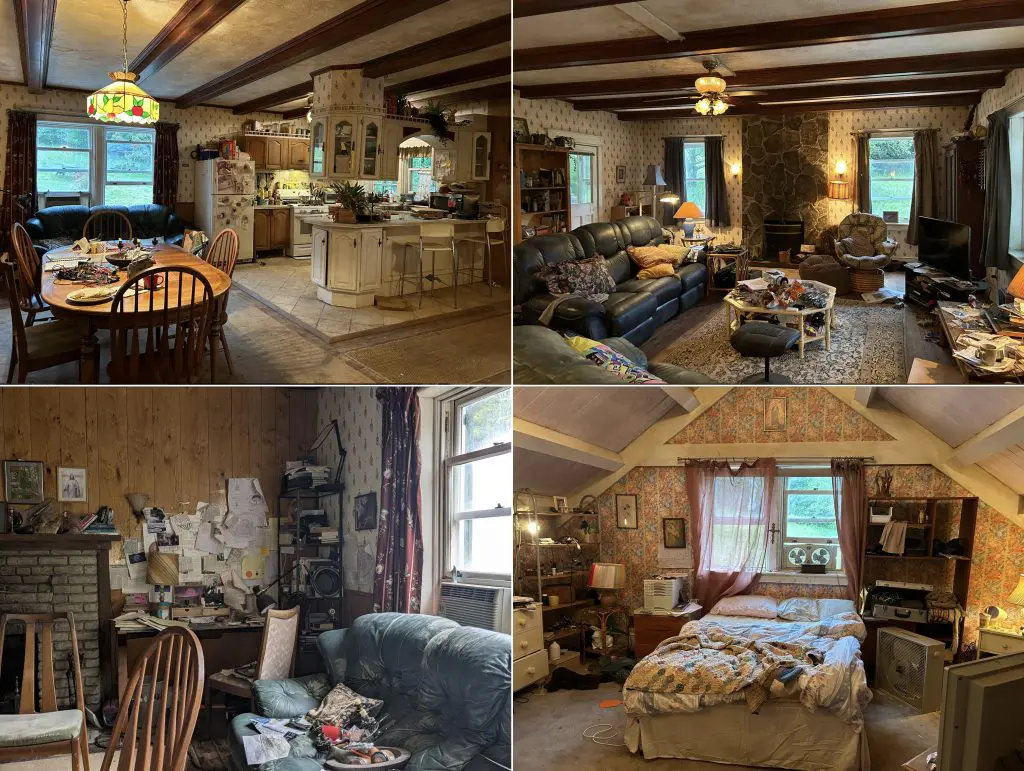
Nothing in Teddy’s house announces itself as “design”. Wallpaper was recreated from out-of-print American patterns, scanned and recoloured. Furniture came and went as the space evolved. Even the aging and wear developed intuitively. “You can’t really design chaos,” James says. “It evolves. It becomes a living, breathing environment — one that’s gone wrong somewhere down the line.”
The result is a house that becomes a character in its own right: uncomfortable, obsessive, and quietly tragic.
Michelle’s office: Cool control
When Bugonia moves into Michelle’s world, the contrast is immediate.
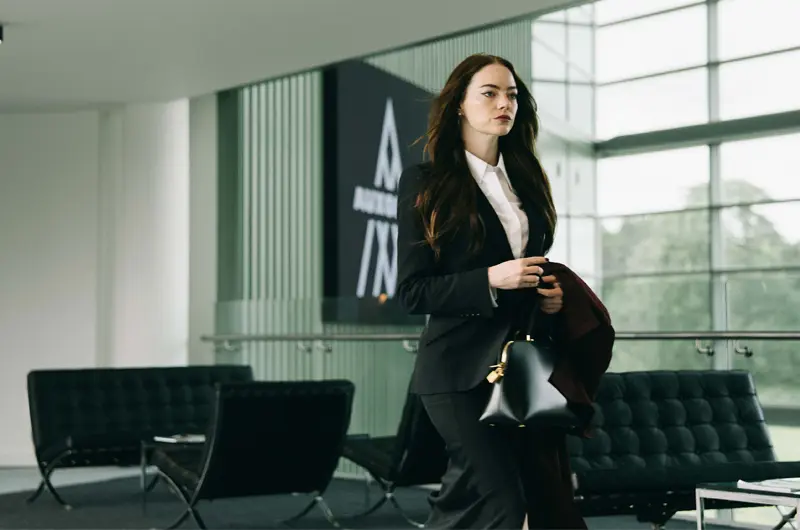
Michelle is the CEO of a pharmaceutical company, and her office reflects absolute authority. Clean, stripped-back and emotionally cool, it sits within a raw architectural shell that feels engineered rather than furnished.
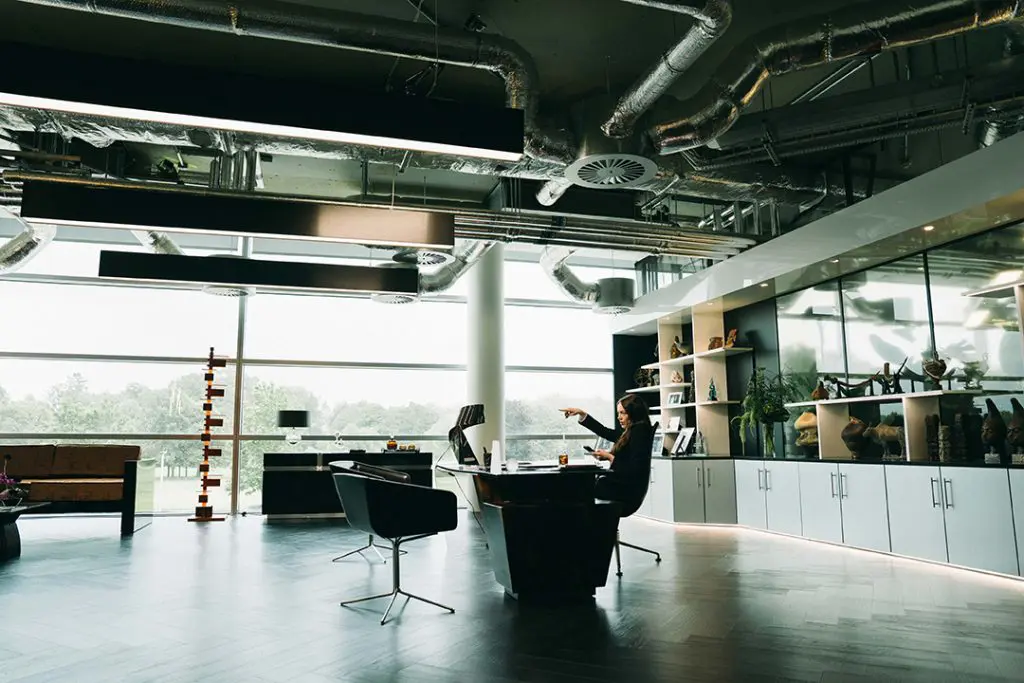
Credit: Atsushi Nishijima/Focus Features © 2025 All Rights Reserved.
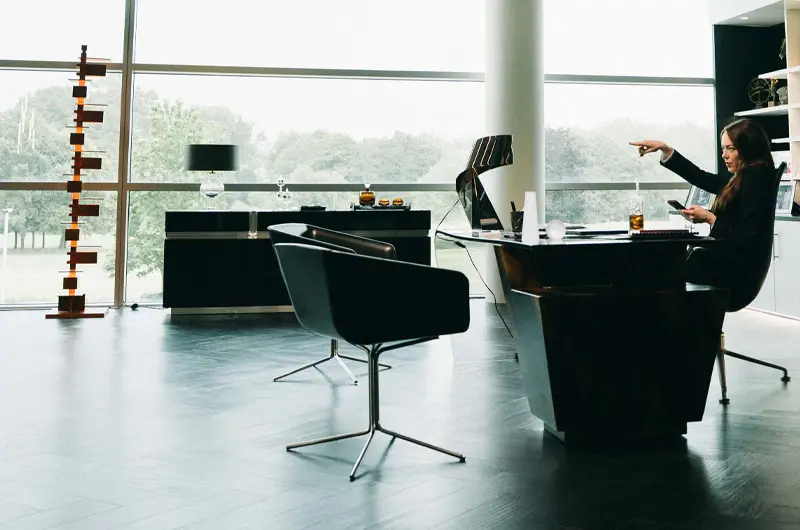
James initially explored real pharmaceutical headquarters — only to discover they were too democratic. “We’d ask, ‘Where’s the CEO’s office?’ And they’d say, ‘Oh, they just sit with everyone else.’ There was no sense of ‘us and them’.”
Instead, the team found a stark, unfinished building near the M4 — exposed ducting, aluminium floors, no suspended ceilings — and treated it as a blank canvas. “I wanted her world to feel like she was living in a spaceship,” James explains. “A place that could just take off and fly away.”
Michelle’s glass-box office sits at the centre of the space, allowing her to survey everyone — a deliberate expression of power and separation.
Credit: Atsushi Nishijima/Focus Features © 2025 All Rights Reserved.
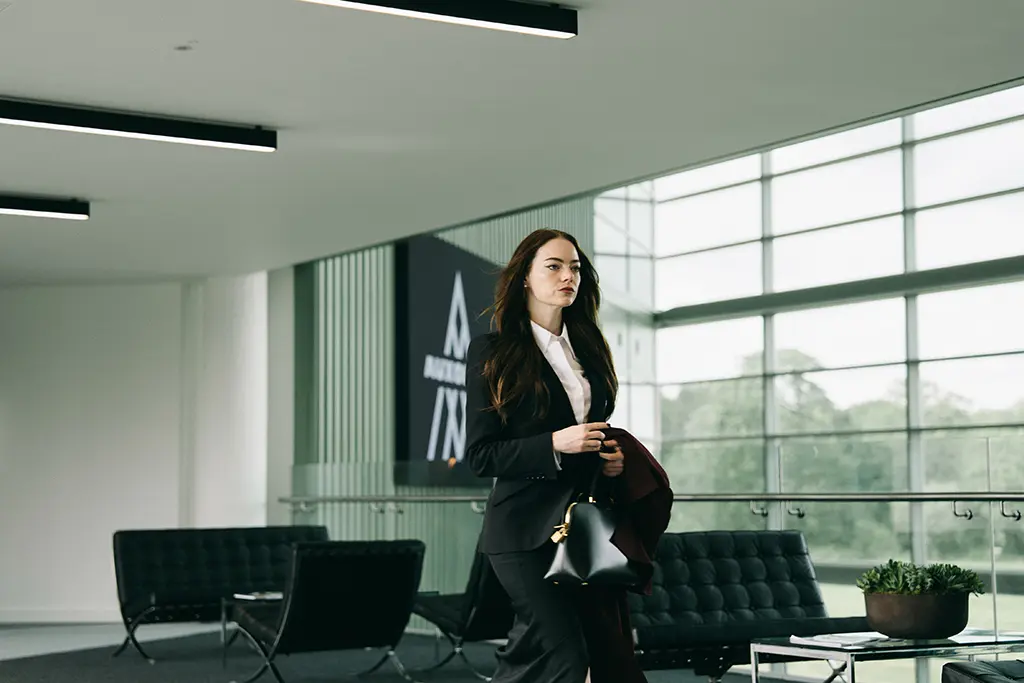
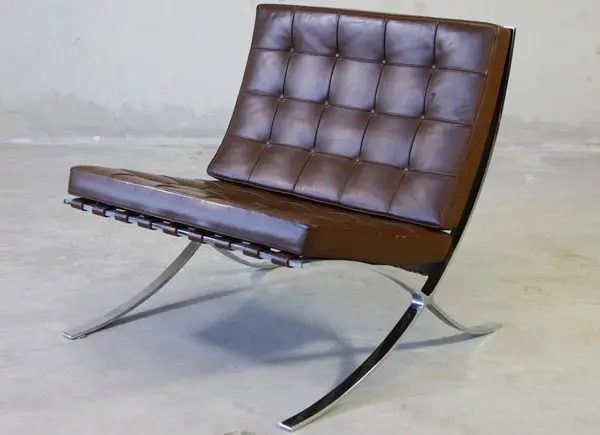
The furniture choices are minimal but loaded. The Barcelona Chair by Ludwig Mies van der Rohe appears not as a symbol of authority: upright, formal, and uninviting.

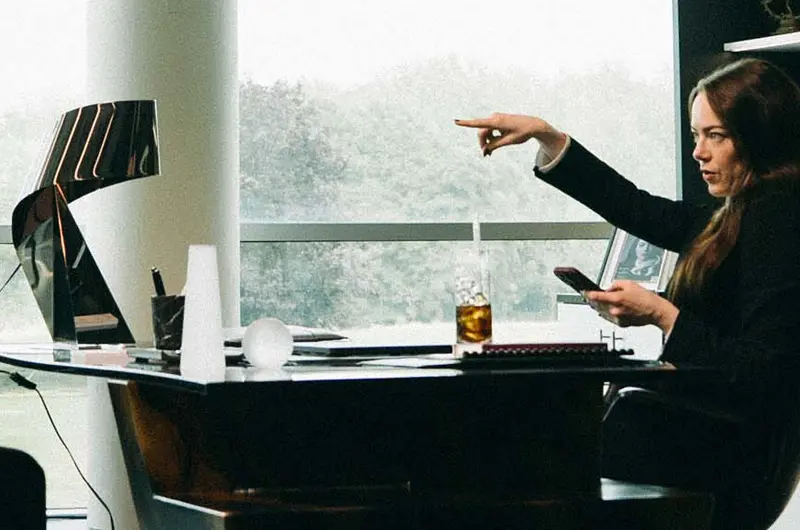
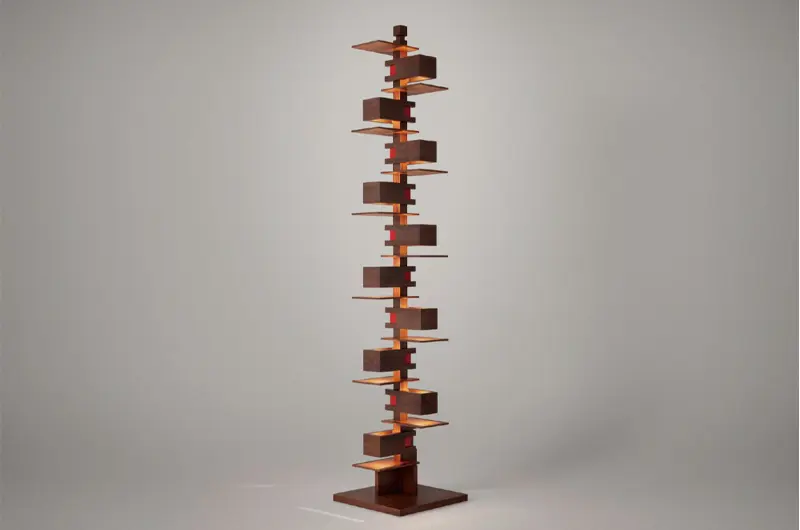
Lighting does equally subtle work. The Ribbon Lamp by Claire Norcross brings a faintly warped, space-age quality, while the Taliesin floor lamp by Frank Lloyd Wright adds architectural lineage and weight.
Credit: Atsushi Nishijima/Focus Features © 2025 All Rights Reserved.
Michelle’s house: Immaculate and modern
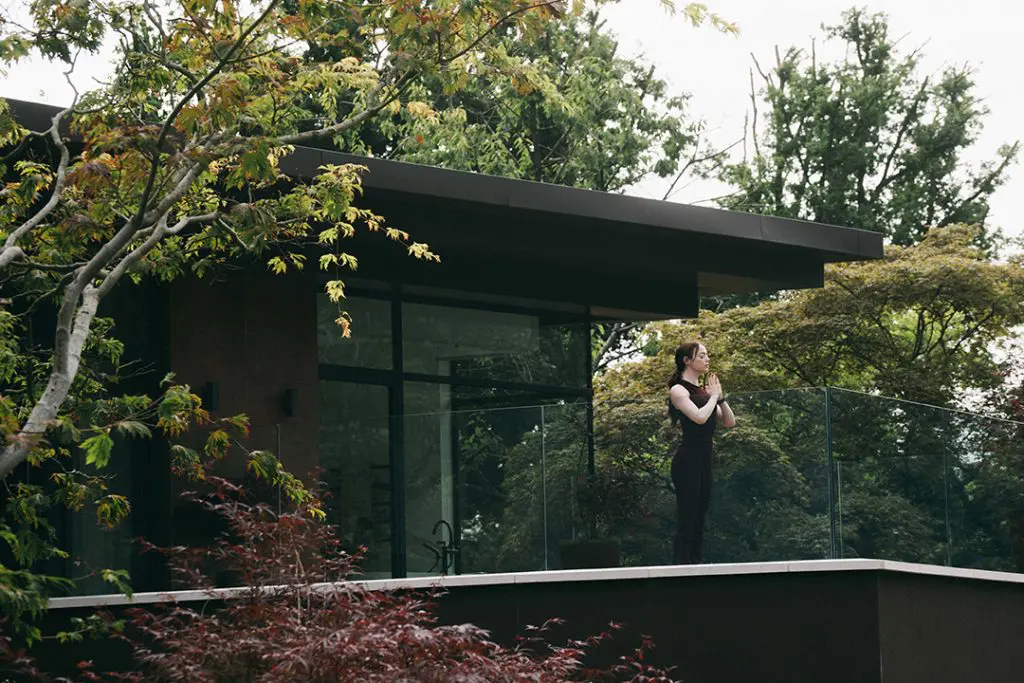
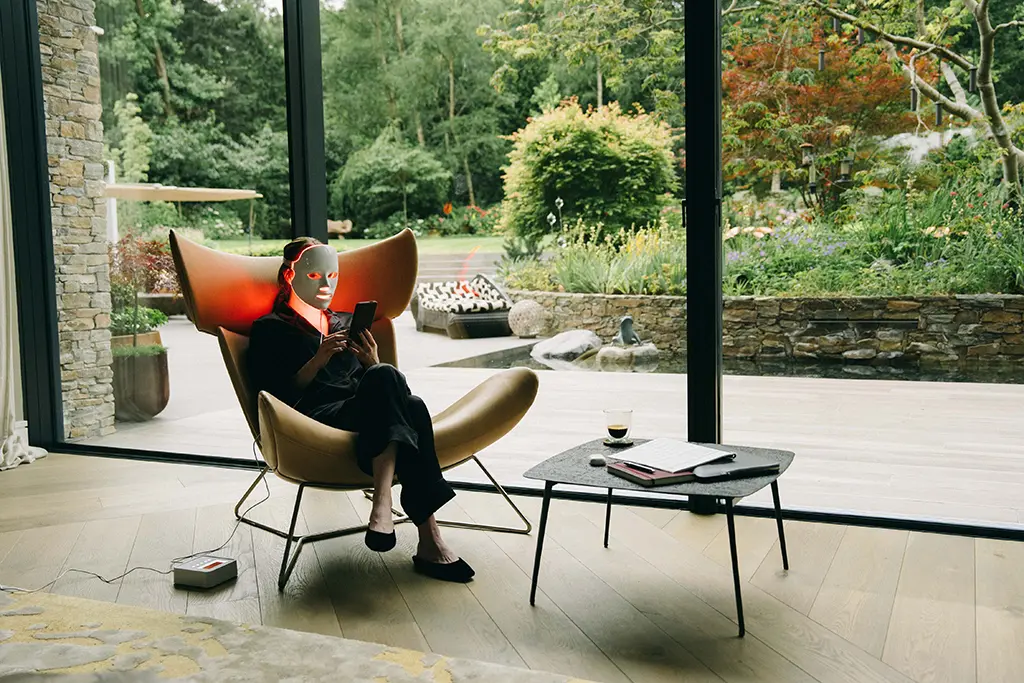
Michelle’s domestic space continues this language of control — but in a different register. Her house is a real contemporary home in Surrey, newly built and meticulously landscaped. Nothing feels out of place — and that, James explains, is precisely the point: “This is a house where wealth shows up as order rather than comfort.”
Credit: Atsushi Nishijima/Focus Features © 2025 All Rights Reserved.
-


Imola Chair by Henrik Pedersen for BoConcept – as seen in Bugonia
As seen in:Designer: Henrik Pedersen
Director: Yorgos Lanthimos
Shop NowStriking, sculptural, and steeped in cinematic presence – the Imola Chair is a modern design statement that has earned its place on screen. In Yorgos Lanthimos’ Bugonia, the chair’s dramatic wingback and sweeping curves command attention, upholstered in a warm brown leather with brushed steel legs.
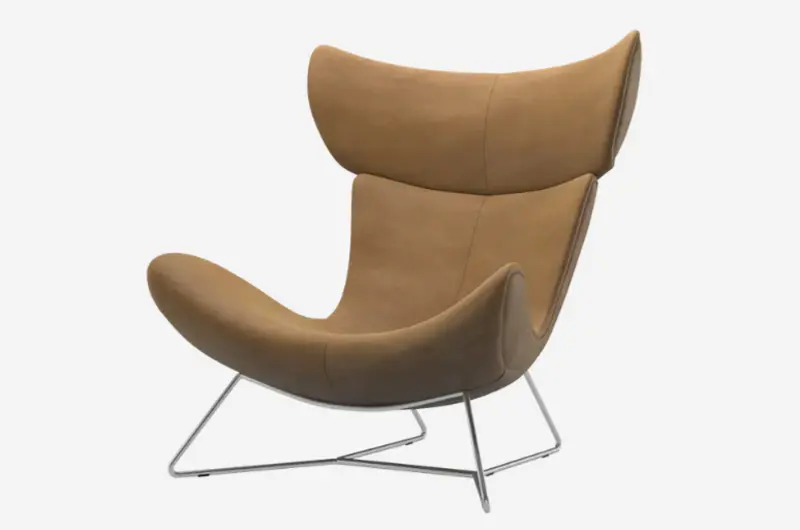
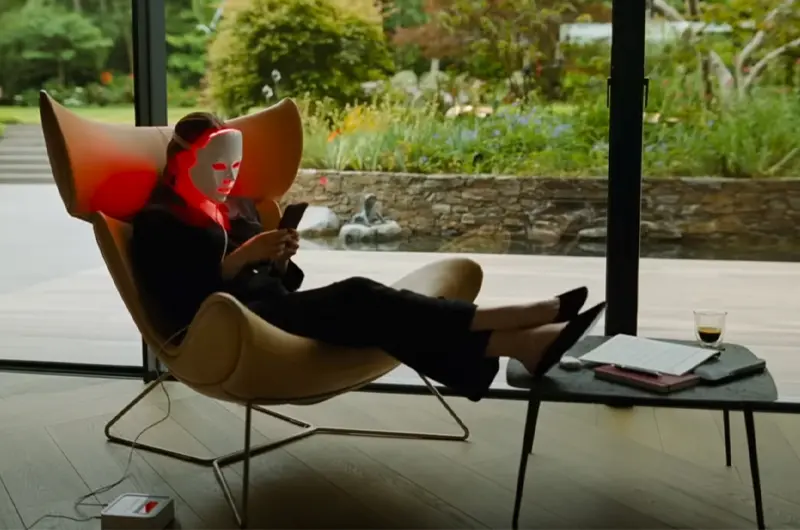
The furniture choices reinforce that idea. The Imola Chair by Henrik Pedersen plays a key role, particularly in close shots. This chair was already in place in the house used for filming, and the way the wingback eencloses Michelle gives the feel of a Bond villain chair.
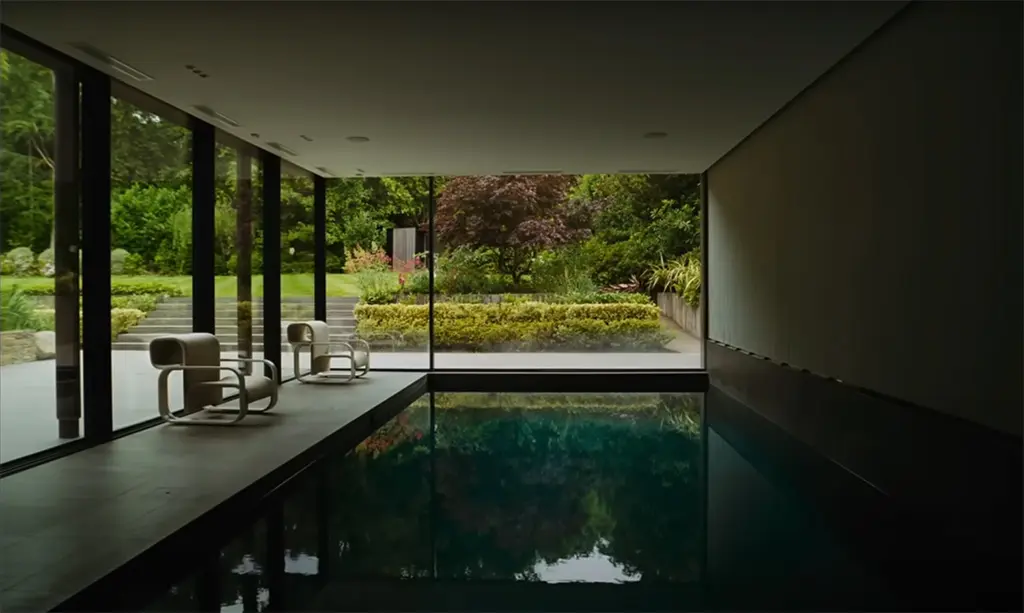
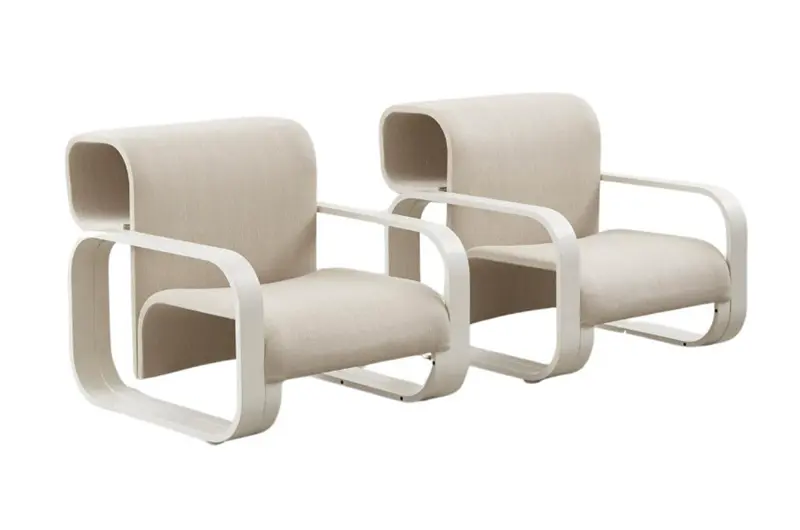
By the pool, a pair of rare Jan Bočan armchairs introduce a more unusual note. Sculptural and unfamiliar on screen, they signal discernment rather than trend-following. “You see the same design classics again and again because they’re easy to hire,” James notes. “Finding something iconic that hasn’t been in a million dramas is the challenge.”

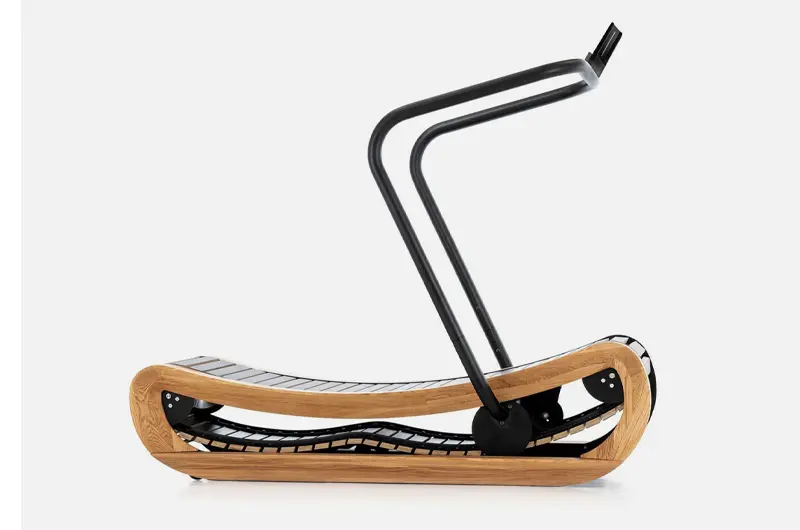
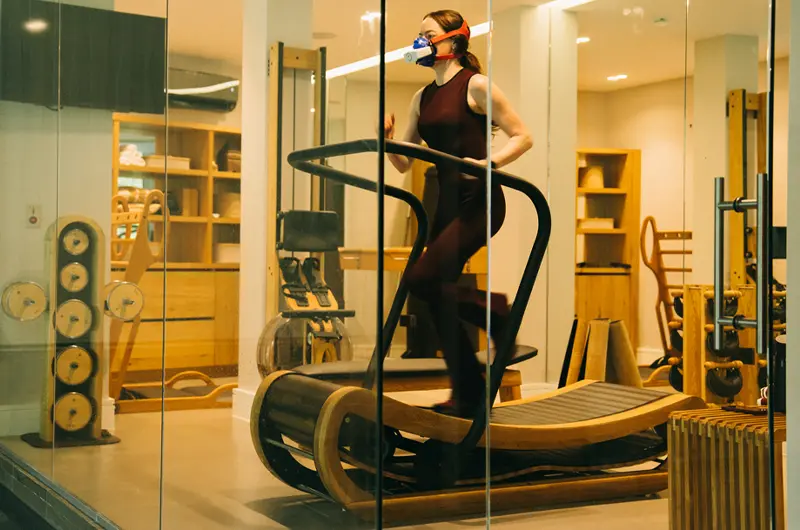
Even the gym refuses to behave like a gym. The NOHRD Sprintbok curved treadmill and accompanying weight system are designed to be seen — fitness equipment treated as furniture, not something to hide away.
The Andromedan World: Beyond realism
Then comes the Andromedan world — the point where Bugonia gleefully throws realism out of the airlock.
This final environment took the longest to resolve, precisely because it couldn’t be pinned down: “I spent about 90% of my development time thinking about that end sequence,” James admits.
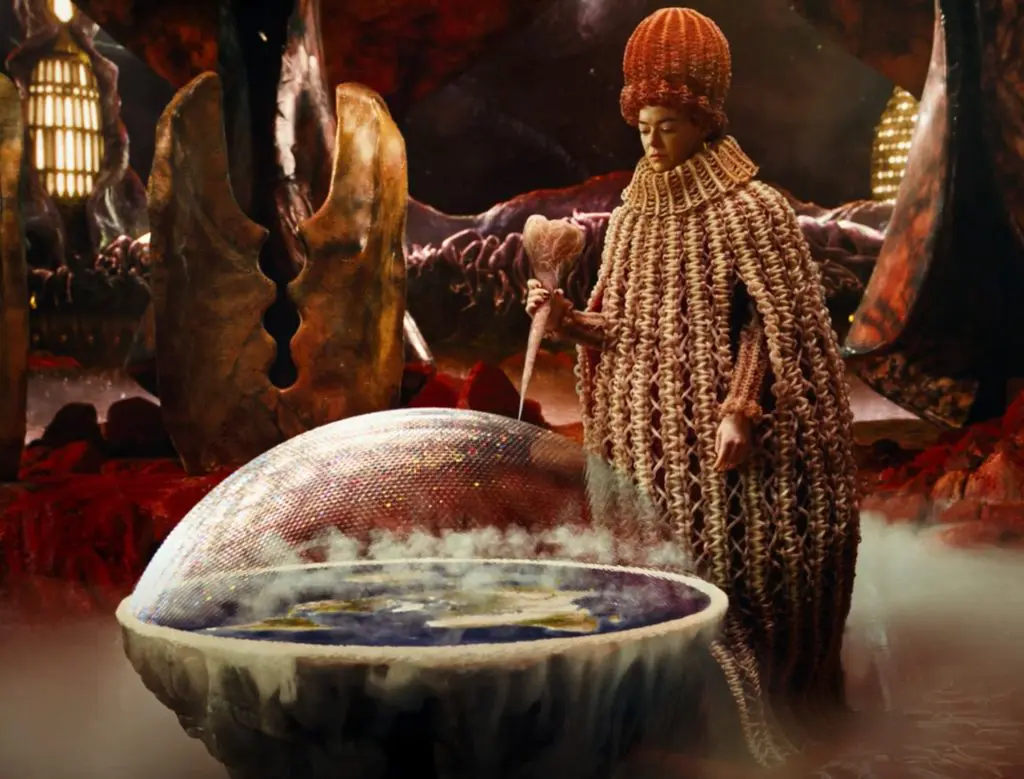
Ideas ranged wildly: ritual, rebirth, anatomy, sacred spaces, Dyson spheres, ant colonies, temples instead of throne rooms. The design evolved gradually, instinctively — and unapologetically. “Nobody ever said, ‘You can’t do this,’” James laughs. “So I just did it.”
The result is a space that’s strange, ceremonial, visceral — and completely committed. “It gets a massive laugh in the cinema,” James says. “People just burst out laughing because it’s so unexpected.”
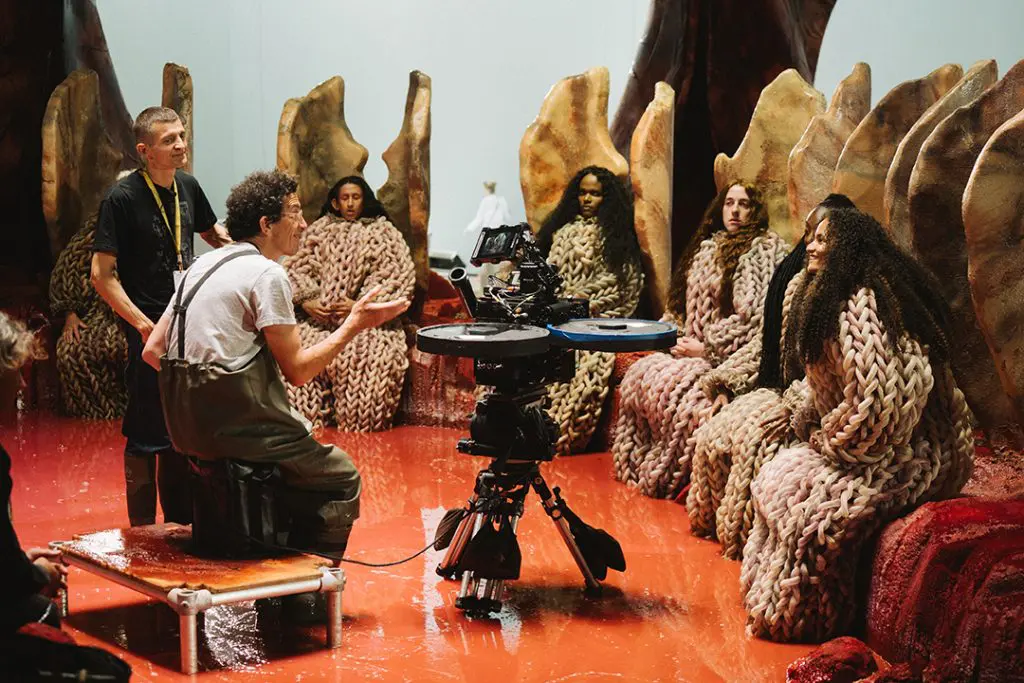
Credit: Atsushi Nishijima/Focus Features © 2025 All Rights Reserved.
By this point, the film has earned that leap. We’ve moved from grounded chaos, through icy control, to something utterly otherworldly — and it works because each world has been designed with total conviction.
Bugonia is now streaming on key platforms and has received multiple nominations at the Critics’ Choice Awards, Golden Globes, and nominations for production design and set decoration in the ADG (Art Directors Guild) Awards, the SDSA (Set Decorators Society of America) Awards and the BFDG (British Film Designers Guild) Awards.
It’s a film that trusts its audience — and one that proves, once again, how powerful furniture, interiors and architecture can be in storytelling.
This feature is FREE to Classic members.
Join our newsletter community to receive Film and Furniture inspiration direct to your inbox and we’ll UPGRADE you to Classic Membership (which includes access to our exciting giveaway draws) for FREE.
To access in-depth features, video interviews, invitations to pre-release film screenings, major exhibitions and more, become a Front Row or Backstage member today!





 Facebook
 Twitter
 Instagram
 Pinterest
 RSS
RSS