


Wes Anderson: The Archives — A First Look Inside the Design Museum’s Landmark Retrospective
Following the Design Museum’s hugely popular run of film-related exhibitions — including the recent Tim Burton show, which drew record-breaking crowds — stepping into Wes Anderson: The Archives feels like walking into a perfectly preserved, Anderson-curated prop house: a world where every piece of furniture, model, stitch and surface has been considered, crafted and placed with intention. For the first time, Anderson has opened his personal archive, revealing the extraordinary level of design thinking that underpins his films.
Expanded significantly for its London run, the exhibition features more than 700 objects, many never previously displayed. Anderson himself visited to inaugurate the show — a fitting gesture from a filmmaker so closely connected to the material worlds his stories inhabit.


The Grand Budapest Hotel: Film Set Craftsmanship

The monumental candy-pink model of The Grand Budapest Hotel, spanning more than three metres, is a highlight not simply for its scale but for its architectural finesse. The signage, balustrades, shutters and decorative flourishes all speak to the close collaboration between production designers, model makers and craftspeople.
Nearby sits Boy with Apple, hung with the dignity of a museum piece, surrounded by the costumes of Gustave H and Madame D. Together, they form a tight vignette of the film’s interiors — those ornate hotel suites, velvety timbers, polished surfaces and gilded details — and serve as a reminder that Wes Anderson’s worlds are built from the inside out.
Costumes, Characters and Personality

We find Max Fischer’s school blazer from Rushmore, the Zissou crew uniforms from The Life Aquatic with Steve Zissou, and Gwyneth Paltrow’s fur coat as Margot from The Royal Tenenbaums — all of which play a defining role in shaping Anderson’s cinematic storytelling.
Design is a language Anderson uses to build identity: the furniture, costumes, accessories and objects around a character become extensions of who they are. Seeing them gathered here underscores the interplay between set dressing, prop styling and narrative.
Some of the most satisfying pieces to examine are the vending machines from Asteroid City. Up close, their curves, colour choices and graphic details feel like a love letter to mid-century industrial design. They demonstrate Anderson’s trademark ability to blend architecture, signage and sculptural form into a single harmonious frame.
-

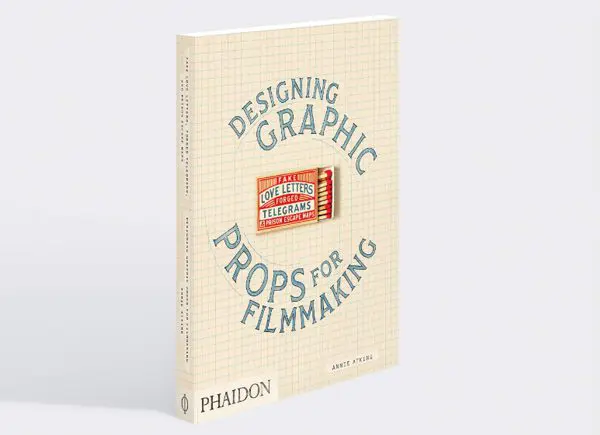
Fake Love Letters, Forged Telegrams, and Prison Escape Maps: Designing Graphic Props for Filmmaking
As seen in:Shop NowAnnie Atkins’s new book, Fake Love Letters, Forged Telegrams, and Prison Escape Maps: Designing Graphic Props for Filmmaking takes a behind-the-scenes look at the extraordinary and meticulous design of graphic objects for film sets.
Miniature Furniture and Material Worlds

The stop-motion rooms are a treasure trove for lovers of crafted objects. The miniature sets are filled with tiny chairs upholstered in fabric, miniature tables, cabinets and lamps — all built with remarkable precision. These pieces operate exactly like full-scale production design: they create character, place and mood.
Mr Fox’s corduroy suit, Nutmeg’s elegant silhouette and the meticulously scaled interiors around them highlight the sheer artistry behind these handmade environments. Even at 1:6 or 1:12 scale, the furniture tells the story.
-

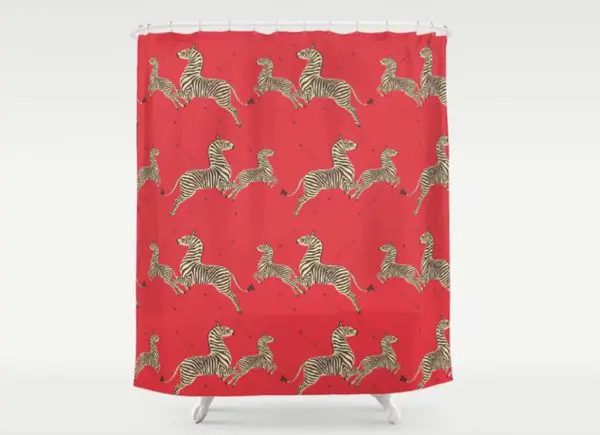
Scalamandre zebra cushion / pillow cover as seen in The Royal Tenenbaums
As seen in:Director: Wes Anderson
Shop NowThis cushion/pillow cover is made in a variety of sizes and colours using Scalamandre zebra fabric – the iconic design which is seen in wallpaper form in The Royal Tenenbaums.
Approx £40.00 Inc VAT if applicable / $53


A Major Addition: Objects from The Phoenician Scheme (2025)

For its London debut, the Design Museum has added a capsule of newly revealed objects from Anderson’s latest feature, The Phoenician Scheme. Over two dozen items are displayed for the first time, including a Dunhill pipe, beautifully crafted with an almost sculptural presence and a bejewelled dagger by Harumi Klossowska de Rola, which looks as though it belongs in the curated interior of an art collector.
These pieces belonged to the film’s central figure, Anatole ‘Zsa-zsa’ Korda, a passionate collector of art, books and residences. Their inclusion offers a direct bridge to the themes of collecting, connoisseurship and object-making that run throughout Anderson’s filmography.

The Director’s Notebooks

Anderson’s spiral notebooks are among the most revealing elements of the show. Filled with early sketches, scene ideas, notes and handwritten fragments, they offer a rare glimpse into his creative process. Their pages feel closer to design development drawings than traditional screenwriting — revealing how early Anderson begins thinking about the visual world of a film, from the arrangement of space to the objects that populate it, long before cameras roll.
Short Films Screened Together for the First Time in Britain

Beyond the objects, the exhibition also brings together, for the first time in the UK, four of Anderson’s shorts: Bottle Rocket (1993), Hotel Chevalier (2007), Castello Cavalcanti (2013), and The Swan (2023)
Each short is a distilled exercise in design and world-building, and seeing them projected together charts Anderson’s evolving architectural, material and decorative interests.
Craft and Collaboration
Throughout the exhibition, the work of Anderson’s key collaborators is foregrounded: Adam Stockhausen (production design), Javi Aznarez (illustration and graphic art), Andy Gent (puppet and model fabrication), Carl Sprague (concept art), Roman Coppola (writing and creative collaboration), Erica Dorn (graphic design) and Milena Canonero (costume design). Their contributions range from illustrated backdrops to architectural models, from puppets to costume design — a reminder that Anderson’s worlds are deeply collaborative acts of craftsmanship.
For fans of production design and set decoration, this is a rare chance to see the physical building blocks of Anderson’s cinema — from miniature furniture pieces to full-scale props and sculptural models — in all their textured, hand-built glory.
Wes Anderson: The Archives is an extraordinary study in object-making, costume, interior craft, architecture and furniture-as-storytelling. The exhibition affirms what many design lovers already know: that in Anderson’s films, furniture and objects aren’t simply background — they’re the emotional and visual architecture of the narrative.
For anyone fascinated by production design, set decoration, craftsmanship and the poetry of well-made things, this exhibition is unmissable.
Wes Anderson: The Archives
Design Museum, London
21 November 2025 – 26 July 2026
Get your tickets.
This feature is FREE to Classic members.
Join our newsletter community to receive Film and Furniture inspiration direct to your inbox and we’ll UPGRADE you to Classic Membership (which includes access to our exciting giveaway draws) for FREE.
To access in-depth features, video interviews, invitations to pre-release film screenings, major exhibitions and more, become a Front Row or Backstage member today!



 Facebook
 Twitter
 Instagram
 Pinterest
 RSS
RSS