• Features
    • All
    • F&F Features
    • Guest Features
    • Events/Exhibitions
    • Resources
  • Marketplace
    • Furniture & Homeware
    • Films & TV
    • Books & Mags
    • Recommended Retailers
    • The Shining request form
  • Films+TV
  • About
  • News+Members
    • News+Members
    • Sign In
  • PODCAST
  • Contact
Follow
Facebook logoFacebookTwitter logoTwitterInstagram logoInstagramPinterest logoPinterestRSS logoRSS

Elli Griff

Films / TV

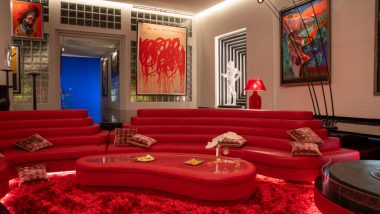
Glass Onion: A Knives Out Mystery

Glass Onion: A Knives Out Mystery

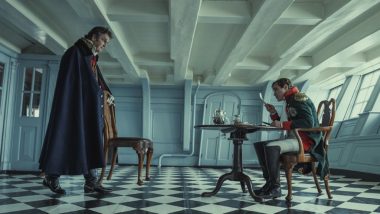
Napoleon

Napoleon

  • Features
    • All
    • F&F Features
    • Guest Features
    • Events/Exhibitions
    • Resources
  • Marketplace
    • Furniture & Homeware
    • Films & TV
    • Books & Mags
    • Recommended Retailers
    • The Shining request form
  • Films+TV
  • About
  • News+Members
    • News+Members
    • Sign In
  • PODCAST
  • Contact
Facebook logoFacebookTwitter logoTwitterInstagram logoInstagramPinterest logoPinterestRSS logoRSS
From Instagram
Sunday Sofas: Sofas in Film and TV No.7 - The Futu Sunday Sofas: Sofas in Film and TV No.7 - The Future Edition 🚀

How do filmmakers furnish the future? Quite often, with a fantastic sofa.

Science fiction has long used furniture to tell us what tomorrow might look and feel like. Sleek or strange, optimistic or dystopian, a sofa can reveal plenty about the world we’ve entered, and about the era in which that future was imagined.

In 2001: A Space Odyssey, released in 1968, Stanley Kubrick filled Space Station 5 with Olivier Mourgue’s sculptural Djinn chairs and 2-seat sofas, designed just three years earlier. Their low, fluid forms and vivid colour became inseparable from Kubrick’s vision of the 21st century.

In The Hunger Games, the Capitol’s huge serpentine de Sede DS-600, first launched in the 1970s, becomes part of a future built on decadence and excess.

Then there’s the joyless seating of Blade Runner 2049; the polished space-liner luxury of Passengers; the immaculate white-and-blue minimalism of Oblivion; and the retro-futurism of Incredibles 2, with its conversation pits and built-in seating.

More recently, The Fantastic Four: First Steps plays with the same idea, creating a 1960s-inspired future filled with curves, colour and sweeping sofas.

And if Kubrick’s future is the one for you, Film and Furniture sells professionally restored Djinn chairs and 2-seat sofas, increasingly collectible pieces of screen design.

🔎 Find the Djinn collection and more furniture from film and TV at filmandfurniture.com
🔗 Link in bio.

Stay tuned for more Sunday Sofas...

2001: A Space Odyssey (1968)
D: Stanley Kubrick | PD/AD: Tony Masters, Harry Lange, Ernest Archer

The Hunger Games (2012)
D: Gary Ross | PD: Philip Messina | SD: Larry Dias

Blade Runner 2049 (2017)
D: Denis Villeneuve | PD: Dennis Gassner | SD: Alessandra Querzola

Passengers (2016)
D: Morten Tyldum | PD: Guy Hendrix Dyas | SD: Gene Serdena

The Fantastic Four: First Steps (2025)
D: Matt Shakman | PD: Kasra Farahani | SD: Jille Azis

Incredibles 2 (2018)
D: Brad Bird | PD: Ralph Eggleston

Oblivion (2013)
D: Joseph Kosinski | PD: Darren Gilford
🎬 La La Land at 10: beyond the dancing, the interi 🎬 La La Land at 10: beyond the dancing, the interiors are doing plenty of storytelling too.

Damien Chazelle’s La La Land returns to cinemas from 16 August, ten years after its debut, and we’ve been looking again at the film through its furniture, lighting and interiors.

💗 Mia’s apartment is exuberant and theatrical. Floral wallpaper, mismatched patterned bedding, a huge Ingrid Bergman portrait, vintage lamps, an old dresser and bursts of red, pink and turquoise create the home of someone already living partly inside her own Hollywood fantasy. 

As Mia works on her one-woman show, the living room becomes a creative sprawl: pages across the floor, a faded orange sofa, upright piano, small wooden tables and domestic lamps.

🎹 Sebastian’s apartment is far more stripped back. Pale walls, hard daylight through Venetian blinds, a simple bed and little decoration leave the piano, records and record player to dominate. 

And then there’s the Griffith Observatory, where its monumental stone interior, Art Deco lighting and great circular Foucault pendulum become part of the choreography.

Production designer David Wasco and set decorator Sandy Reynolds-Wasco give Mia and Sebastian very different visual worlds. Ten years later, there is still a lot to look at.

Which La La Land interior would you move into? 🎹💃

🔎 More film interiors, furniture and design at Film and Furniture.

#filmandfurniture
Few filmmakers make ordinary interiors feel as uns Few filmmakers make ordinary interiors feel as unsettling as David Lynch.

In Blue Velvet, pastel diner booths, pink bedrooms, floral fabrics, old televisions and familiar furniture all seem ordinary at first. Then it all goes off on one.

Dorothy Vallens’ apartment is where that unease starts to grip. Dusky plum-purple walls, green curtains, heavy upholstery and pools of lamplight give the room a theatrical quality. There’s also a surprising plethora of snake plants, their tall, graphic leaves looking especially striking against those purple walls and adding another slightly surreal note.

Lynch creates dread through suggestion. A lamp, a curtain, a sofa or an apparently ordinary room can feel charged with something ominous through colour, lighting, composition and what might be waiting just beyond the frame.

Costume designer Patricia Norris also worked closely with Lynch on the film’s visual world, helping shape the sets, colours and atmosphere that make Blue Velvet feel both recognisable and suitably strange.

🔎 Explore more furniture, décor and interiors from film at filmandfurniture.com

Blue Velvet (1986), written and directed by David Lynch.
Bathrooms in Film No. 3: Bathroom rituals Bathroo Bathrooms in Film No. 3: Bathroom rituals

Bathrooms are full of rituals. Shaving. Brushing teeth. Applying make-up. Clipping toenails. Making phone calls from the loo. Bathing. Dressing. Looking in the mirror. Sometimes hiding out.

Film loves these small routines because they reveal character while giving actors something wonderfully ordinary to do.

In The Darjeeling Limited, shaving becomes a group ritual in the train washroom. Licorice Pizza turns the bathroom into a private spot for a phone call, while Poker Face makes use of the intimacy of a tiny loo. The Royal Tenenbaums gives Margot a perfectly period setting for her grooming and telephone habits, and Le Mépris brings strong mid-century colour and sanitaryware into play.

Then things get stranger. Paddington turns toothbrushing into slapstick, The Shining makes bathing and bathroom conversations deeply unsettling, Stuart Little gets his own miniature basin and mirror, while The Cook, the Thief, His Wife & Her Lover turns grooming into something ceremonial.

From tiles and taps to mirrors, basins and loos, bathrooms give filmmakers a concentrated little world for everyday behaviour.

🚿 Explore more furniture, interiors, set decoration and production design from film and TV at filmandfurniture.com.

#filmandfurniture
🎬 Inside the strange, seductive world of Teenage S 🎬 Inside the strange, seductive world of Teenage Sex and Death at Camp Miasma.

Production designers Brandon Tonner-Connolly (@brandontconnolly) and Matt Hyland (@oneonetwothree) transformed remote summer camps into a richly layered world of handmade art, vintage furniture and old-school cinematic craft.

🛋 Around 90% of the set decoration was sourced locally on Vancouver Island, including Billy’s weathered orange mid-century leather sofa.

🖼 Gillian Anderson’s character is surrounded by artworks inspired by Josef Albers and Vera Molnar, while the team also revived matte painting to create the film’s dreamlike landscapes.

We spoke to the designers about the furniture, interiors, art and practical filmmaking behind the film.

🔎 Read the full story at Film and Furniture. Link in bio.

@welcometocampmiasma Directed by Jane Schoenbrun @janedoesnotknow
Set Dec by hana Cook @iquitelikethedark
@mubi
#filmandfurniture
Bathrooms in Film No. 2: Mirrors, grooming, perfor Bathrooms in Film No. 2: Mirrors, grooming, performance and self-image

Few objects in a film bathroom work harder than the mirror.

Characters use them to get ready, apply make-up, shave, rehearse, scrutinise themselves, check the face they are about to show the world, or confront one they barely recognise.

Mirrors also give filmmakers another frame within the frame. A face can appear twice. Somebody can be watched without turning around. The room can suddenly feel larger, stranger, more intimate or more exposed.

Add lighting, tiles, cosmetics, taps and colour, and the bathroom becomes a perfect stage for transformation. From the pink-and-green haze of La La Land to the saturated glamour of The Neon Demon, the cool geometry of Decision to Leave and the unsettling reflections of The Substance, these rooms reveal plenty.

Films pictured include Black Mirror, Decision to Leave, Joker: Folie à Deux, La La Land, Last Tango in Paris, The Neon Demon, Parallel Mothers, Point Blank, Saltburn and The Substance.

Which bathroom mirror scene has stayed with you?

🪞 Find more production design, interiors and screen-worthy objects at Film and Furniture, filmandfurniture.com.

#filmandfurniture
Join In

Disclosure: We may receive a small % commission if you click a link and purchase a product or service via this website.
We tell you this in the spirit of openness and please rest assured that all our recommendations are vetted and genuine.

ALL WRITTEN CONTENT © FILM AND FURNITURE.
All rights reserved. Content cannot be reproduced, distributed, transmitted, displayed or published without consent.
All original images: copyrighted to the original image maker and/or film company and are published under Fair Dealing.

Film and Furniture logos © Film and Furniture

Terms & Conditions Returns & Refunds Privacy Policy & Cookies Sign In
ADVERTISING & PARTNERSHIPS GUEST POSTS
Site design: Form®
We use cookies to ensure that we give you the best experience on our website. Learn more. View our privacy policy. Got it